
Lab Members
Dr. Elizabeth Covelli Metcalf
 Dr. Libby Metcalf is the Joel Meier Distinguished Professor of Wildland Management and Senior Associate Dean of the W.A. Franke College of Forestry and Conservation at the University of Montana. In 2011, Dr. Metcalf received a dual Ph.D. at the Pennsylvania State University in Recreation, Parks, and Tourism Management and the Human Dimensions of Natural Resources and the Environment. Her research interests generally center around recreation management issues, wildlife related issues, and understanding complex social-ecological systems. Dr. Metcalf’s theoretical approach is based in social-psychology and often includes the examination of attitudes, values, and beliefs. Dr. Metcalf has worked on statewide studies examining outdoor recreation, hunter recruitment and retention issues, and river management. Her more recent work has focused on larger social-ecological systems such as the social dimensions of river restoration and wildlife management. Dr. Metcalf uses structural equation modeling in social data analysis and has been working with other researchers to develop models to couple human and natural systems. Along with her research, Dr. Metcalf is a dedicated teacher where she provides field-based opportunities for her undergraduate students including field trips and internships. At the graduate level, Dr. Metcalf offers seminar style courses and close mentoring for her advisees. Libby is also an avid runner and outdoor enthusiast, favoring activities that include sunshine and water. Her favorite place to recreate is the upper Blackfoot River where she enjoys floating and fishing with her family.
Dr. Alexander L. Metcalf
 Dr. Alex Metcalf is an Associate Professor Professor of Human Dimensions in the Department of Society & Conservation in the W.A. Franke College of Forestry and Conservation at the University of Montana where he serves on the undergraduate faculties for Environmental Science & Sustainability and Wildlife Biology, and the interdisciplinary graduate faculties for Systems Ecology and the BRIDGES Food Energy and Water Nexus. In 2010 Dr. Metcalf received a dual Ph.D. from The Pennsylvania State University in Forest Resources and the Human Dimensions of Natural Resources and the Environment. His research focuses broadly on the human dimensions of natural resources using theories and methodologies from sociology- and psychology-related disciplines to address natural resource issues while advancing theory. He employs qualitative, quantitative, and mixed methods in his research, including spatial (GIS) techniques, to understand relationships between humans and the environment, and the consequences of conservation behavior across scales. Dr. Metcalf is particularly interested in understanding the factors which drive conservation decisions by private landowners, including the cross boundary realities of many natural resources; using theories of social-ecological system dynamics to inform management toward desired outcomes; improving the use and measurement of attitudes, beliefs, and values in agency and NGO decisions and outreach/extension; and helping ensure people and communities are fairly and meaningfully engaged in natural resources decision-making processes. Dr. Metcalf has oriented his research toward a variety of natural resource contexts and issues including forest management and restoration, private land conservation, fire policy and management, invasive species control, regenerative agriculture, and human-wildlife interaction. Dr. Metcalf enjoys teaching at all levels, including in his freshmen intro to natural resource conservation class (NRSM 121), his Human Dimensions of Wildlife course (WILD 274), and a graduate course on theories used in human dimensions research (NRSM 574)
Anna Baize, PhD student, Wildlife Biology

I am a PhD student in the Wildlife Biology Program, coadvised by Dr. Sarah Sells and Dr. Alex Metcalf. I earned a BS in Fish, Wildlife, and Conservation Biology from Colorado State University. During my time at CSU, I assisted the Center for Human-Carnivore Coexistence in analyzing state-wide surveys that engaged the public in large carnivore conservation. This project sparked my interest in the field of human dimensions, and I have since pursued positions related to human-carnivore conflict and coexistence. My experience includes working with the Southwest Montana Grizzly Bear DNA Project, the Idaho Wolf Project, and a range riding study throughout the West. I am particularly interested in understanding the human side of grizzly bear recovery in Montana, with a focus on the Bitterroot Valley. In my free time, I can typically be found riding a bike along ridges and valleys or painting by a river.
Brianna Lipp, PhD student, Wildlife Biology

I am a PhD student in Wildlife Biology program, coadvised by Drs. Sarah Sells and Alex Metcalf. My research interests include the human dimensions of large carnivores such as grey wolves and grizzlies in Montana, the relationship between identity and conservation, and social-ecological systems. I graduated from Middlebury College in 2020 with a B.A. in Biology and Anthropology/Sociology. After graduating, I worked a number of jobs in the conservation field, such as being a plant technician in Kansas’ tallgrass prairies, an AmeriCorps conservation corps member in New Hampshire’s Squam Lake, and a zookeeper in Alabama, before deciding to return to school. In my free time, I’m a dedicated cat mom, passionate hockey fan, and indoorsy outdoorswoman, enjoying reading and baking about as much as I like backpacking and scuba diving.
Kat Petersen, PhD student, Wildlife Biology
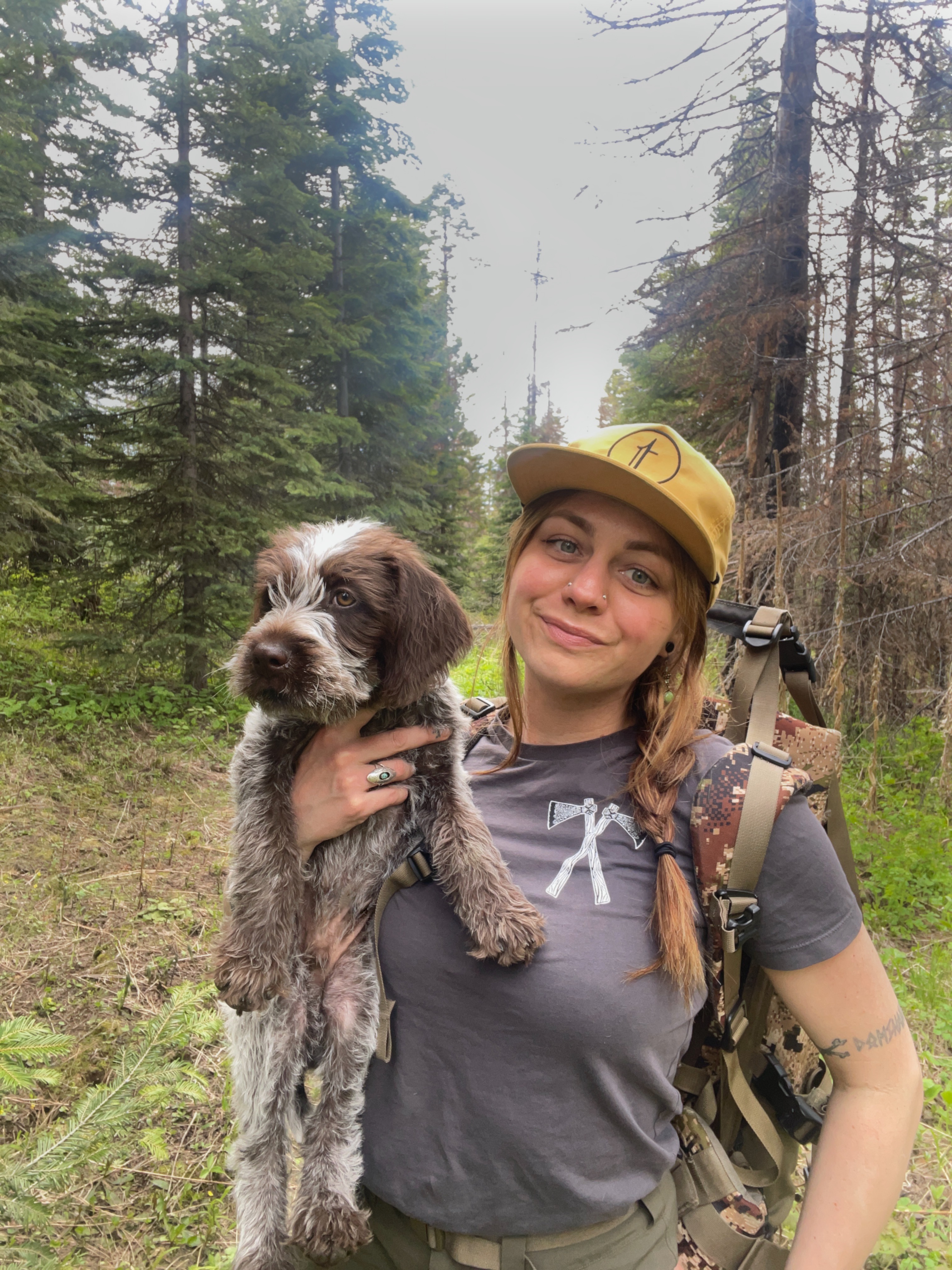
I am a PhD student co-advised by Dr. Sarah Sells and Dr. Alex Metcalf. I earned my MS at the University of Idaho, where I studied wolf dispersal using genetic and genomic methods. I have worked in a variety of wildlife field research positions across the West, including predator-prey studies capturing ungulates and black bears, bighorn sheep disease and population monitoring, mesocarnivore camera traps, and avian surveys. These experiences, along with my work with wildlife agencies, have shaped my interest in applied ecology. My research interest focuses on the behavioral and population dynamics of large mammals using quantitative ecology and non-invasive approaches. I am interested in applying these tools to both fundamental questions and applied conservation challenges, with particular emphasis on how human dimensions shape decision-making in carnivore management and how harvest influences carnivore populations. Outside of research, my life revolves around the hunting seasons. You can usually find me chasing my bird dog through canyons, archery hunting, or backpacking into a mountain lake to fly fish.
Jazzelle Elias, Research Assistant

Jazzelle earned a B.S. in Recreation Management from the University of Montana in 2023 and joined the lab as a research assistant in 2024. She began her M.S. in Resource Conservation in 2025. During her time at UM as an undergrad, she worked with the Flathead Lake Biological Station (FLBS) studying stoneflies, the Institute for Tourism and Recreation Research (ITRR) conducting public surveys, the Bob Marshall Wilderness Foundation (BMWF) as a wilderness ranger, and the U.S. Forest Service (USFS) doing trail work. Her passion lies in understanding human interactions, decision-making processes, and policy as they relate to natural resources. Originally from a concrete jungle in Southern California, Jazzelle moved to a small logging town in Washington State, where she was first introduced to the outdoors in high school. Once afraid of trees, she eventually found herself leading a mule through the Bob Marshall Wilderness alone during her college years. Outside of the lab, Jazzelle can be seen on a trail, on the pickleball courts, or avoiding unleashed dogs.
Jaxon Caufield, B.S student, Wildlife Biology
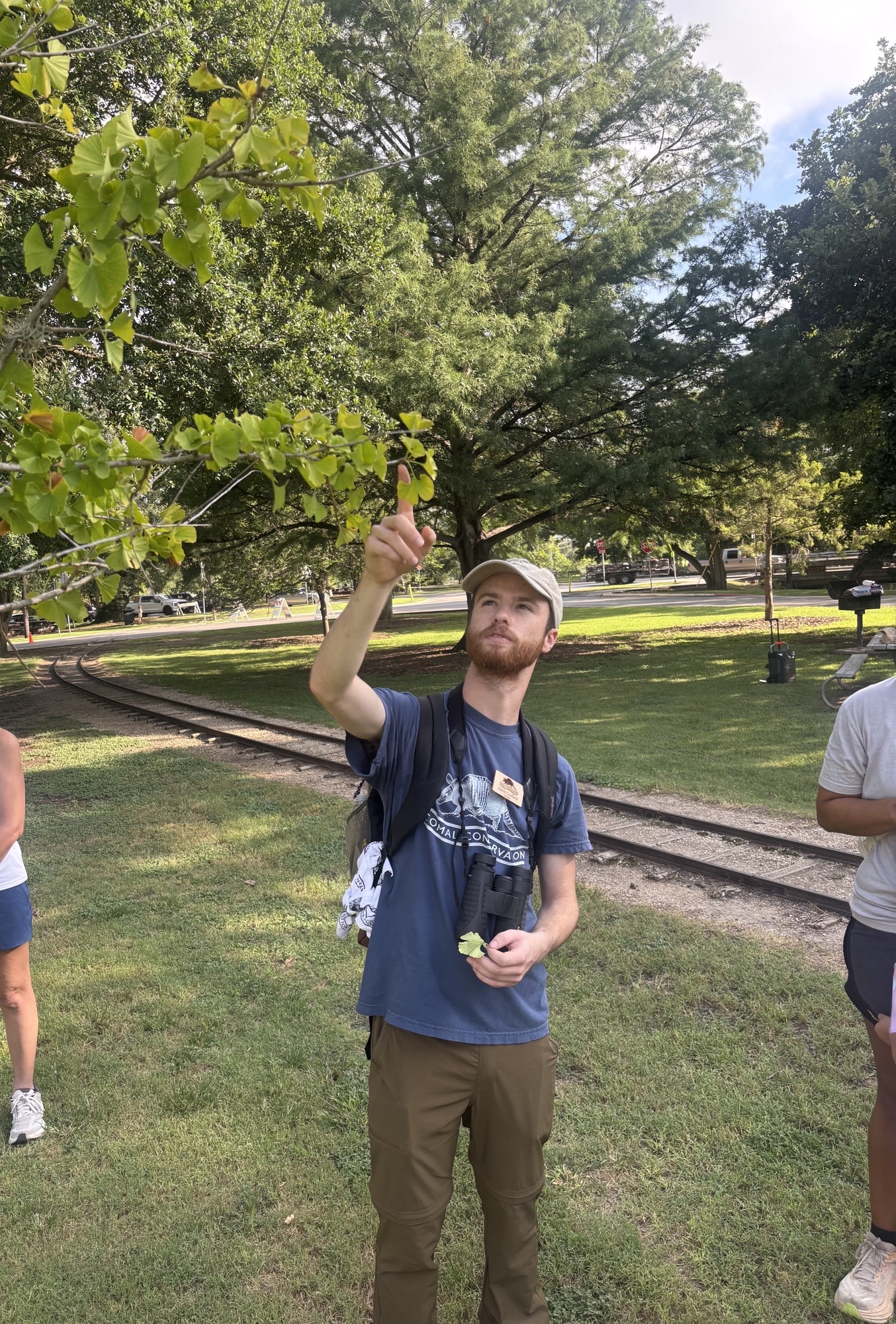
Jaxon Caufield is a 4th year undergraduate student in the wildlife biology program. Beyond wildlife courses, Jaxon has served as an intern for non-profit conservation groups, led student clubs, and is minoring in political science, prospects that led him to the Human Dimensions Lab to bridge his wildlife science and political policy education. Within the lab, Jaxon is writing his Senior Thesis on how cultural views impact Americans’ species-specific hunting approval.
Riley Comstock, B.S. Environmental Science, B.A. Journalism
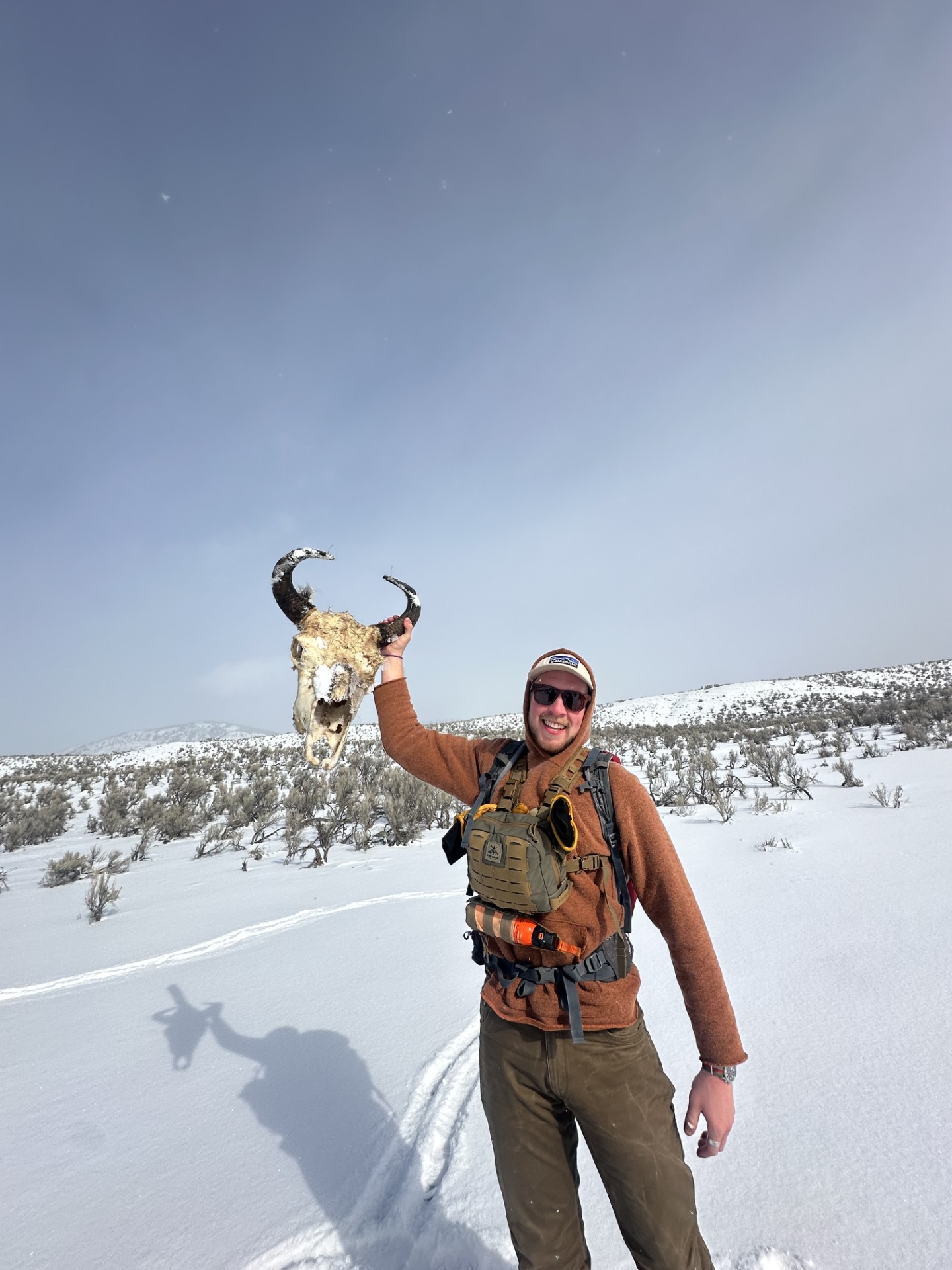
Riley graduated in May of 2026 with a BS in Environmental Science, a BA in Journalism, and a minor in Wilderness Studies. He is researching attitudes towards bison in the West and how rural and urban identities and activation influence those attitudes. He is incredibly interested in the role these large wooly bovines play in rangeland systems both in wildlife and livestock settings. Outside of the lab, he is involved heavily with Trout Unlimited and can typically be found on the river, fly fishing or floating, usually both.
Daniel Rakis, B.S student, Wildlife Biology

Daniel is a B.S. student in Wildlife Biology at the University of Montana and is a research intern with the Human Dimensions lab, working on the SMART Fires project. He finds himself interested in understanding how people and policy shape everyday conservation problems, solutions, and the steps in between them. Outside of the school and the lab, Daniel is an avid outdoor recreator who enjoys flyfishing up Rock Creek, wandering up the Rattlesnake and reading every historical plaque in Downtown Missoula.