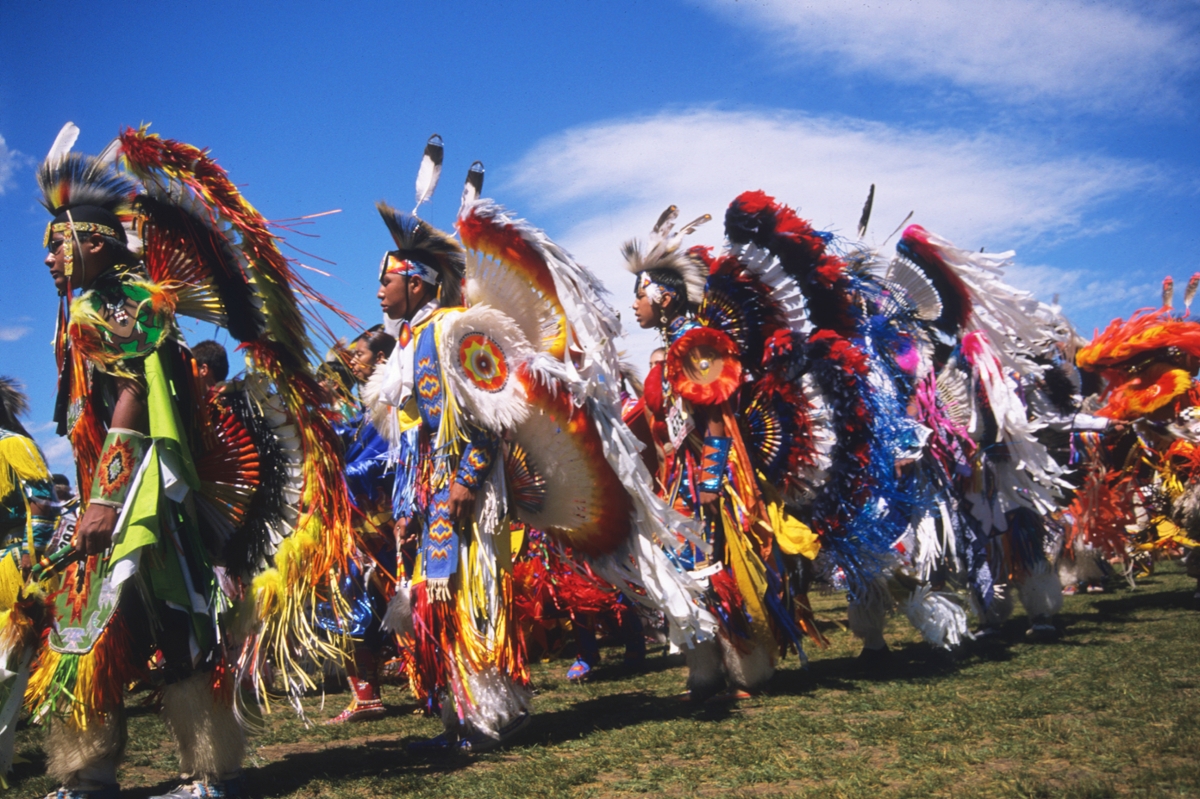
 A scene from North American Indian Days Pow Wow on the Blackfeet Reservation (Photo by the Rick and Susie Graetz)
At one time, they were feared Plains warriors controlling hunting grounds over a vast expanse of the Montana prairie east of the Northern Rocky Mountains.
Scientific DNA studies released in 2023 established the Blackfeet DNA to be 18,000 years old with origin stories linking them to the landscape now called the Blackfeet Reservation. The Blackfeet are the only tribe in Montana that has remained on their ancestral land since time in memorial.
Traditional ecological knowledge was demonstrated by them through their sophisticated management of the prairie ecosystem. They set fire to grasslands knowing their main food source the Buffalo, would gravitate towards the new growth. This practice is the most plausible explanation on how they received their name; their moccasins were blackened from treading on these burned lands.
The Blackfoot Confederacy consists of Four tribes, three of which reside in Canada. The Siksika, Kainai, and the Northern and Southern Piikani tribes, Blackfeet being the South Piikani tribe after the 49th parallel was placed.
Blackfeet territory once ranged into southern Canada and south through Montana to Yellowstone National Park. Theirs was a nomadic life. Before acquiring horses, dogs were used to pull the travois as they traveled in search of bison. They were one of the first tribes to use pishkuns – steep cliffs over which herds of bison were driven for harvesting.
Modern Blackfoot People Descend from Ancient Ice Age Lineage – Science.org
The Evolutionary History of the Blackfoot People – PubMed Central (PMC)
Once the Blackfeet obtained horses, they vigorously broadened their territory by pushing other tribes such as the Kootenai, Flathead and Shoshone west of the Continental Divide. Their hunting lands soon covered an enormous landscape. By the early 1800's, they were doing battle with most tribes who ventured into the Northern Great Plains. It is estimated their numbers exceeded 15,000, and this size, coupled with their warrior skills, struck fear in the hearts of all who encountered them.
By the time of the Corps of Discovery moved up the Missouri, the Blackfeet had control of nearly all the Montana terrain the explorers wandered through. Except for one incident, their encounters with the explorers were peaceful. But they were the scourge of the fur traders who followed the expedition, and it wasn't until the 1830's that they began working with the trappers.
Efforts by the U.S. government to end inter-tribal warfare began in 1855 with the treaty that gave the Blackfeet and their allies the Gros Ventre much of Montana east of the Northern Rocky Mountains. But as was the case with all the other tribes in Montana, these lands quickly were whittled down by deception and the efforts of the U.S. government.
With a gradually shrinking territory and the disappearance of the bison, the Blackfeet became impoverished. In 1888, left with no other choices, these once proud people were forced to sign the so-called Sweet Grass Hills Treaty - an agreement that gave the Blackfeet their present reservation, plus lands in the eastern side of present-day Glacier National Park. Once again though, in 1896, the U.S. government went back on their word as they forced the tribe to cede the mountain lands that would become part of the national park for $1.5 million.
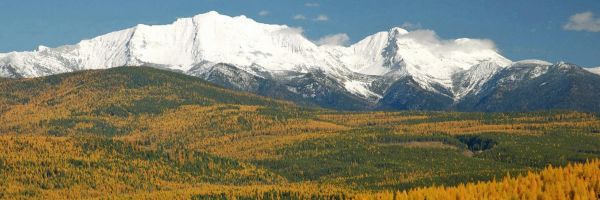
Today's Blackfeet reserve borders the eastern edge of Glacier and provides a most beautiful backdrop for the undulating hills that stretch eastward towards a north-south perimeter on the western edge of the town of Cut Bank. The Canadian line defines the northern tier of Blackfeet country, and its southern point extends just to the west of Dupuyer and the eastern ramparts of the Rocky Mountain Front. Much of the landscape is dissected by creeks and dotted with lakes.
Almost 10,500 tribal members reside on this 1,525,712-acre reservation a large portion portion of which, in this case nearly 40 percent, is owned by non-Indians. The reservation is home to 56 percent of the enrolled tribal members and is the largest Indian population in Montana.
North American Indian Days, the largest Indian celebration in Montana after Crow Fair, is the highlight of the year in Blackfeet country. It is an authentic, not-staged-for-tourists event that brings out tribal pride and traditions.
Browning is the center of the tribal government, economy and activities. The Blackfeet National Bank opened there in 1987 and has the distinction of being the first tribally owned and controlled, full-service bank in the United States. Soon to be renamed the Native American Bank, its healthy capital base will expand as other tribes become involved. Blackfeet Community College prepares tribal members in myriad fields to be future leaders, educators and businesspeople.
Overall, an attitude to preserve traditions, including their language and land base, is growing. And the Blackfeet Nation has been instrumental in the fight to keep Montana's Rocky Mountain Front free of development as “The Front” is an integral part of their sacred heritage.
Rick and Susie Graetz | Department of Geography | University of Montana