
Fall 2026
IRSH 382: Rockin' Rebels: Popular Irish Music from Traditional to Punk

Credits 3
Tuesdays / Thursdays 11:00 – 12:20
Prof. Erin Costello Wecker
This course explores the concept of “Irishness” through generative works of music by artists such as Seán Ó Riada, The Wolf Tones, The Pogues, Sinéad O’Connor, Rory Gallagher, Thin Lizzy, The Chieftains, The Dubliners, U2, The Cranberries, Méav Ní Mhaolchatha, Soulé, Enya, Dolores, and Gearóidín Bhreathnach (not an exhaustive list). To do this the class will begin with an examination of traditional Irish music as a cultural form. Next, we will move through genres and decades charting political and cultural shifts as represented in folk, rebel, rock, punk, and pop music. We will explore concerns of authenticity and hybridity in Irish popular music and apply theoretical ways of understanding the reproduction and marketing of “Irishness” in a global context.
Gen Ed Attributes: Writing Across Curriculum
LIT 246-L Genres, Themes, Approaches: The Irish Americans
3 Credits
Tuesdays / Thursdays 9:30 – 10:50
Prof. Erin Costello Wecker
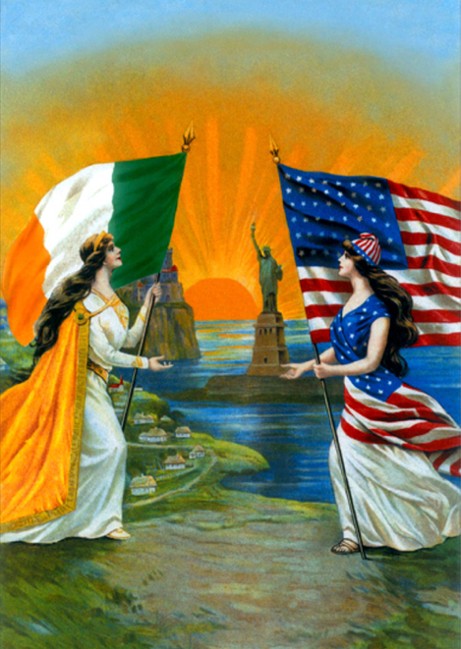
This course will examine the urban and rural landscapes of America where the Irish diaspora eventually settled. Our inquiry will begin on the east coast focusing on Boston, Massachusetts and New York, New York. Then we will begin a journey westward, making a stop in Chicago, Illinois before continuing to mining communities of Leadville, Colorado, Butte, America, and Anaconda, Montana. Lastly, our study of Irish America will conclude in San Francisco, California. Across all of these locales, we will explore multiple waves of Irish immigration, paying particular attention to the historic challenges these newcomers faced such as the “No Irish Need Apply” movement and popular texts such as Thistleton’s Jolly Giant, which oozed with Anti-Catholic and Anti-Irish sentiments. Through the prism of immigration, we will consider the various cultural traditions that the Irish brought with them to America such as music, food/recipes, knitting, lacework, politics, religion, humor, etc. which will demonstrate the indelible mark that the Irish and Irish Americans continue to make on American society.
Gen Ed Attributes: Lit & Artistic Studies (L); Writing Across Curriculum