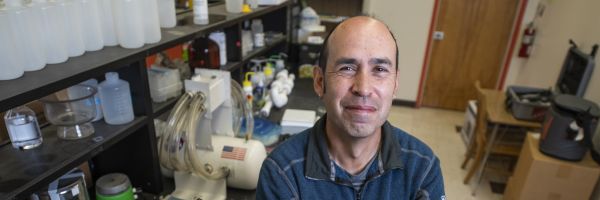
Native American Research Lab - Biological Sciences

Native Science, Native Needs


NARL Research


The Native American Research Laboratories are involved in four interdisciplinary research projects that incorporate techniques in molecular biology, microbiology, ecology, biochemistry, biophysics, and mathematical modeling of biological systems. These projects are supported by a several sources including the National Aeronautics and Space Administration (NASA EPSCoR program) and the National Science Foundation (NSF RIG and NSF EPSCoR programs). Student funding is/has been funded by the Howard Hughes Medical Insitute MILES program, the NSF Alliance for Minority Participation program, the Alfred P. Sloan Foundation, and the American Chemical Society.


Research Project #1: Characterizing Thermophiles from Hot Springs in Central and South America

Hyperthermophilic archaea and their viruses exhibit unique physiology and genomes. Several species of the genus Sulfolobus have been isolated from volcanic hot springs in North American, Asia, and Europe. In addition, several families of viruses that infect Sulfolobales have been identified. Although, it has been shown that the biodiversity of the Sulfolobus hosts exhibits biogeographical dispersion patterns, it is less clear that their viruses exhibit the same patterns. We are currently studying hot springs samples from Central and South America to identify new species of Sulfolobus and new strains of archaeal viruses that may provide further insights into the biodiversity of archaeal hyperthermophiles. Techniques in molecular biology, genetics, microbiology, and mathematical modeling of hot springs microbial community structures are being used to determine global distribution patterns of Sulfolobus and its viruses as well as to characterize hot springs community population structure and dynamics.

Research Project #2: Protein-Protein interactions and hyperthermophile protein complex stability.

Hyperthermophilic archaea and their viruses express unique proteins that are not found in other life forms. Some of these proteins have already been proven useful in biotechnological applications such as memory storage devices and alternative energy production systems. We are currently studying interactions between host proteins and viral proteins to better understand hyperthermophile virus life cycles and the function of host and virus proteins. At the forefront of these investigations is a study of the stability of heat shock protein complexes from the genus Sulfolobus. Techniques in molecular biology, biochemistry, and biophysics are used to study protein-protein interactions and protein complex stability.

Research Project #3: Enzyme structure/function relationships FIV RT

Relating enzyme function to specific structural characteristics is another focus of our research. Currently, we are using the reverse transcriptase (RT) from Feline Immunodeficiency Virus (FIV) as a model to study the how changes in amino acid composition impacts domain “flexibility” and how that, in turn, impacts protein function. The FIV-RT model is an excellent model to use since it is a simple heterodimer comprised of two subunits that are both derived from the same transcript with one subunit subject to a post-translational proteolytic cleavage. Several subtypes of FIV-RT have been expressed and purified in our laboratory. Using techniques in biochemistry and biophysics, we are able to study the changes in enzyme flexibility and function between different RT subtypes with subtle amino acid sequence variations. Since RT systems are well-studied, we are able to use published data along with our data to gain new insights about the role of flexible domains in enzyme efficiency.

Research Project #4: Psychrophile Microbiology and Biochemistry

A new research focus is under development in conjunction with collaborating institutions in Norway and Denmark to study psychrophile microbiology and biochemistry. The goal of this initiative is to integrate the lessons learned from studying hyperthermophiles and thermo-tolerant proteins with data emanating from the study of psychrophiles and cold-adapted proteins. Plans for this work include taking ice core samples from Greenland and Antarctica to identify unique psychrophilic microorganisms and their viruses. We will employ specialized culturing techniques to maintain psychrophilc species in a laboratory environment with the purpose of studying psychrophile physiology and cold-adapted enzymes.