
Data and Modeling Core

While urban population health research often benefits from dense data and abundant monitoring, rural communities present unique analytical challenges. Rural populations are more geographically dispersed, experience limited environmental monitoring, and often face distinct barriers to healthcare access. The CPHR Data and Modeling (DM) Core addresses these challenges head-on. By providing investigators with state-of-the-art data acquisition and management, advanced biostatistical modeling, and secure high-performance computing (HPC) infrastructure, we equip researchers with the tools they need to successfully conduct rigorous, impactful population health research in rural and frontier communities.
Recent highlights of our services are showcased below. To inquire further about how the DM Core can support your research, please complete the Data and Modeling Request Form at the bottom of this page.
Data Acquisition & Management
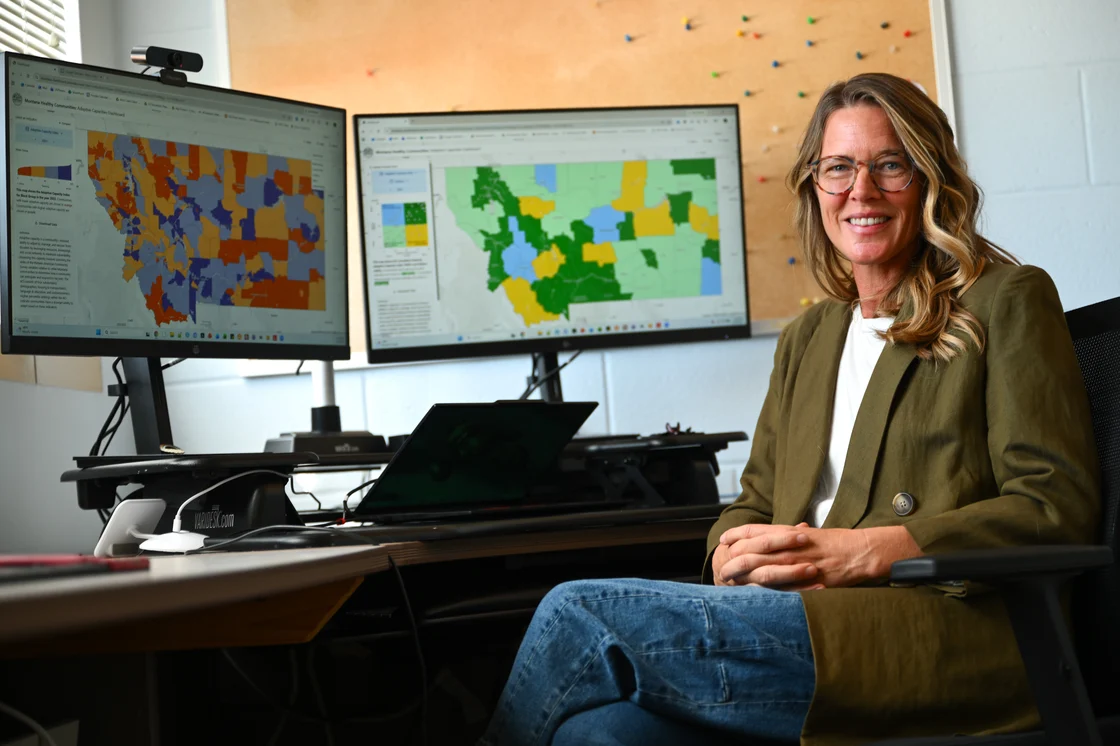
Mapping Rural Health Equity with the Montana Healthy Communities Dashboard
Public health data is only as useful as it is accessible. Historically, rural health metrics have been fragmented across dozens of different state and federal systems. To bridge this data gap, the DM Core developed and launched the Montana Healthy Communities Dashboard (MHCD). This interactive, public-facing platform harmonizes over 30 datasets, including vital statistics, BRFFS, environmental exposure metrics, and social determinants of health. By translating millions of complex data points into an intuitive, interactive map, the Core empowers local health departments, community partners, and researchers to instantly visualize the intersection of environmental stressors and rural health inequities across all 56 Montana counties.
Biostatistics & Modeling
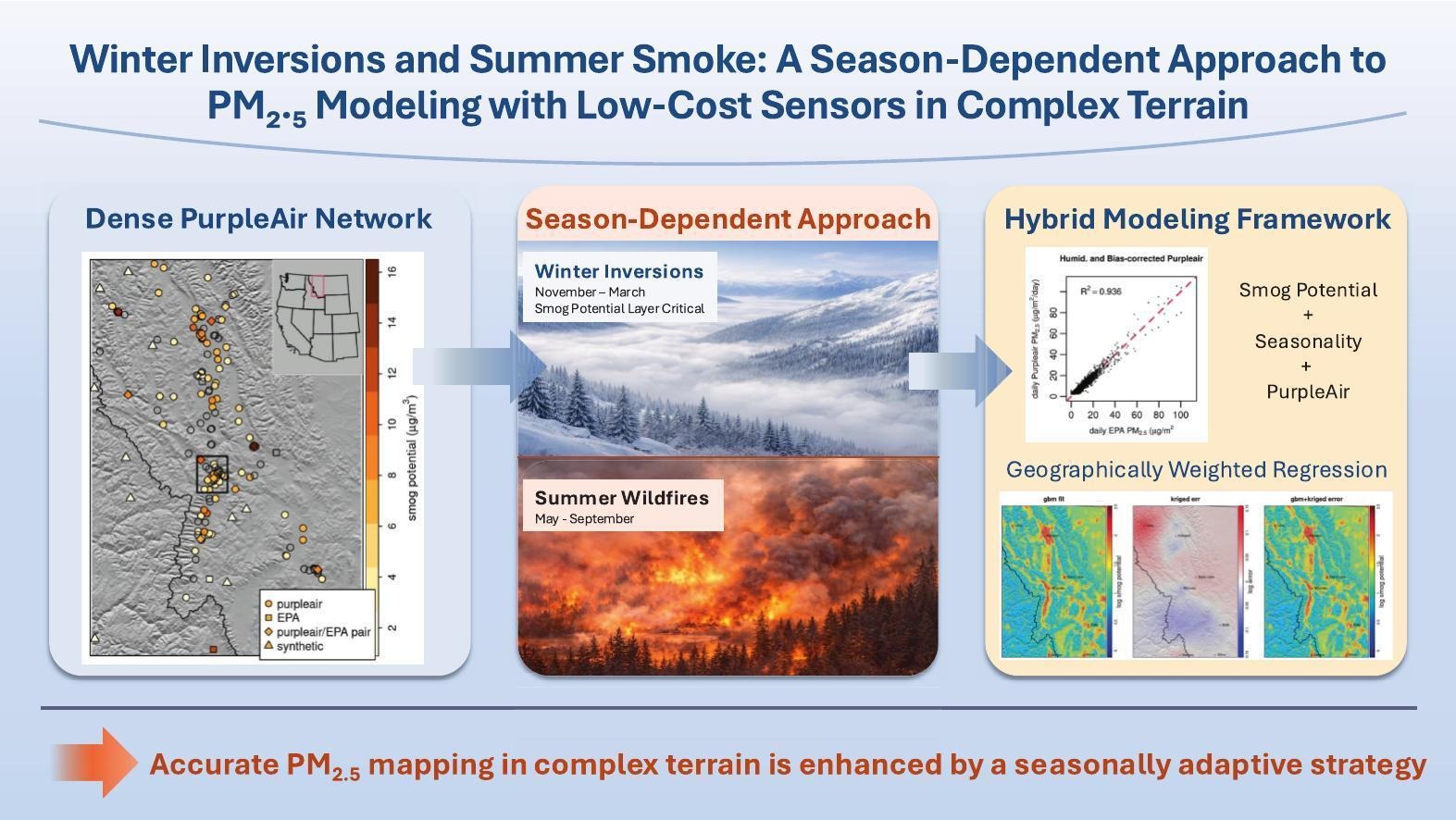
Breathing Easier: Precision Air Quality Modeling in Mountainous Terrain
Standard national air quality models frequently fail in Montana because they cannot account for our complex mountain terrain and distinct seasonal pollution sources. Accurate monitoring is incredibly difficult due to sparse regulatory monitors. To solve this, our biostatistical team developed a novel, seasonally-adaptive spatial modeling framework. By integrating data from a dense network of citizen-science "PurpleAir" sensors with advanced geographic weighted regression, the Core generated a daily, ultra-high-resolution (600-meter) map of PM₂.₅ exposures. This innovative model dynamically adjusts to capture both suffocating winter valley inversions and diffuse summer wildfire smoke, allowing CPHR researchers to precisely track how localized air quality impacts cardiovascular and respiratory health down to the neighborhood level. (Link to paper)
High-Performance Computing (HPC)
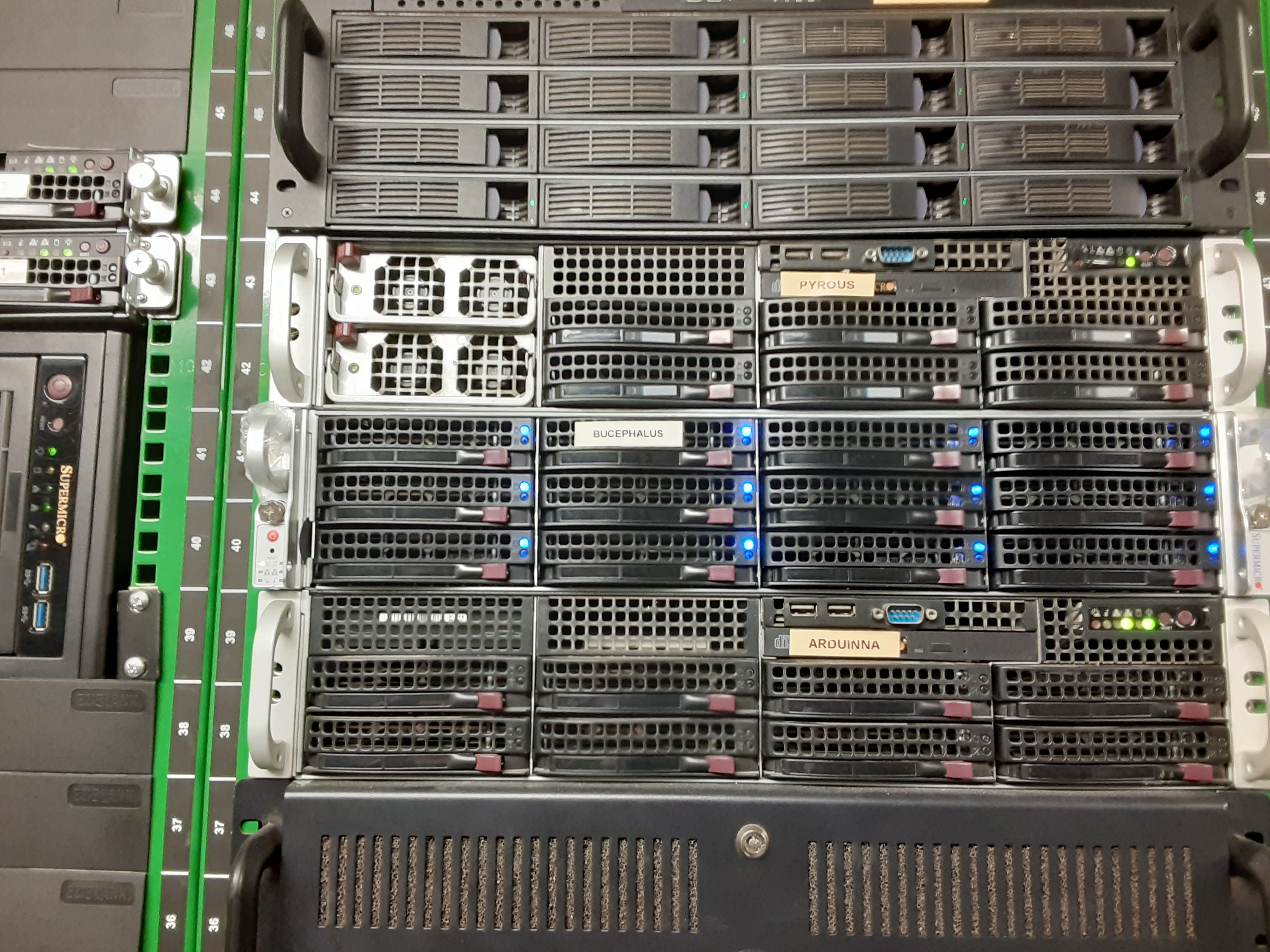
Securing and Powering "Big Data" for Rural Health
Modern population health research requires immense computational power and uncompromising data security. From analyzing tens of millions of state Medicaid claims to executing complex spatial scans on real-time environmental sensor data, our researchers need robust infrastructure. The DM Core recently upgraded to a state-of-the-art, custom 16-node (600-core) High-Performance Computing (HPC) cluster designed specifically for health researchers. We maintain strict security protocols and specialized multi-terabyte storage servers. Crucially, we utilize a custom Graphical User Interface (GUI), ensuring that our clinical investigators can safely and efficiently harness the power of supercomputing without needing an advanced degree in computer science.
Core User Fees
| Service | Rate per Hour |
|---|---|
| Statistical Support - Level 1 | $50.00 |
| Statistical Support - Level 2 | $60.00 |
| Statistical Support - Level 3 | $110.00 |
| Data Acquisition, Cleaning & Consultation - Level 1 | $50.00 |
| Data Acquisition, Cleaning & Consultation - Level 2 | $60.00 |
| Data Acquisition, Cleaning & Consultation - Level 3 | $70.00 |
| Data Processing HPC - Consultation & Training | $60.00 |
| Data Storage | $5/TB/month |
| HPC Usage** | $50.00/month |
* Service levels are based on education and experience. The service level(s) and estimated number of hours required for a specific project will be determined via an initial consultation with the DM Core. External user rates include the base rate plus 47% IDC.
Contact: Erin Landguth, Core Director
Phone: 406-243-5221
Email: erin.landguth@mso.umt.edu