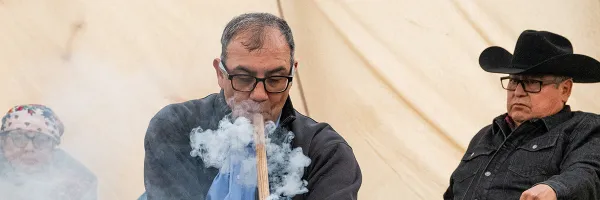
Mellon Project Research
University of Montana (UM) acknowledges the people whose research and scholarly works positively impact UM, adding substantial contributions to the Mellon project, "Centering Indigenous Epistemologies, connecting generations and sustaining Indigenous Scholarship."
-
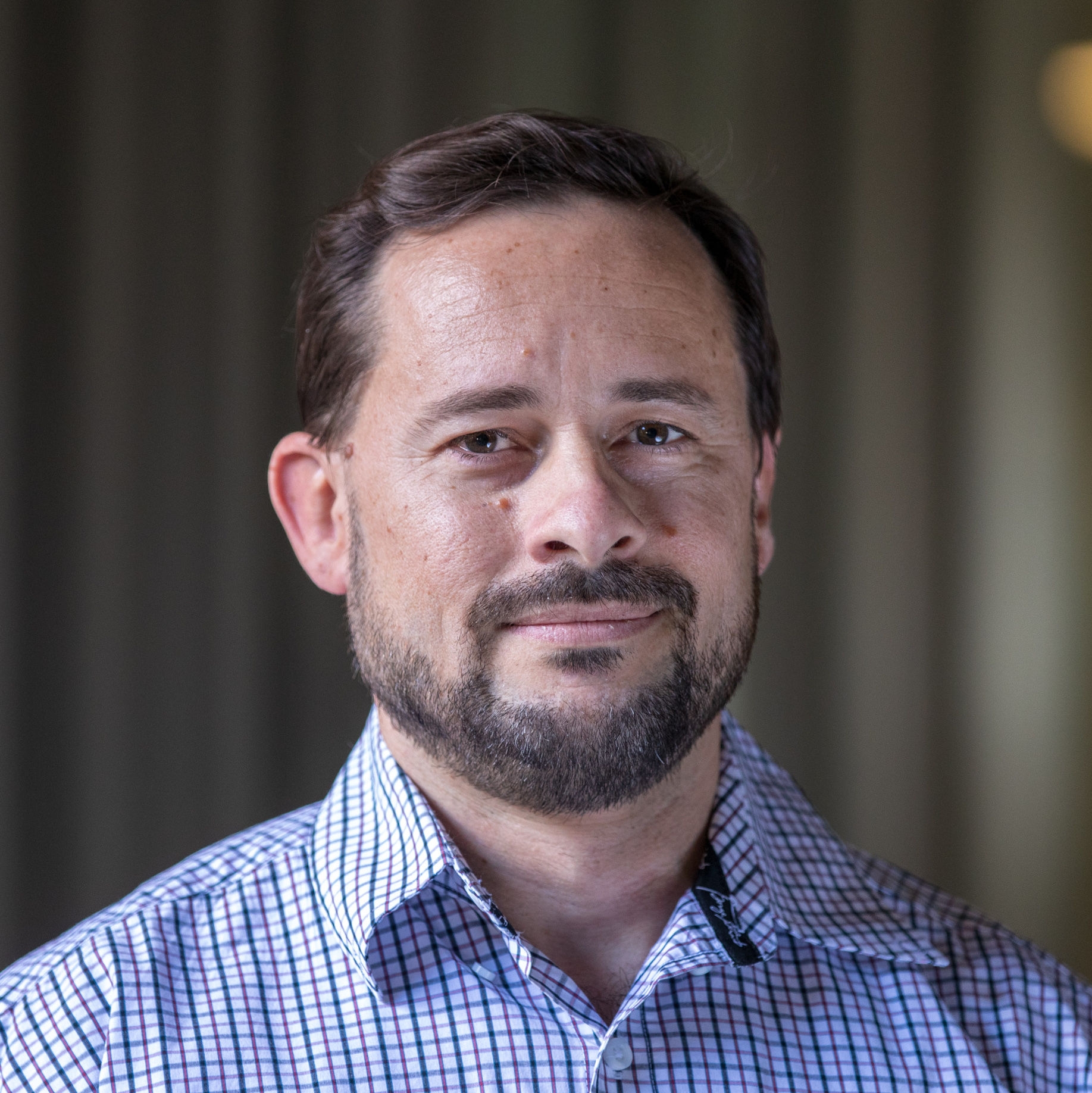
Dr. Sanchez - Mellon Project Principal Investigator
Dr. Fernando Sanchez, one of the Mellon project authors and Principal Investigator, is the Director of the Elouise Cobell Land and Culture Institute and an assistant professor in the departments of Native American Studies and Environmental Studies at the University of Montana. As a quantitative researcher with academic interests in both the STEM and the social sciences, his scientific approach is diverse but fundamentally founded on data science and geographical thinking, which he leverages to characterize environmental dynamics and their impacts on coupled human-nature systems, inform climate change adaptation, and communicate indigenous perspectives on conservation. -
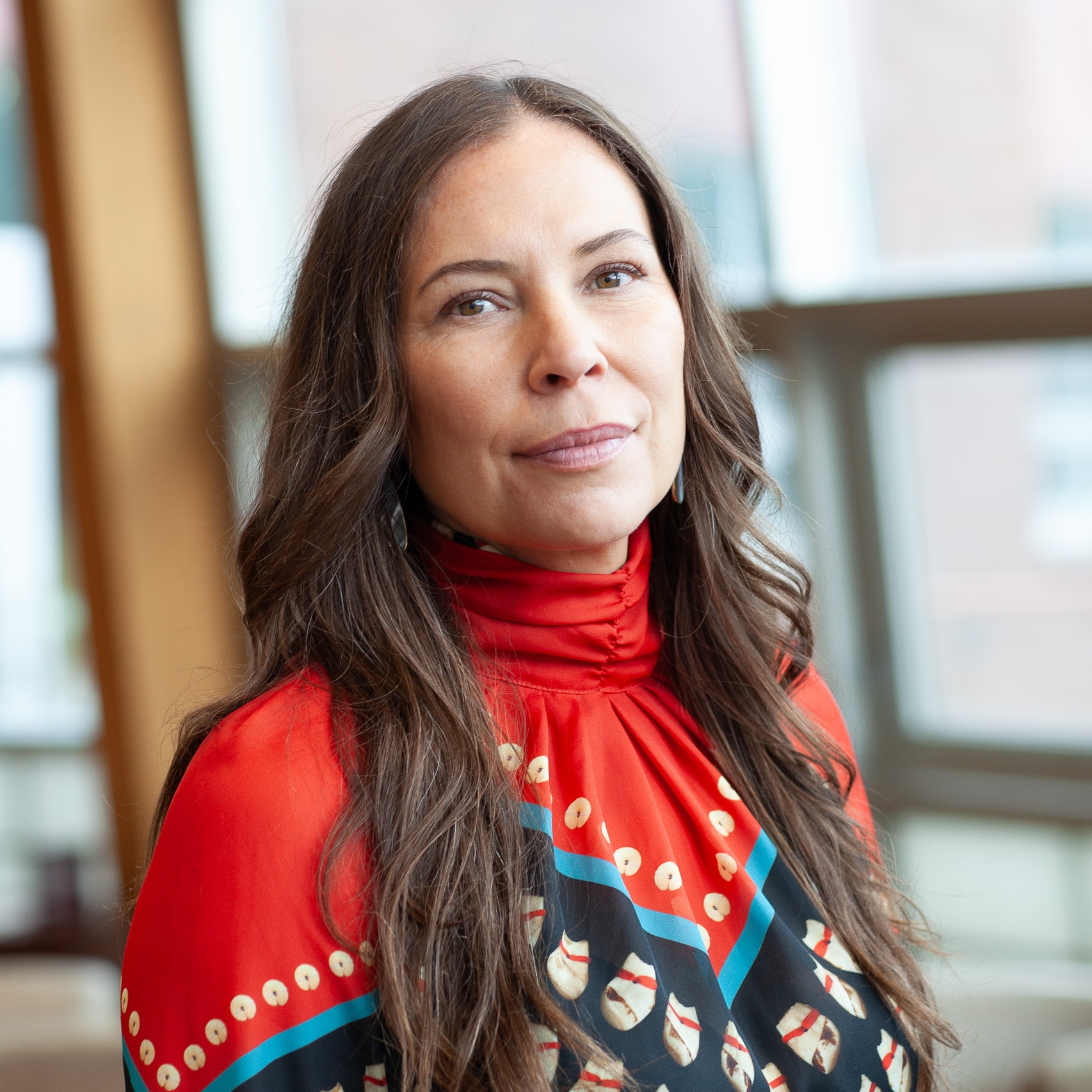
Dr. Cahoon - Mellon Project Author and co-Principal Investigator
Heather Cahoon, PhD, MFA, Chair of Native American Studies, is one of the Mellon project author's and co-Principal Investigators. Heather is an award-winning poet and scholar of federal Indian policy. She is the author of two poetry collections, Elk Thirst, and Horsefly Dress, which was published as part of the University of Arizona Press’s distinguished Sun Tracks American Indian literary series. Heather grew up on the Flathead Indian Reservation and is a member of the Confederated Salish and Kootenai Tribes with Upper Kalispel, Nez Perce, Spokane, Kootenai, Chippewa and western European lineages. In 2015, Heather was named UM’s first Elouise Cobell Land and Culture Institute Scholar, a title reserved for faculty who are continuing Elouise Cobell’s legacy of working for justice and equity for American Indians and tribal communities. -
Dr. Greymorning
Dr. Greymorning holds joint positions in Anthropology and Native American Studies. He is a political anthropologist who has conducted research among Indigenous peoples of Australia, Canada, Colombia S.A., New Zealand, E. Timor and the United States. Professor Greymorning's research interests include Native American language maintenance and restoration, Indigenous sovereignty issues and contemporary Native American issues. In addition to his faculty position at UM, Neyooxet serves as the Executive Director of Hinono'eitiit Ho’oowu' (Arapaho Language Lodge) in Wyoming, a position that has been instrumental in his development of a break-through method for second language instruction and acquisition called Accelerated Second Language Acquisition (ASLA). -
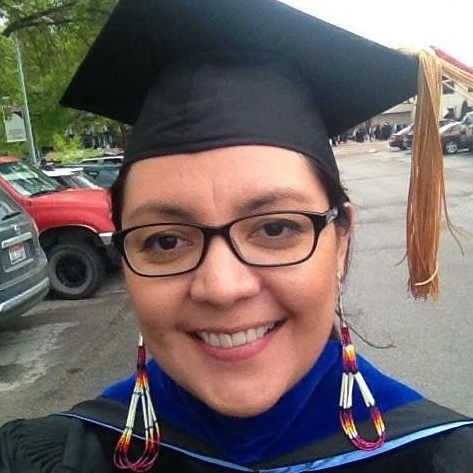
Dr. Annie Belcourt - Mellon Project Author and co-Principal Investigator
Dr. Belcourt (Aímmóniisiaki/Mdbogay-Otterwoman), one of the Mellon project authors and co-P.I. Annie is an American Indian Professor in the College of Health at the University of Montana’s School of Public and Community Health Sciences Departments. She is an enrolled tribal member of the Three Affiliated Tribes, Mandan, Hidatsa, Blackfeet, and of Chippewa descent. She has worked clinically with diverse populations, including combat veterans, Native Americans, and low-income populations specializing in posttraumatic stress reactions and multiple psychiatric conditions. Her research and clinical priorities include mental health disparities, posttraumatic stress reactions, risk, resiliency, psychiatric disorder, and environmental public health within the cultural context of American Indian communities.
Dr. Sanchez - Mellon Project Principal Investigator
Dr. Cahoon - Mellon Project Author and co-Principal Investigator
Dr. Greymorning
Dr. Annie Belcourt - Mellon Project Author and co-Principal Investigator
Dr. Belcourt (Aímmóniisiaki/Mdbogay-Otterwoman), one of the Mellon project authors and co-P.I. Annie is an American Indian Professor in the College of Health at the University of Montana’s School of Public and Community Health Sciences Departments. She is an enrolled tribal member of the Three Affiliated Tribes, Mandan, Hidatsa, Blackfeet, and of Chippewa descent. She has worked clinically with diverse populations, including combat veterans, Native Americans, and low-income populations specializing in posttraumatic stress reactions and multiple psychiatric conditions. Her research and clinical priorities include mental health disparities, posttraumatic stress reactions, risk, resiliency, psychiatric disorder, and environmental public health within the cultural context of American Indian communities.