Project FORAGER: Investigating Alternative Trajectories for Human Demographic Growth in Temperate Northern Holocene Societies
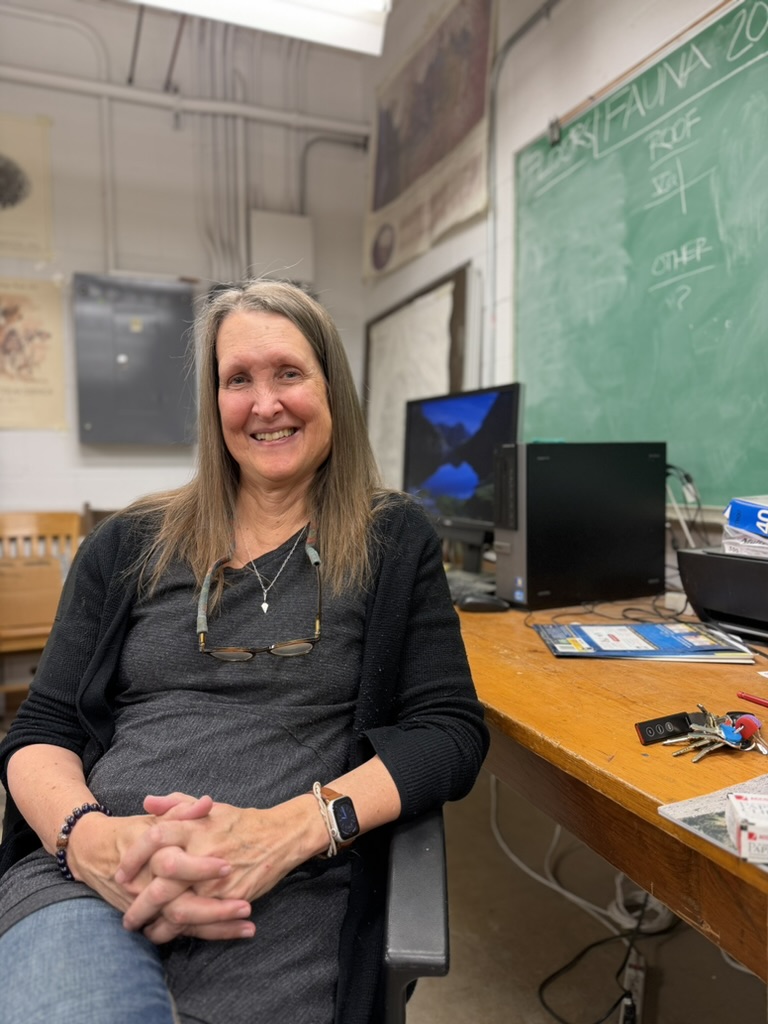
Dr. Anna Prentiss, Regents Professor of Anthropology at UM, is challenging the long-held belief that agriculture is “the main driver for social and cultural evolution.”
With funding from the European Research Council, the FORAGER project brings together 37 scientists worldwide to explore alternative paths of human demographic growth in temperate Holocene societies.
The goal of the project is to develop a unified approach to study a key phase in human history during the past 10,000 years, looking at hunter-gatherer-fisher societies and comparing cultures from Japan, Northern Europe, and North America to understand, as Prentiss says, “human experience outside agriculture.”
Dr. Prentiss began working toward this line of inquiry in 2002 through a collaborative research relationship with Xwísten, the Bridge River Indian Band in Canada. The partnership will continue with this project, and the Band will help shape every aspect of the research, from study design to working in the field.
The knowledge gained will directly benefit the Band, helping them maintain their heritage tourism project which educates the public on early ways of life and how that history is still present in the community today. Children in local schools visit and tour heritage sites to see how their lives connect to those of their distant ancestors. Knowledge gained from the FORAGER project will add to these educational opportunities.
Prentiss began this work in 2002 with small grants of as little as $4000 and she had to be creative to piece together funding to support her work. Eventually, she secured bigger dollar support from major agencies like the National Science Foundation and National Endowment for the Humanities, building toward the landmark ERC award.
The six-year ERC grant totals approximately $12.2 million dollars and will be divided amongst the four major participating institutions. The University of Montana will receive $3.2 million to support two post-doctoral fellowships, one for six years and one for five years, and two PhD students for four years. These students will have the opportunity to work with experts from York University and the University of Cambridge in the UK, and Lund University in Sweden. They will also participate in field activities, working in collaboration with heritage communities toward common research goals.
For Dr. Prentiss, persistence and creativity have been the keys to success. Early on, funding was scarce and modest. Still, she built partnerships with local communities and fostered international collaborations, with the goal of eventually securing a major award.
This groundbreaking research positions UM as a leader in understanding human history beyond agriculture and will shape global conversations for years to come.
Contact: Naomi DeMarinis, Associate Director of Research Development, Communications, naomi.demarinis@umontana.edu; Anna Prentiss, Regents Professor of Anthropology at UM, anna.prentiss@umontana.edu