UM Environmental Philosophy Professor Raises the Profile of Moral Values in Resource Management
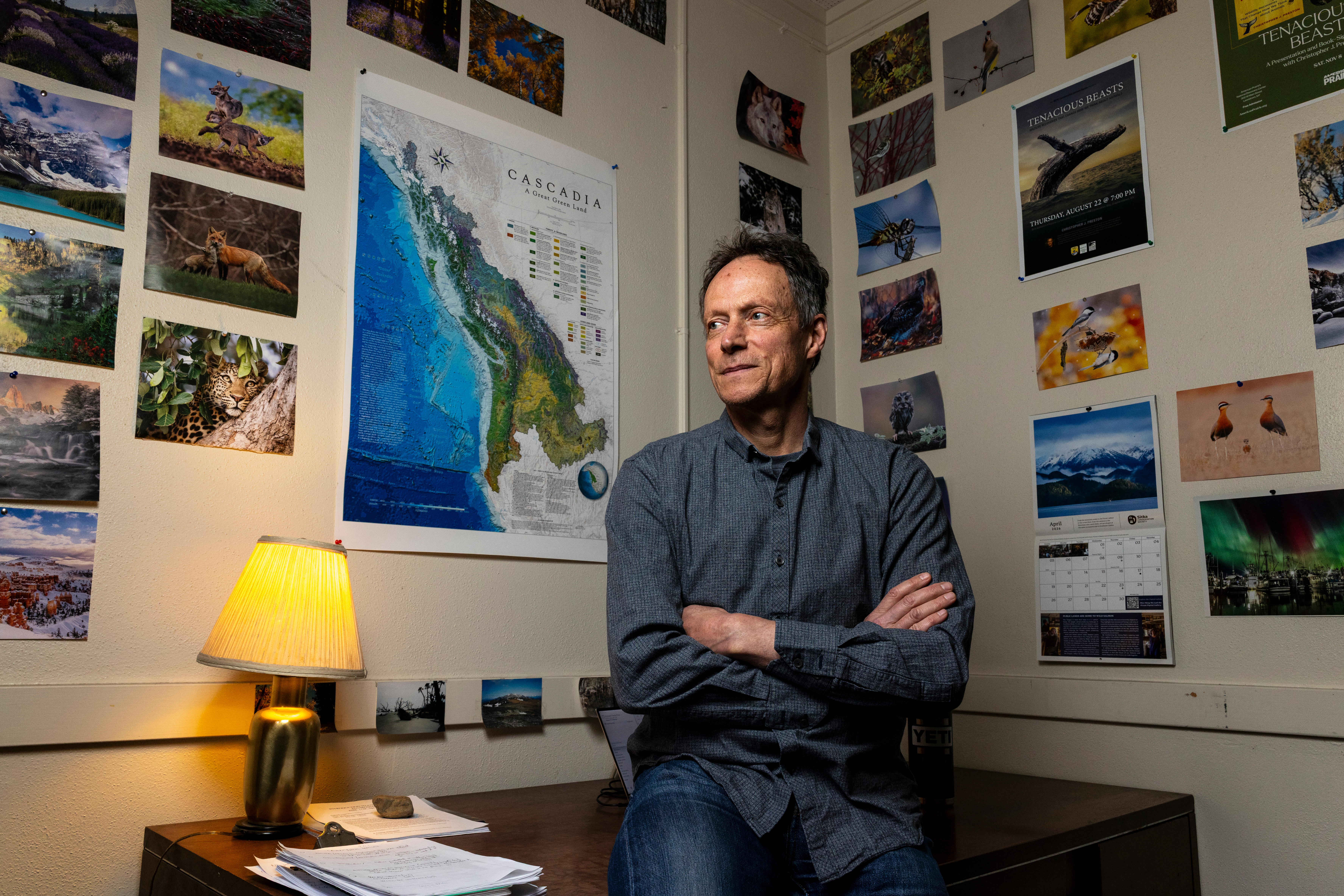
Glacier National Park and Yellowstone are changing fast. Melting glaciers, longer fire seasons, and warming waters make difficult management decisions about the future unavoidable. At the University of Montana, humanities perspectives help natural resource managers make important decisions as they steward public lands.
Decisions about how to manage park lands involve crucial ethical choices. For example, is it right to assist a bull trout by moving it to a cooler high-elevation stream? Or is it our job to let nature take its course? Should we replant a hillside with native trees after a devastating fire, or should we risk scrubby invasives taking over. The relevance of ethics to ecology is not obvious if people assume conservation decisions are entirely scientific. Scientists bring technical expertise to predict how management choices will pan out. But effective land management requires values-based decision making to choose what to protect. Ethics are foundational in conservation.

Christopher Preston, philosopher and UM professor of environmental philosophy, is deep into a collaboration with a National Park Service employee—a UM alum and graduate of the Franke College of Forestry and Conservation—on a U.S. Geological Survey grant. “UM has world-beating researchers in conservation and related sciences,” says Preston, who calls himself an applied ethicist. “We also have leading researchers on the social side of natural resource challenges that study what those who use Montana landscapes care about, whether that be hunting experiences, their cultural histories, or simply places to spend time with their children and grandchildren.”
The aim of his project is to raise the profile of values in resource management. Science is never applied in a moral vacuum. Managers must choose policies that reflect public and statutory expectations of what matters on the landscape, such as its wildness or the habitat it provides for animals. If values are explicit, they can be openly discussed and debated, helping make policy more transparent for an interested public and more durable. Preston’s work will help conservation scientists and managers in the parks recognize the value choices that go into a management plan.
Preston's work has become increasingly public-facing in recent years. He has been a subject matter expert on the ethical aspects of wildlife, conservation, and climate change for the BBC, PBS, CNN, the Associated Press, the Washington Post, and numerous other outlets. His latest book, Tenacious Beasts, won the High Plains International Book Award for non-fiction. His work is part of a tradition at UM that brings social sciences and environmental humanities into conversation with the natural sciences.
Contact: Naomi DeMarinis, Associate Director of Research Development, Communications, naomi.demarinis@umontana.edu; Christopher Preston, UM Professor of Environmental Philosophy, christopher.preston@umontana.edu