UM Doctoral Student’s Research on Cellular Interactions Could Guide the Next Generation of Immunotherapies
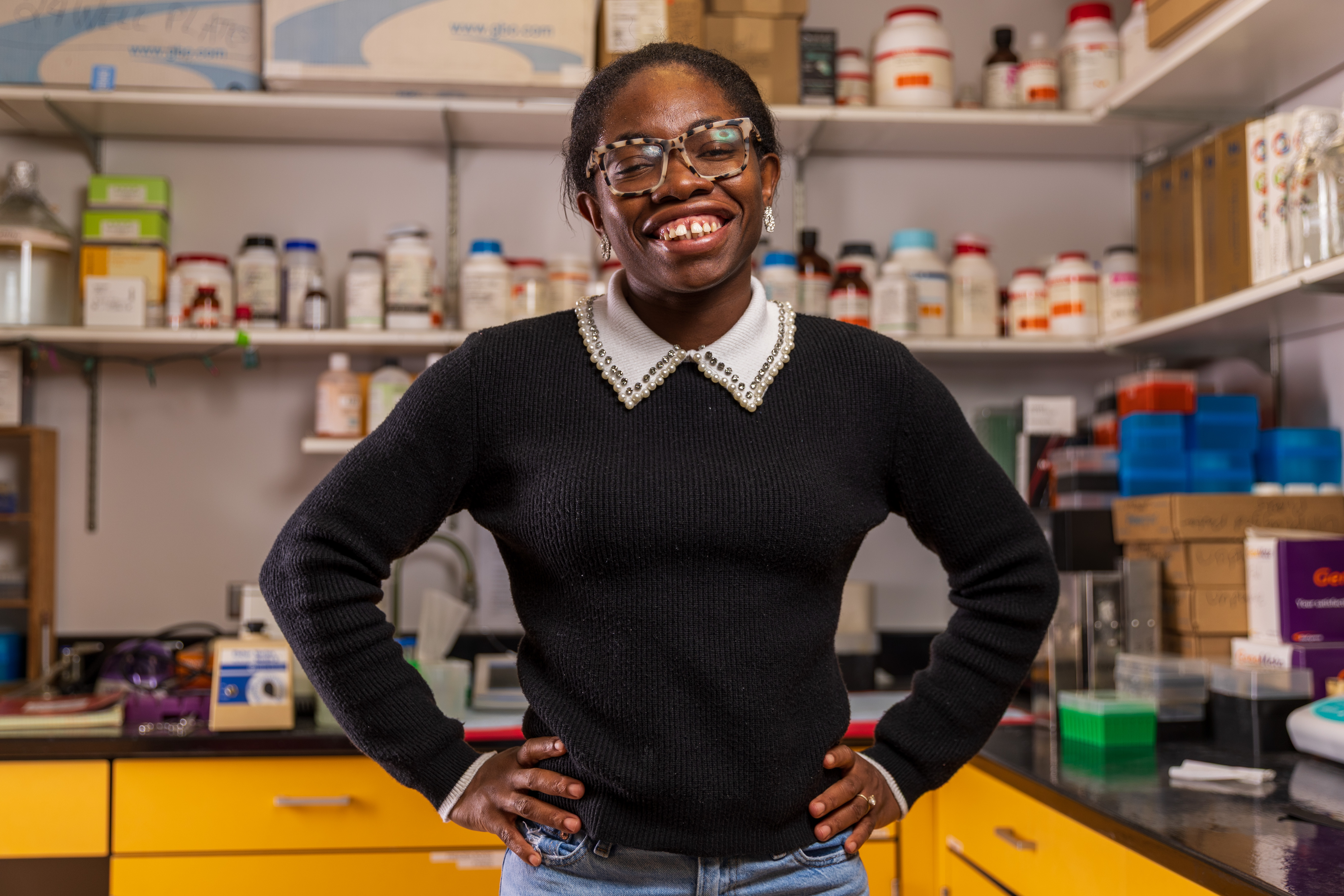
Deborah Agbakwuru, PhD candidate in the Department of Biomedical and Pharmaceutical Sciences, is studying cells and processes between cells. By examining cell interactions and the strength behind them, she can better understand how immune signaling is regulated during inflammation and disease. This can ultimately lead to explanations as to why some immune responses are effective while others become too weak or overly aggressive (as seen in autoimmunity). Long term, this knowledge can guide the design of better immunotherapies, such as improving cancer treatments, or developing strategies to reduce harmful inflammation by limiting excessive immune signaling.
Through her education, Deborah has developed expertise in techniques that allow her to distinguish subtle differences between cell types, track how cells change during infection or disease, and identify rare but important populations that might otherwise be missed. Now she can gain a better understanding of how the immune system functions and detect disease-related changes earlier, which aids the development of more targeted treatments, including precision immunotherapies tailored to specific immune responses. “That could mean identifying the specific signaling pathways or molecular interactions driving a disease and targeting those directly, reducing side effects and improving outcomes. For patients, this has the potential to translate into earlier diagnoses, more effective therapies, and treatments designed around their individual immune response rather than a one-size-fits-all approach,” Deborah explains.
At a young age, Deborah developed an early interest in health and disease. Eventually she earned her Bachelor of Pharmacy from the University of Ibadan, Nigeria, and went on to work as a pharmacist. Deborah became increasingly curious about the scientific mechanisms underlying the conditions she encountered in patients, which eventually led her toward research and, in 2021, to the University of Montana, where she began her course of study.
Deborah had to adapt to a new country and academic system, while also conducting complex laboratory research. She says this proved to be a bit challenging at the beginning of her program, but those experiences have helped shape her development as a scientist.
“Navigating differences in teaching styles and communication norms requires resilience, independence, and a willingness to learn quickly. Over time, these experiences helped me build confidence, sharpen my problem-solving skills, and become more adaptable in unfamiliar environments.” Looking ahead, Deborah plans to continue advancing her research at the intersection of immunology and applied science while pursuing opportunities that translate her findings into real-world impact.
Contact: Naomi DeMarinis, Associate Director of Research Development, Communications, naomi.demarinis@umontana.edu; Deborah Agbakwuru, PhD candidate, deborah.agbakwuru@umconnect.umt.edu