Humanities for a Rapidly Changing World
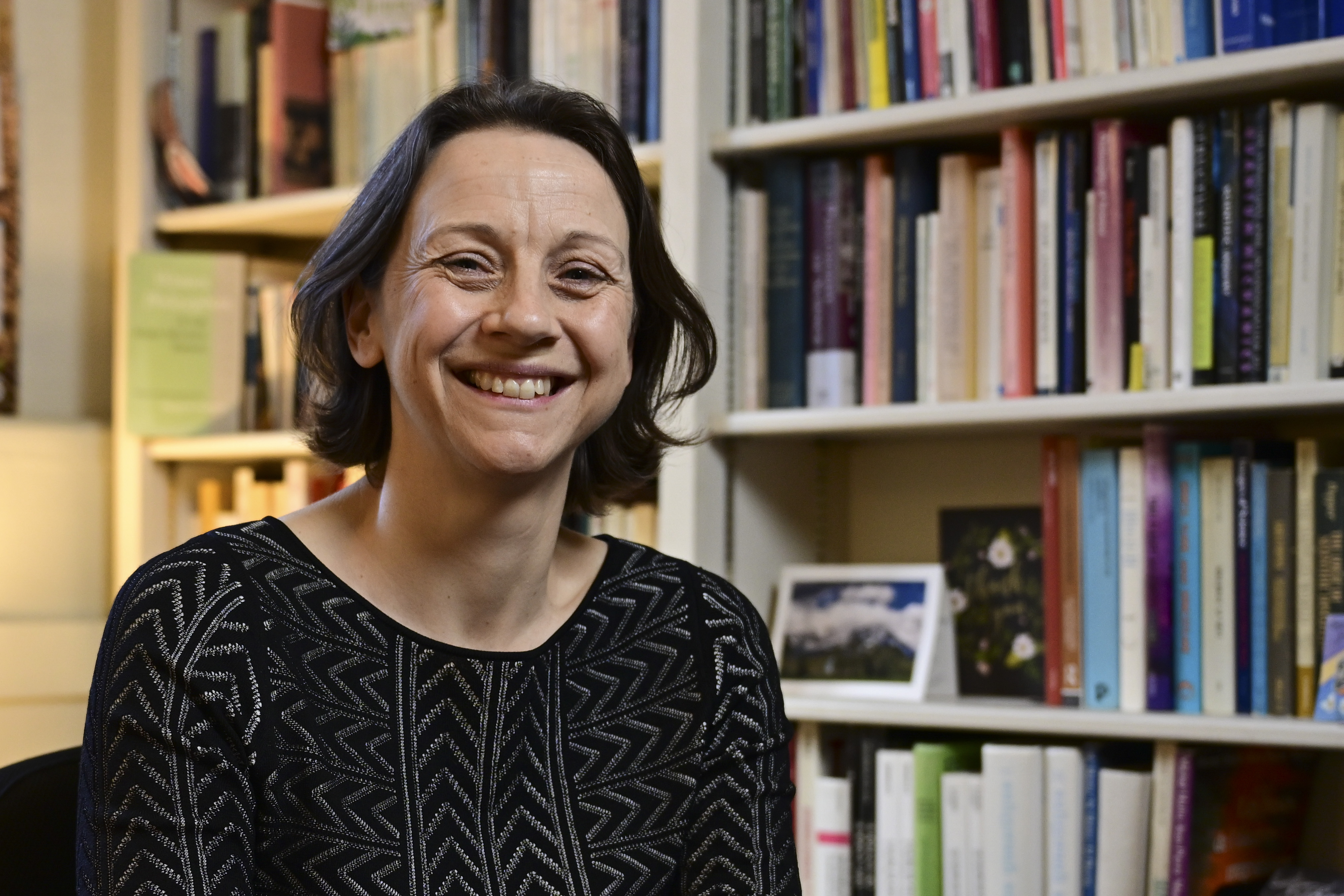
Soazig Le Bihan is a philosopher by training and a humanist by passion. Originally set to become an engineer, she switched to studying the humanities when she decided to teach. She ultimately set her eyes on the philosophy of science, the best of both worlds. If science were a piano, scientists would be expert players, and philosophers of science would be the ones who open the instrument to understand how striking a key makes a sound. She sees science as one of the most fascinating human endeavors, so much so that she made its inner workings the subject of her research. She is currently working on a book on scientific understanding with Prof. Armond Duwell, also in the UM philosophy department. They hope to shed some new light on how, despite its many shortcomings, science is an enduring and powerful tool for navigating the world.
She views the humanities as fundamental to both healthy democratic systems and flourishing personal lives. Leading a life of meaning and purpose requires understanding oneself as rooted in the past, shaped by core values, and capable of creative moral imagination. It imposes an imperative of epistemic responsibility and civic engagement, examining one’s beliefs as a citizen and engaging thoughtfully with perspectives different from one’s own. As the world undergoes a new technological revolution with the rise of AI, research in the humanities will be vital to rethinking relationships with one another, with the environment and non-human animals, with thinking machines, with government systems, and more. The humanities are more important now than ever, and cultivating the next generation of humanist thinkers is at the heart of that work.
Students recognize the paradoxical moment in which they live. The rise of the machine calls for a revitalization of expertise in the human experience. Whether it consists of soft skills, creative imagination, empathy, or critical inquiry, a “humanities edge” is no longer a luxury but a necessity for human agency in an automated world. At UM, students studying the humanities benefit from transformative mentorship, engage in deep research, and contribute to the humanities’ great endeavor: making sense of lived experiences with nuance, sensitivity to context, and an embrace of complexity.
This past year, Soazig has assumed the role of Interim Director of the Humanities Institute as part of her duties as Interim Associate Dean for the College of the Humanities and Social Sciences. She hopes to revive the vibrant community around the Institute and the humanities at UM and beyond. Soazig believes in the Humanities Institute's power to foster research, engagement, and dialogue on the most relevant and timely issues related to the human—all-too-human—condition, through which people are willing to look at human life with clarity and intellectual honesty. One of the Institute’s goals for this year is to host and support events on campus and in the Missoula community that do just that. The Institute also supports faculty and student research in the humanities through grants and scholarships. Soazig is thrilled to promote the important work of humanists at UM, in the Missoula community, throughout Montana, and beyond in the coming months.
Contact: Naomi DeMarinis, Associate Director of Research Development, Communications, naomi.demarinis@umontana.edu; Soazig Le Bihan, soazig.lebihan@mso.umt.edu