Transportation Tidbits
- Trip chain more often. It's easy! Chances are, you're already doing it- combining your errands into one trip. It helps you get things done and it helps reduce traffic congestion and air pollution. When you first start a car after it has been sitting for more than an hour, it pollutes up to five times more than when the engine's warm.
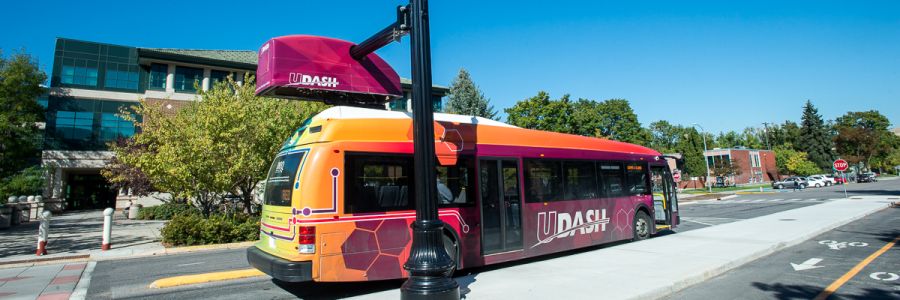
- Take mass transit, share a ride or carpool. Even if you do it just once or twice a week, you'll reduce traffic congestion and pollution, and save money. The average driver spends about 44 cents per mile including ownership and maintenance.
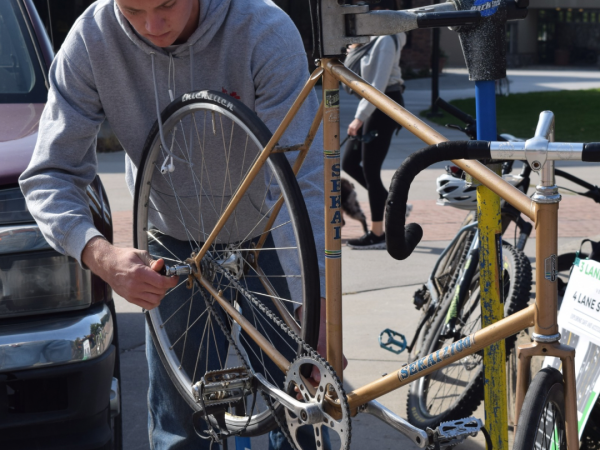
- Have fun! Ride your bike. It's a great way to travel and it can help you and the air get into condition. Vehicles on the road create more than 25% of all air pollution nationwide.
- Take things in stride. Walk or in-line skate instead of driving. They're easy ways to get exercise and they're easy on the air.
- Care for your car. Regular maintenance and tune-ups, changing the oil and checking tire inflation can improve gas mileage, extend your car's life and increase its resale value. It can also reduce traffic congestion due to preventable breakdowns and it could reduce your car's emissions by more thean half.
- Get fuel when it 's cool. Refueling during cooler periods of the day or in the evening can prevent gas fumes from heating up and creating ozone. And that can help reduce ozone alert days.
- Don't top off the tank. It releases gas fumes into the air and cancels the benefits of the pump's anti-pollution devices. So stopping short of a full tank is safer and reduces pollution.
- America's poorest families spend 40% of income on transportation
- Between 1970 and 1999, the U.S. population grew by 33%. During the period, however, the U.S. Department of Transportation found that vehicle miles grew disproportionately by 143%.
- According to the U.S. Environmental Protection Agency, although air quality has greatly improved, vehicles on the road account for at least 29% of air pollution emissions nationwide (29% of volatile organic compounds, 34% of nitrogen oxides, and 51% of the carbon monoxide).
- In 1999, the Texas Transportation Institute reported that congestion costs U.S. travelers 4.5 billion hours of delay, 6.8 billion gallons of wasted fuel and $78 billion in wasted time and fuel.
- 100 bicycles can be produced for the same energy and resources it takes to build one medium-size automobile.
- The earth takes between 5 and 10 million years to make one gallon of gasoline. The average automobile uses one gallon of gasoline in about 22 minutes.
- Burning one gallon of gasoline yields 22 pounds of carbon dioxide, the major greenhouse gas.
- Every car annually emits its own weight in carbon dioxide.
- 65% of Missoula's winter and spring air particulate problem is attributable to cars.
- Adding a 30-minute commute three days a week to the routine of a 180-pound person can result in a weight loss of about 1 pound a week or 4 pounds in a month, as long as caloric intake is not increseased.
- Bicycles could accomadate roughly 10 times as many people per hour as private cars in the same road space.
- Estimated cost of fuel consumed in 1999 by U.S. drivers caught in traffic delays: $8,600,000,000.
- The average American spent 434 hours - 18 days - in his car in 1999.
- In order to avoid morning traffic jams, 15% of the nation’s morning commuters leave for work between 5 and 6 a.m., the largest percentage ever.
- Traffic now exceeds road capacity in more than half of the nation’s 50 largest urban areas.
- One lane of interstate can accommodate 2,500 cars per hour, while one lane of rail can accommodate 40,000 passengers per hour.
- Riding the bus is 47 times safer than car travel.
- The number of vehicles is increasing at 6 times the rate of population growth.
- The average household spends nearly 19 % of its income on transportation, which is second only to housing.
- Twelve bicycles can be parked in the space required for one car.
- Students can save up to 25% of the cost of their education by not owning a car while attending the university.
- We spend more on driving than on education, health or food. An average of $3,000 per year for one automobile.
- One full bus equals a line of moving automobiles stretching 6 blocks!
- The average adult in the US drives almost 40 miles a day and spends an hour in the car.
- Missoulians drive more than 1.5 million miles every day.
- According to the U.S. Environmental Protection Agency, six of the seven chief air pollutants come from automobiles.
- An average of 1.5 million acres of farmland is lost to sprawl each year, encouraged by road building and car travel.
- Roads and parking lots generate poison runoff which degrades bodies of water important to humans and other species.
An average passenger car emits in one year the following:
- 80 pounds of hydrocarbons
- 606 pounds of carbon monoxide
- 41 pounds of nitrogen oxides
- 10,000 pounds of carbon dioxide
- Consumes 550 gallons of gas
The typical sport utility vehicle emits in one year the following:
- 114 pounds of hydrocarbons
- 894 pounds of carbon monoxide
- 59 pounds of nitrogen oxides
- 16,800 pounds of carbon dioxide
- Consumes 915 gallons of gas
The Wages of Inactivity:
"It's no wonder that the consequences of America's sprawling communities are most evident in children. Obesity is on the rise in kids, with 15% of children aged 6 to 19 no considered overweight, double the childhood rate 25 years ago. For teens, the rate has tripled.
Adult-onset diabetes, which is related to obesity and physical inactivity, is showing up with increasing frequency in young children -- so much so that doctors now call it "Type 2" diabetes instead. A new study predicts that one out of every three children born in 2000 will become diabetic unless Americans begin to eat less and exercise more. That's up from the current level of less than one in ten, which was already considered an epidemic.
Dr. Julie Gerberding, the director of the Atlanta-based federal Centers for Disease Control and Prevention, says obesity and physical inactivity may soon overtake tobacco as the number-one health threat in the nation. Physical inactivity already contributes to the premature deaths of an estimated 200,000 Americans each year, or roughly 10 percent of all deaths annually in the United States.
What a shame. The latest research shows that even the modest physical activity involved in walking to the store or biking to the park can significantly improve fitness levels, which contributes to a healthier and longer life. And that's why public health officials bet that by encouraging American communites to be bikeable and walkable, as they once were, they can improve the health of the population."
Think drivers pay the cost of roads? It's a myth.
In Minnesota, drivers -- through gasoline taxes, car registration fees and sales taxes on vehicles -- actually pay only 62 percent of the costs of roads. General taxpayers "subsidize" the rest, no matter how much or little they drive.
Fact: America's poorest families spend 40 percent of income on transportation.