Accessible Navigation. Go to: Navigation Main Content Footer

Greening UM

The University of Montana


KLESS REVOLVING ENERGY LOAN FUND OVERVIEW

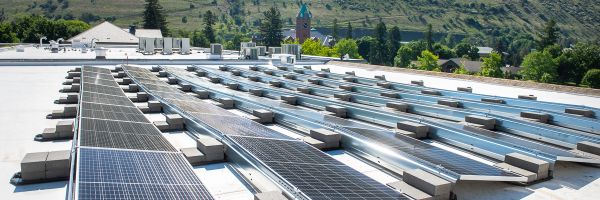
Overview: Students at the University of Montana have created the Kless Revolving Energy Loan Fund (KRELF) which allows students to propose projects that save energy on campus using money generated through a $4 per semester optional student Sustainability Fee.  Projects funded by KRELF must demonstrate quantifiable savings and a return on investment.  Future energy costs saving must be used to repay KRELF, thereby allowing the fund to be self-sustaining over time.  Funded projects will reduce annual operating expenses, decrease greenhouse gas emissions, and lower energy costs.  
Eligibility:  All projects must originate from the student body or have the backing of a student or class to be considered for funding.  Should there be times when no feasible student proposals exist or do not reserve all available funding, then proposals from faculty, administrators, Facilities Services or other University entities will receive consideration.  Projects must involve auxiliary buildings. These include:

  • University Center (UC)*
  • On-Campus Housing (Residence Halls, University Villages, Lewis & Clark Village)
  • UM FLAT (Forum for Living with Appropriate Technology)
  • Fitness and Recreation Center*
  • Adams Center*
  • Grizzly Pool*
  • Lommasson Center*
  • Curry Health Center*
  • Todd Building (Continuing Education)*
  • Lubrecht Experimental Forest

* Buildings where energy audits have been performed

Loan Uses: Loans and awards from the fund may be used for projects that support energy conservation and efficiency.  Project proposals must demonstrate student participation and can involve researching project ideas, loan payback, implementation costs, and environmental benefits.  New construction and major remodeling projects are not eligible for loans at this time.

Loan Payback: Loan repayment schedules will be determined on a case-by-case basis between the KRELF Committee and the entity receiving funds. No payback longer than six years will be allowed.  

Project Categories: Project must fit into one of the following categories:

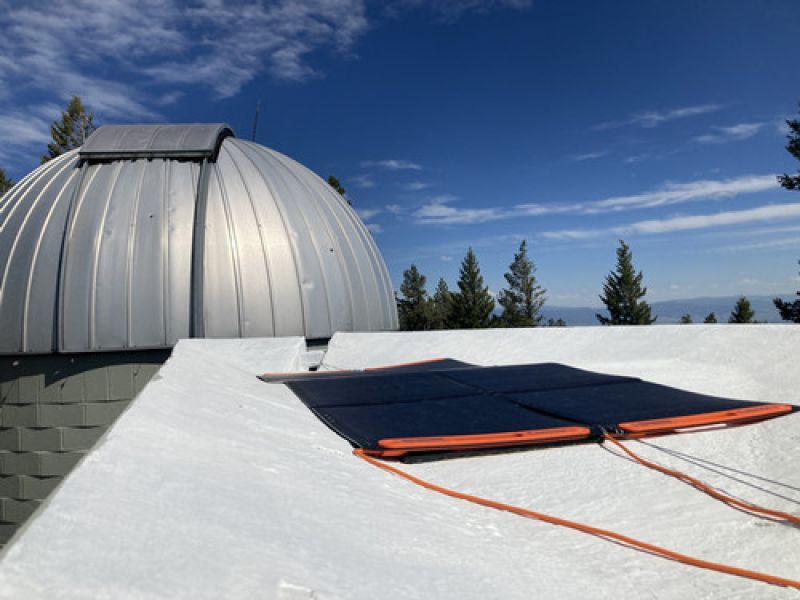
1. Quantifiable Energy Savings through reduction of purchased electricity or natural gas or generation of renewable energy.

2. Quantifiable Resource Conservation through projects that result in lowered consumption of fuel, water, paper, purchased materials, other utilities, etc.

3. Plausible Energy Savings and/or Resource Conservation benefits through projects that aim to promote a specific behavior or use education, information or communications to positively impact campus sustainability.

Projects belonging to one of the latter two categories need not have quantifiable savings.  However, the KRELF Committee will use a total of no more than 25% of the annual funds allocated by the KRELF for these types of projects.

Timeline: Project proposals will be accepted semi-annually once a semester. The deadline for applications for Spring 2012 is April 20, 2012.

Loan and Award Amounts:  There is no minimum amount for funding projects. For the academic year 2011-12, the KRELF Committee approved up to $120,000 to be used for a variety of student projects.

Duration of Projects: Projects approved in the Fall 2011 semester must be completed by October 15, 2012.  Projects approved in the Spring 2012 semester must be completed by March 15, 2013.  Unused funds will not be available for use after that date.

Selection Criteria

Proposal selection by the KRELF Committee will be based on various criteria, including but not limited to the following:

  • Completeness and quality of the application
  • Demonstrated student involvement in proposal development and project implementation
  • Documentation of energy savings and/or conservation of resources
  • Documentation of environmental benefits and impacts;
  • Documentation of cost effectiveness and duration of loan pay-back period (projects with shorter payback periods or greater reductions for lower costs will receive higher ratings)
  • Creativity and innovation
  • Ability to improve energy efficiency or resource conservation awareness on campus
  • Ability of project to be successfully completed in one year

The Office of Sustainability
UM Facilities Services PP 110
32 Campus Dr MS 9288
Missoula MT, 59812