Dr. Chad Bishop
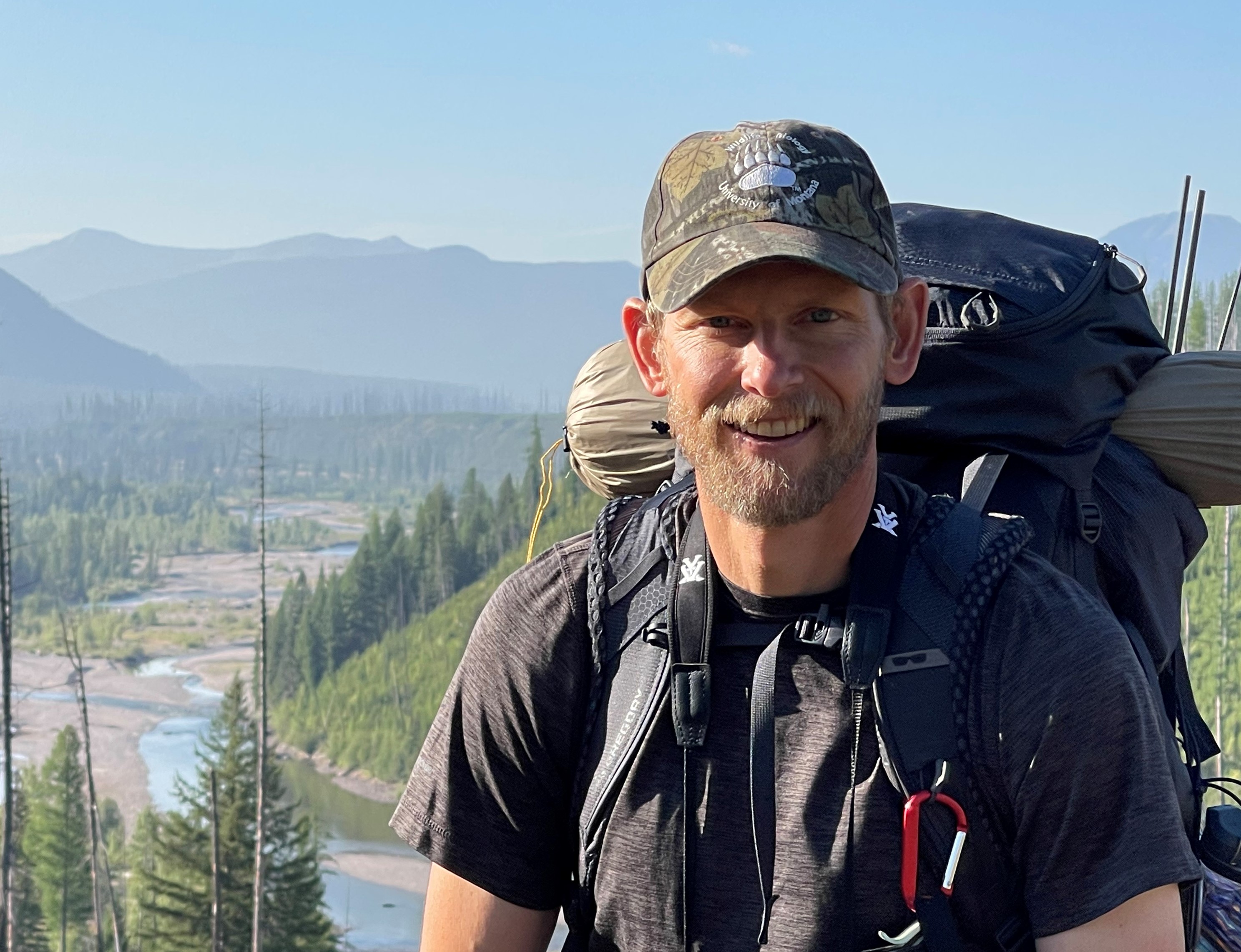 Dr. Chad Bishop is Director of the Wildlife Biology Program and Professor in the Department of Ecosystem and Conservation Sciences at University of Montana. Prior to UM, Chad spent nearly 16 years working for Colorado Parks and Wildlife as an ungulate researcher, Mammals Research Leader, and later as the Assistant Director of Wildlife and Natural Resources. He earned degrees in wildlife biology at Colorado State University (PhD, 2007), University of Idaho (MS, 1998), and Montana State University (BS, 1995). Chad's research interests have long focused on ungulate population and habitat ecology. He is especially interested in advancing understanding of mechanisms that drive population change, with an emphasis in nutrition. Chad places a high priority on conducting applied research that has relevance for biologists as they implement management and conservation strategies. He also has made several advances in field-based and analytical techniques used in wildlife research. In working with graduate students, Chad draws upon his agency experience and training in adaptive leadership to help position graduate students for impactful careers in the increasingly dynamic field of wildlife conservation. In more recent years, Chad has put forth a concerted effort to make connections with tribal wildlife programs and support graduate education opportunities for indigenous students.
Sattie Fisher
Sattie Fisher resides in the Mission Valley, MT, and is a member of the Yakama Nation in Washington. Sattie is completing her Master of Science degree in Wildlife Biology. Her thesis research is focused on the impacts of wild horses on elk and deer on the Yakama Indian Reservation.
Xavier Lovato
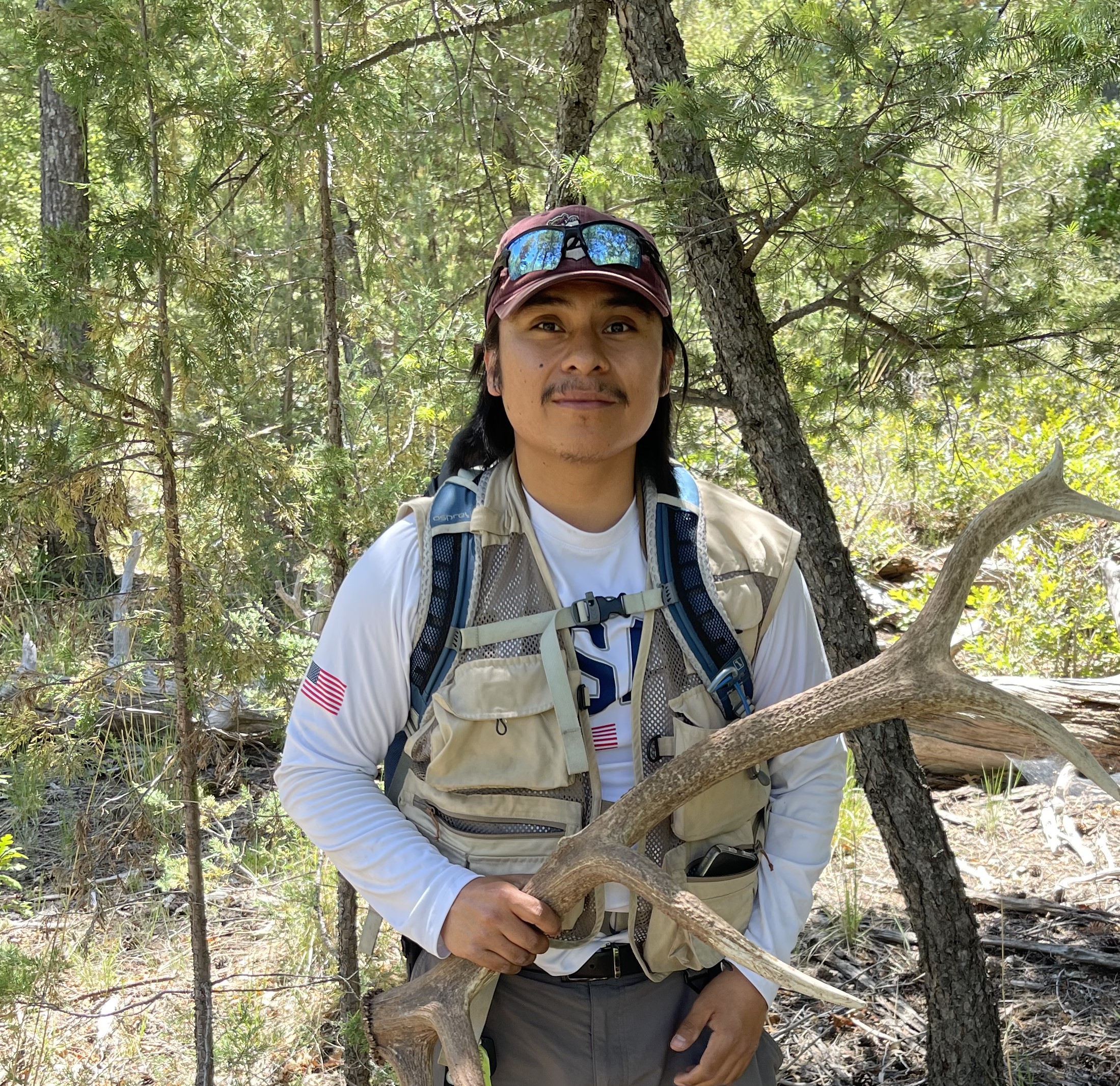 Xavier Lovato is a member of the Santo Domingo and Cochiti Tribes in New Mexico. Xavier is completing a Master of Science degree in Wildlife Biology. Xavier's thesis research is focused on population and habitat monitoring of Mexican and northern spotted owls on the Mescalero Apache (NM) and Yakama Indian (WA) Reservations.
Landon Magee
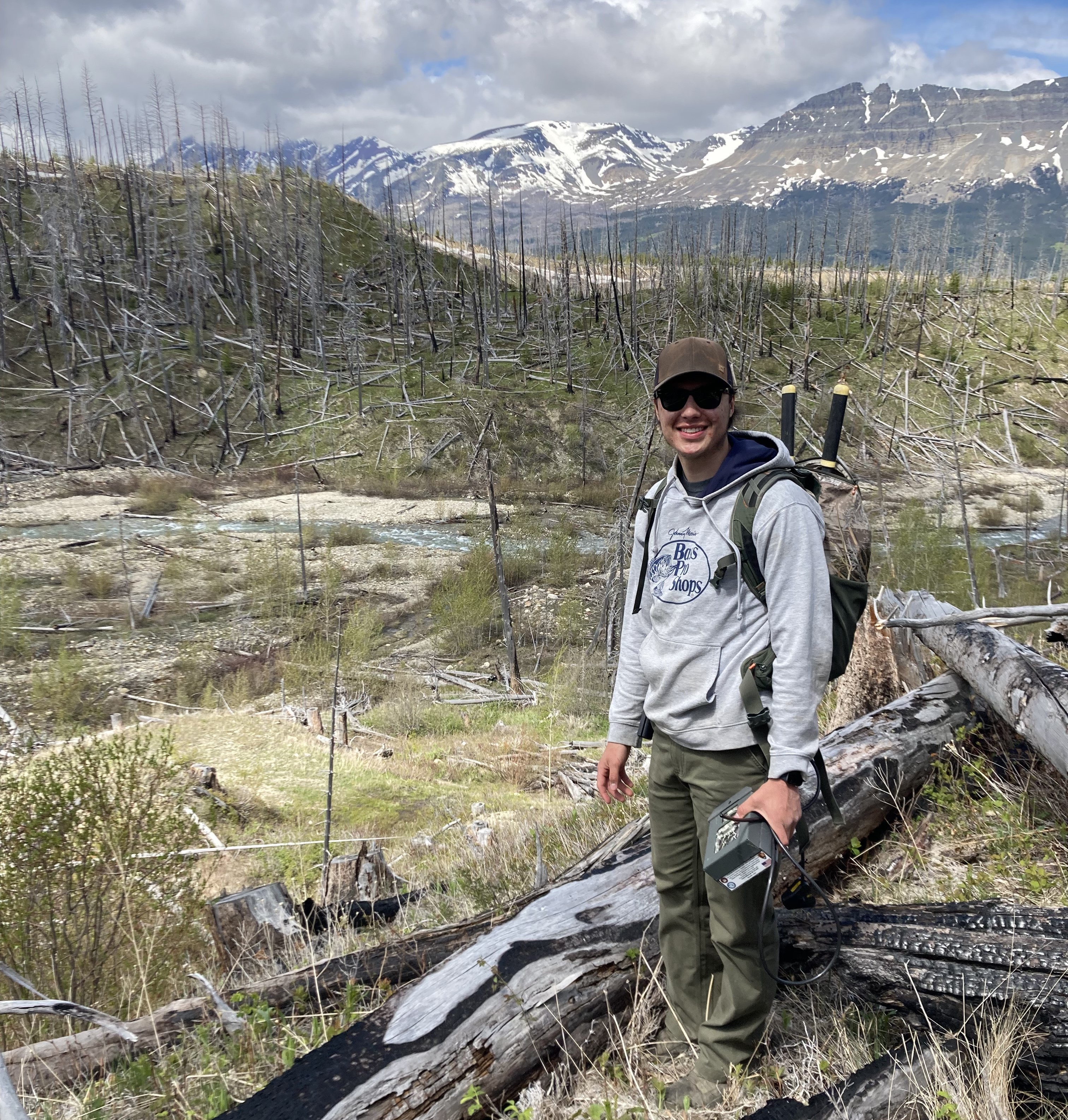 Oki Nistoo Nitankinoo (Hello my name is…) Landon Magee. I am a member of the Blackfeet Nation (Amskapi Piikani). Growing up, I forged a deep connection with the land through hunting and fishing adventures with my dad, embracing the remarkable beauty that the Reservation and its surrounding areas have to offer. My profound passion for the great outdoors led me to pursue a degree in Wildlife Biology. I graduated from the University of Montana with my B.S. in Wildlife Biology and am currently pursuing an M.S. degree in the same field. For my thesis, I am testing the efficacy of using trail cameras to estimate the abundance and other demographic features of moose, using the Blackfeet Reservation and Glacier National Park as a case study. During the summer months, I work for the Blackfeet Fish and Wildlife Department’s Threatened and Endangered Species Program, addressing the complex challenges posed by human-bear conflicts. My future aspirations revolve around serving as a biologist within the Blackfeet Fish and Wildlife Department. Additionally, my career interests extend beyond tribal boundaries, encompassing opportunities with federal or state agencies, as well as non-governmental organizations, focusing on population dynamics and the conservation of significant big game species and predators.
Elizabeth Painter
 Elizabeth Painter is a PhD candidate at University of Montana studying effects of predators on population dynamics of white-tailed deer and other ungulates in northern Idaho. Elizabeth completed her M.S. in Mexico where she studied effects of land use change on jaguar conservation.
Trevor Weeks
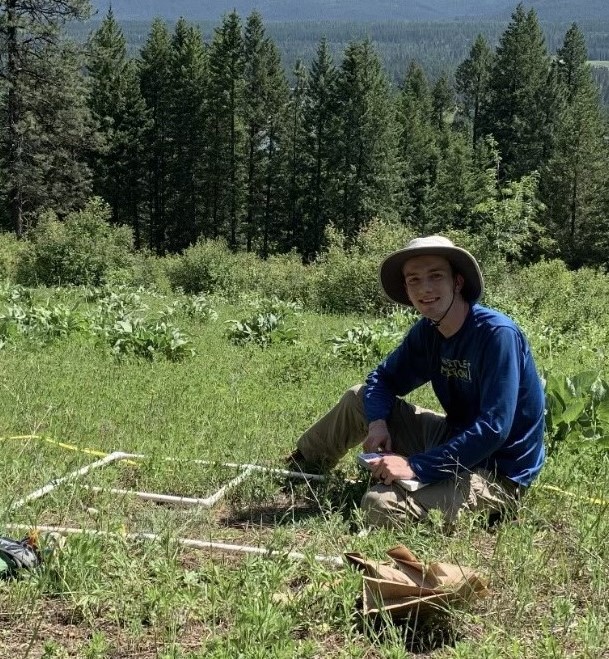 Trevor was raised in the Cascade mountains of western Washington in a family with deep ties to wildlife. He spent his high school years assisting state biologists in the capture of mountain lions and black bears, kickstarting his career in wildlife biology. While attending the University of Montana for his undergraduate degrees, Trevor spent two summer seasons working for a long-term elk monitoring project in Alberta, Canada, and completed an undergraduate honors thesis analyzing trophic effects in this same system. Following graduation, he worked on several research projects for the state of Idaho, including a bighorn sheep nutrition project and a white-tailed deer survival project. Trevor is currently pursuing his M.S. degree as part of a collaborative effort between the University of Montana and Montana Fish, Wildlife & Parks. His research seeks to understand the effects of timber harvest on elk nutritional resources and resource selection.