The Story of PFNAC
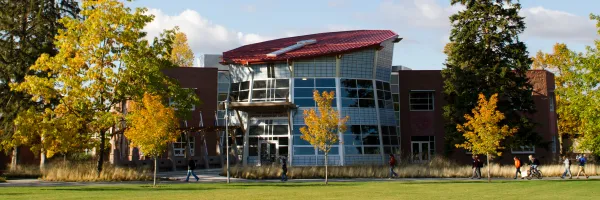
The Payne Family Native American Center (PFNAC) opened in 2010 and was the first building in the United States designed specifically to house a Department of Native American Studies within a facilities of its own.
Its design honors Indigenous cultures in both form and function. The rotunda has 12 sides, each representing one of Montana’s tribal nations. The main entrance faces east, following Plains traditions. Throughout the building, you'll find artwork, symbols, and materials that reflect Native identity and storytelling. The building was created in collaboration with tribal representatives and designed by Crow architect Daniel Glenn.
PFNAC is also a leader in sustainability. It was the first building at the University of Montana to receive LEED Platinum certification. Reclaimed wood, native stone, and natural lighting make the space both environmentally friendly and deeply symbolic. Even the surrounding landscape—featuring native plants and an Ethnobotany garden—reflects cultural values and ecological balance.
From the vision of community leaders to its architectural details, PFNAC remains a cultural home, a gathering place, and a symbol of connection for Native students, families, and visitors.
More Than Beauty
The PFNAC Look
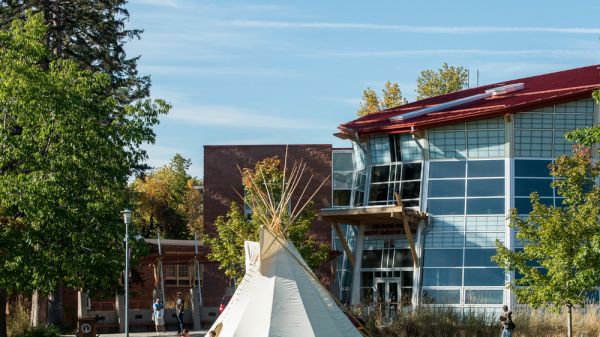
Beautiful and meaningful — from the moment you see the Payne Family Native American Center, it’s clear that it stands apart from any other building on campus. Its distinctive rounded rotunda and gently slanted roof create a striking profile that immediately draws the eye.
The rotunda was fashioned after a traditional lodge (tipi), facing east — a direction that holds deep significance for many Plains tribes. While east carries different meanings among Nations, it's good to note not all tribes would choose east. The narrow opening at the top represents a smoke hole, while the ceiling as a whole represents a hand drum.
Inside the rotunda, timber pillars encircle the wooden floor — repurposed from trees recovered from the Miltown Dam restoration site. These pillars echo a Sun Dance arbor, representing the cultural presence that the building still holds. The floor itself was made from a larch tree that was once rooted on the site; where that tree could not complete the circle, larch wood recovered from a nearby burn areas in the Bitterroot valley continues the story. The circular design reflects a medicine wheel as well as a Blackfeet war shirt medallion design. Within the rotunda are silver plaques that represent each tribe in Montana – all which were consulted when creating this building.
Around the building, every level tells a story — the first-floor border features the Bitterroot flower, the state flower and namesake of the Bitterroot Valley; the second floor carries a flowing water motif; and the garden level displays geometric designs inspired by tribal art. Silver plaques line the rotunda walls, each honoring one of Montana’s tribes, paired with artwork inspired by parfleche designs (with the exception of a bundle bag for the Anishinaabe–Ojibwe and Métis).
Even the exterior sets PFNAC apart — its natural, textured finish contrasts the brick uniformity of nearby buildings. It looks as though it rises from the landscape itself, grounded in the land and community rather than conformity.
To learn more about the architectural inspiration and design process behind the PFNAC, visit the Payne Family Native American Center by Susan Atkinson
Built with Intention – and Sustainability
PFNAC isn’t just culturally grounded — it’s environmentally visionary. The building was the first at the University of Montana to receive LEED Platinum Certification, the highest level of sustainability recognition.
Its design and materials earned points for:
• Energy efficiency — natural lighting, strategic orientation, and efficient systems reduce energy use.
• Reclaimed and local materials — including repurposed timber from the Miltown Dam restoration and locally sourced stone.
• Water conservation — low-flow fixtures and native landscaping minimize water waste.
• Indoor environmental quality — abundant natural light and ventilation support well-being.
• Site sustainability — native plants and the Ethnobotany Garden reflect ecological and cultural harmony.
PFNAC’s LEED Platinum certification shows that environmental sustainability and cultural responsibility can thrive together in one space.
The Living Spaces
Where Land and Sky are brought into the space helping complete an unseen connection. We have two immersive experience that deal with the land and where we come from or to be among the stars and learn how we came to be.
We have our Ethnobotanical Garden and our Stargazing Room
Ethnobotany Garden
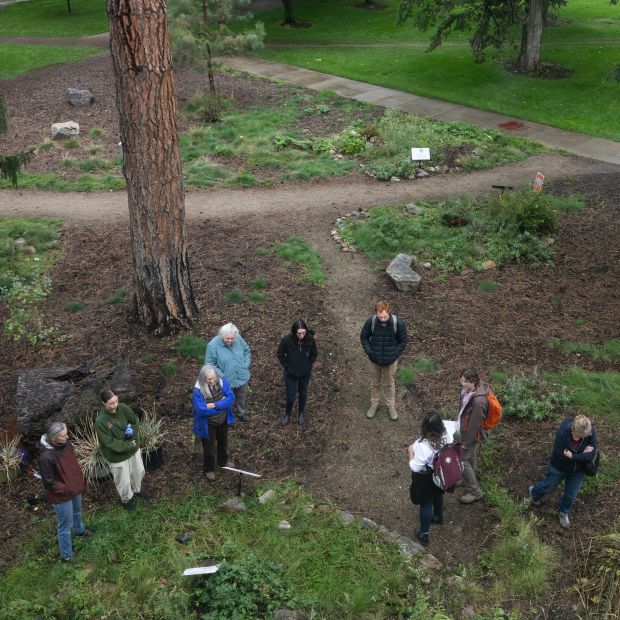
The PFNAC beauty and purpose expands outside the building and into the landscape – it really stands out from the rest of campus. From our Berry garden, our Plains grass, to our Ethnobotany Garden.
The Ethnobotany garden is filled with many plants from all the ecoregions represented in Montana – from the Rocky Mountains out to the Grassland plains. A place where medicine is abundant and present, connecting us back to the the roots and plants thats woven within our history to the land.
Eight stone circles represent the diverse ecoregions of Montana and the Native Tribes that live here.

Stargazing Room
Visit or host at PFNAC
The Payne Family Native American Center is more than a place to learn — it’s a space to gather, share, and connect. From classrooms and meeting spaces to the Rotunda and garden level, PFNAC welcomes students, community members, and visitors.