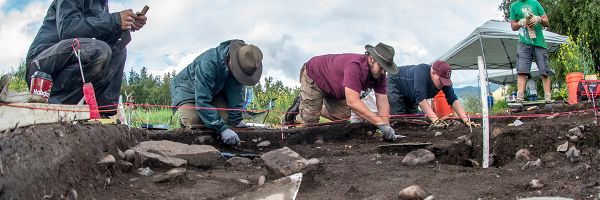
Ph.D. Cultural Heritage and Applied Anthropology
Program Overview
Our doctoral program specializes in Cultural Heritage and Applied Anthropology. Students in this program focus not only on cutting-edge research but also on the application of anthropology to one or more central issues of the 21st century. These include the preservation of heritage and traditions, whether objects, landscapes, or language; international social issues, particularly global development and health delivery; or understanding the biological basis of humankind. This program requires more extensive coursework than the M.A. and, more importantly, independent professional-level scholarship demonstrated by completing a major research project presented to the faculty as a dissertation. This comprehensive yet individualized program provides seasoned professionals and recent B.A. and M.A. graduates alike an opportunity to earn a Doctorate.
Cultural heritage studies analyze 'heritage' as an archaeological, ethnohistorical, social, biological, linguistic, and legal construct. Heritage reflects a socially and personally important set of cultural, linguistic, and biological attributes that have developed through historical processes and carry social and legal meanings and consequences. The concept recognizes diverse ethnic and cultural backgrounds while grounded in principles of the unity of heritage for all people. Different notions of heritage are explored from a theoretical perspective using various anthropological and other relevant paradigms. The course of study covers topics such as cultural resource management, social impact assessment, the interaction between cultures, the invention of tradition through time, cultural landscapes, cultural property, biological heritage issues, and retention of culture and language. An overlapping concern of the Ph.D. program is applied anthropology, the use of the anthropological perspective to solve real-world problems, including cultural heritage, medical anthropology, and a host of international development issues.
At the heart of our program is a strong commitment to employ anthropological theory to engage contemporary relevant issues with focused research for communities.
Career Outcomes
While some who are awarded a Ph.D. in Anthropology from the University of Montana will look toward teaching careers, a goal of the program is to produce applied anthropologists who will serve in government agencies, nongovernmental organizations (NGOs), tribal and ethnic associations, and businesses.
Graduates are finding employment and careers in:
- US Forest Service
- Bureau of Land Management (BLM)
- National Park Service Archaeologists
- Heritage Program Managers
- Tribal and State Historic Preservation Officers (THPOS and SHPOs) and Deputy THPOs, SHPOs, and related positions
- State Archaeologists
- Consulting Archaeologists [usually working with private Cultural Resource Management (CRM) firms]
- Self-employed/private consultants
- Academic/faculty positions
Faculty Expertise
If you are interested in the general Ph.D. Anthropology program, we recommend reviewing our faculty members' research and contacting the one whose work most closely aligns with your interests to discuss your research goals and plans, as that individual may serve as your faculty advisor.