Intern Joe Mateer Restores Native Plants to Burn Scar
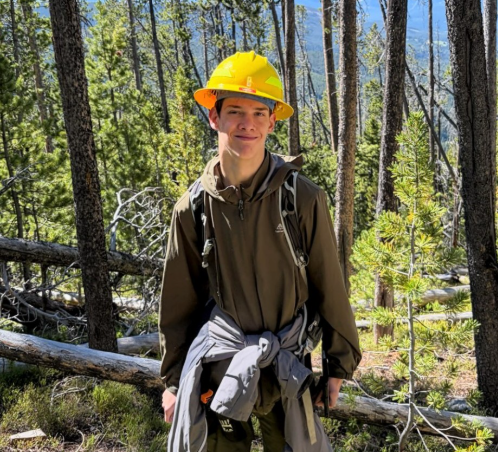
Being a botany resource steward for Beaverhead-Deerlodge National Forest in Dillon, Montana, employed by the University of Montana, has been a very rewarding experience. I have grown as a person and gained skills and experiences I never imagined I would possess. I have become great friends with my mentor and crew members and have formed unforgettable memories. A meaningful experience I had during my time as an intern was planting native shrubs in a burn scar.
The idea of planting these shrubs to positively impact the future of this landscape stands out to me. There have been countless devastating wildfires throughout the western United States, destroying many fragile ecosystems. Although wildfire is a natural and necessary component of healthy forest and shrub-steppe ecosystems, climate change and human-caused fires are putting increased stress on many forested and arid areas in states like Montana.
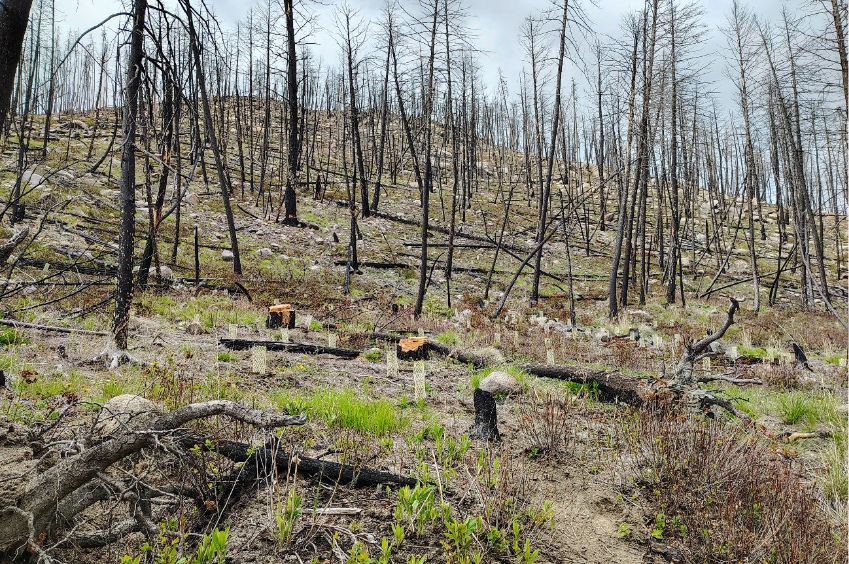
In efforts to limit damage to ecosystems, I joined the botany crew and several other Forest Service employees to plant hundreds of native antelope bitterbrush (Purshia tridentata) plants, cultivated by the Coeur d’ Alene Nursery, in a burn scar on Forest Service-maintained land near Boulder, Montana. Antelope bitterbrush was chosen for this project because it is drought-resistant and native, promoting balanced ecosystems.
The burn scar was on a steep slope near a rushing creek, where ash and rock made it very difficult to dig holes deep enough for the plants. We also hand-crafted and temporarily installed netting, held together with bamboo sticks, to keep deer and other wildlife from eating the young plants. This work was tedious and exhausting, and the weather was not on our side, dropping hailstones on us each afternoon.
Despite the challenges this project presented, it was incredibly rewarding to know that this work will have positive impacts on the landscape and ecosystems in this burned area. Eventually, these shrubs will provide a food source for wildlife to survive in the area, and vegetation will begin reclaiming the landscape. It was especially encouraging to see the difference we made as a team, planting more than 1,000 shrubs in this area over just a couple of days. Each of the nets and plants within them was planted and placed by someone on our crew, representing strong work ethic and dedication to improving the health of native ecosystems.
This is one of many projects that have positively impacted me during my time as a member of the botany crew on the Beaverhead-Deerlodge National Forest. I am incredibly thankful for the opportunity to have been a part of so many restorative projects and will forever cherish the friendships and memories made.