Boats and Goats
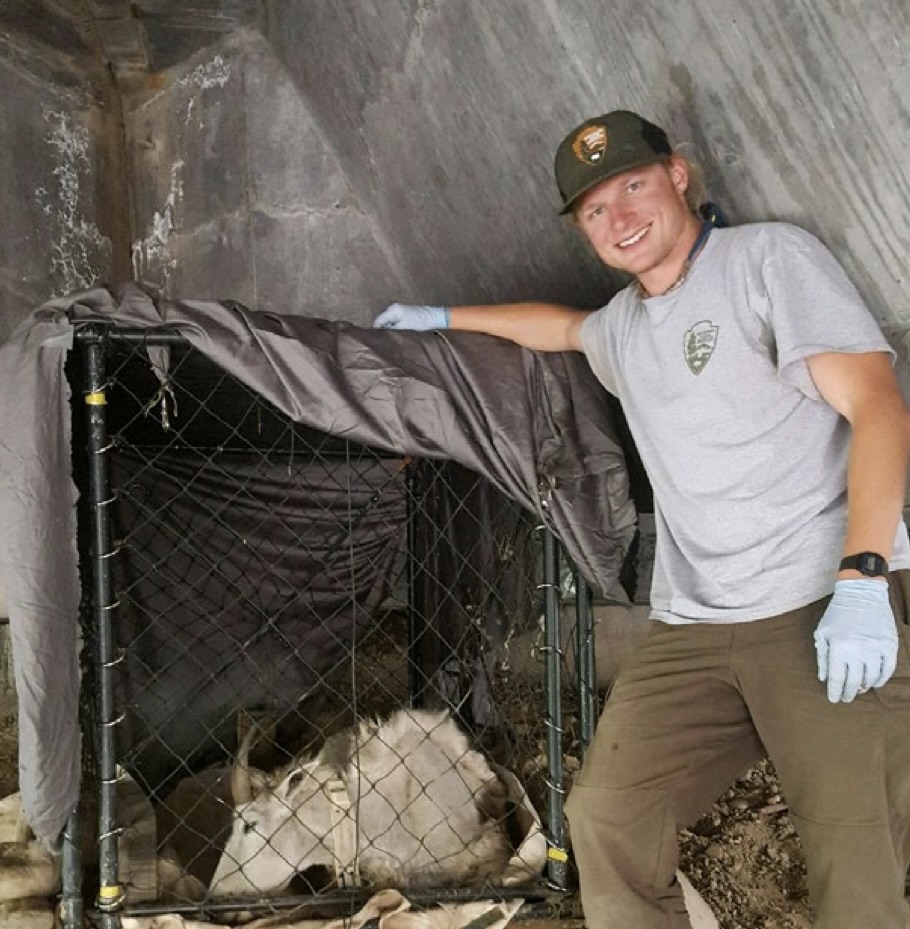
Eric Boyd, a master’s student in wildlife biology at the University of Montana, was named one of two recipients of the 2025 Glacier National Park Conservancy - Jerry O’Neal Fellowship. The award supports early-career researchers working on issues tied to conservation and recreation, and for Boyd it helped move a complex field project from idea to reality.
Boyd’s research, titled “Boats and Goats,” looks at how river recreation affects mountain goats along the Middle Fork of the Flathead River on the southern edge of Glacier National Park. The stretch of river is popular with rafters and anglers, especially in late spring and early summer. That timing overlaps with a critical period for mountain goats, when they descend from alpine terrain to visit mineral licks that provide sodium and other nutrients missing from their diet.
Those visits are not optional. Mineral licks support body condition, reproduction, and recovery after winter. Disturbance at these sites can force goats to delay or avoid visits, which can increase stress and reduce access to key nutrients. Boyd’s work asks whether the steady flow of boats through the corridor is changing how goats use that space.
While researchers have studied the effects of hikers, roads, and aircraft on mountain goats, river recreation has not been examined in the same way. Boyd is trying to fill that gap. His project combines GPS collar data, remote camera monitoring, and direct behavioral observation to understand how goats respond when people are present on the river.
In 2025, his camera system alone captured more than 279,000 images and documented hundreds of individual watercraft moving through the study area . He pairs that data with movement patterns from collared goats and field observations that track behavior such as feeding, vigilance, and flight. Together, those datasets allow him to test whether goats avoid the river, shift their timing, or change how they access mineral licks when recreation levels increase.
The research comes at a moment when land managers are making decisions about how to balance recreation and wildlife protection. The Flathead River is managed under a Comprehensive River Management Plan, and proposed updates include expanding no-stopping zones near key goat habitat. Boyd’s findings could help determine whether those measures are working or need adjustment.
Funding from the GNPC-O’Neal Fellowship played a key role in making the project possible. Fieldwork along a river corridor requires equipment, travel, and long stretches of time in the field. The fellowship helped cover those costs and supported the data collection needed to carry the study forward.
Boyd’s background is closely tied to the landscape he studies. He works as a wildlife biologist for Glacier National Park, where he helps lead research and monitoring projects and responds to human-wildlife conflicts. He also spent years guiding rafts on the Middle Fork, giving him firsthand experience with the recreation patterns he now studies.
With support from the GNPC-O’Neal Fellowship, Boyd’s work is building a clearer picture of how people and wildlife share the same corridor, and what it takes to keep that balance in place.