Spring 2023 Newsletter Feature
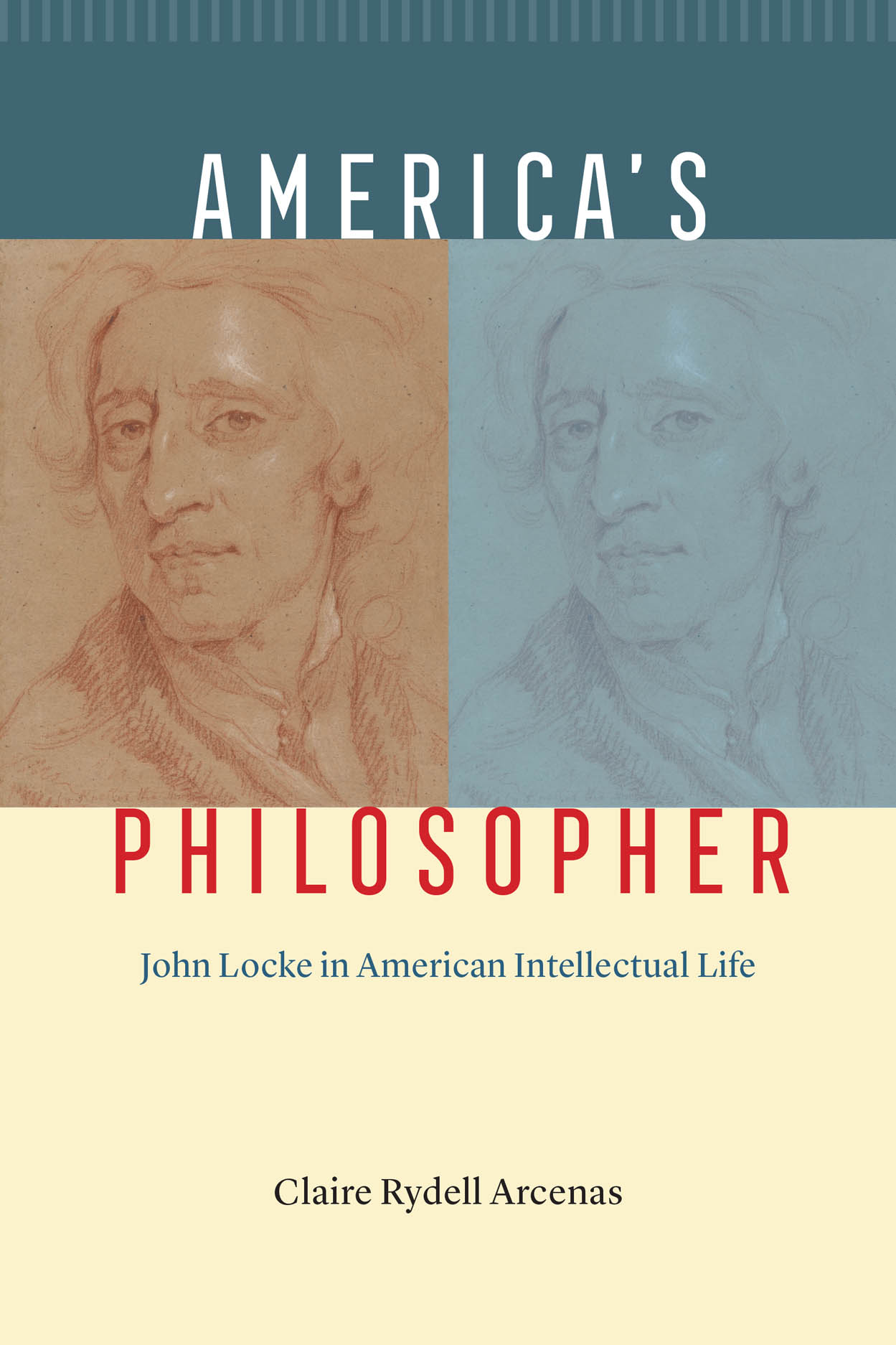 Claire Rydell Arcenas: My book, America’s Philosopher: John Locke in Intellectual Life, was published by the University of Chicago Press in July. And an essay I wrote on the humanities during WWII appeared in Writing the History of the Humanities, ed. Herman Paul, in January. Together with Professor Eric Zimmer, I’m organizing another iteration of our UM Summer History Institute for High School Students this coming June. Last year’s program was a smashing success. Our topic for this year’s institute, which will run June 19 - June 23, is The American West: Past and Present. Thanks to the generous support of a History donor, our week-long program is free for participants!
Scott Lawin Arcenas: I finished a longstanding project on Roman coinage depicting the Temple of Vesta, which will appear in Papers of the British School at Rome this fall. I also finished a book manuscript on political violence in classical Greek city states, which is currently under review. Most recently, I presented a paper on Roman maritime transportation to the St. Anne’s Classics Society, at the University of Oxford.
Richard Drake: In April of this year, Cornell University Press published the paperback edition of Charles Austin Beard: The Return of the Master Historian of American Imperialism. “Charles Austin Beard’s Economic Interpretation of the American Century Through His Journalistic Writings,” a follow-up article to the book, appeared in the March 2023 issue of Diplomacy and Statecraft.
John Eglin: My latest book, The Gambling Century: Commercial Gaming in Britain from Restoration to Regency, is in the final stages of pre-production at Oxford University Press, and is slated to appear in autumn. The textbook of which I am a co-author is coming out in a second edition in April from Routledge: Stephanie Barczewski, John Eglin, Stephen Heathorn, Michael Silvestri, and Michele Tusan, Britain since 1688.
 Leif Fredrickson: My co-creators and I received the Award of Excellence from the American Association for State and Local History for our podcast “Death in the West: The Murder of Frank Little.” With the Butte-Silver Bow Public Archives and Butte Citizens for Preservation and Revitalization, I also created a walking tour about Frank Little for the digital project The Story of Butte. With the Montana Natural History Center and ethnohistorian Sally Thompson, I received a Preserving Local History Grant to develop a historical tour of the Lower Rattlesnake in Missoula. I also helped the Missoula Redevelopment Agency develop a downtown historic preservation walking tour. I gave a talk at the Bonner Milltown Historical Museum about the John Mullan monuments in Montana. I was interviewed for the NPR radio/podcast series “Captured” about the Reagan-era EPA. I co-authored a report putting the Biden administration’s approach to environmental enforcement in historical perspective. The report was cited in Bloomberg News and the American Prospect, among other news outlets. I published an article in Montana: The Magazine of Western History titled “Past and Present in Teaching about Pandemics.”
Anya Jabour: I gave an invited lecture at Vassar College, "A Tale of Two Campuses: Katharine Bement Davis from Vassar College to Bedford Reformatory," in September 2022 and published an article, "In the Victorian Era, Valentine's Day Was a Celebration of Same-Sex Romance," in Atlas Obscura in February 2023.
Tobin Miller Shearer: In addition to working through materials I collected at Emory University last for a new biography on civil rights movement activist and historian Vincent Harding, I’ve given talks at and consulted with the following groups in the past year: Vanderbilt University Medical Center, Adventure Cycling, Frederick County (Maryland) Public Library system, YMCA (Missoula), New Orleans Public Library System, Roots of Justice, and UM’s MOLLI program. In the coming months I’ll be working with groups in KS, PA, VA, MN, and MD. I’ll also be spending two months this summer working on my Harding biography thanks to a generous summer stipend from the National Endowment for the Humanities.
Kyle G. Volk: In March 2023, Dr. Volk’s essay, “Personal Liberty,” appeared in Democracies in America: Keywords for the Nineteenth Century and Today, edited by Bert Emerson and Greg Laski and published by Oxford University Press. The revised 2nd edition of his textbook, Empire, Capitalism, & Democracy (co-authored with Pat O’Connor), was published last summer. Continuing his cross-Oval collaboration with Dr. Erica Woodahl (University of Montana, Department of Biomedical and Pharmaceutical Sciences), Volk co-authored "Advancing Equity in the Promise of Pharmacogenomics," which appeared in Clinical Decision Support for Pharmacogenomic Precision Medicine (Elsevier) last year. In June, he’ll be stepping down as chair of the History Department after four years of service and taking a much-deserved sabbatical to continue work on his book project, Personal Liberty and the Passions of American Democracy.
Eric Zimmer: Eric Zimmer recently delivered his manuscript for Red Earth Nation: Reclamation and Recovery on Meskwaki Land for review. The book is scheduled to be published in the “Environment in Modern North America” series at the University of Oklahoma Press in 2024. Eric also spent much of the last year working with Split Rock Studios on the first design phase of a total revamp of the permanent exhibits at the South Dakota State Museum. Eric also helped develop and appeared in a documentary on the Rapid City Indian Boarding School Lands Project entitled “Remember the Children.” That film recently won several awards on the independent film circuit, including two “Awards of Excellence” at IndieFest. Last fall, Eric spoke about Red Earth Nation and “Remember the Children” at a UM Humanities Institute event and a guest lecture at MSU in Bozeman. This spring, he Zoomed into a graduate seminar at the City University of New York to talk about his work at the intersections of public history and global philanthropy. Eric also joined the Public History Committee of the Organization of American Historians and continued his service on the Cultural Advisory Committee for the Sanford Underground Research Laboratory. Finally, he is excited to offer (with Professor Claire Arcenas) the UM Summer History Institute for High School Students again this June.