UM Study: One Rural County’s Economic Recipe to Thrive
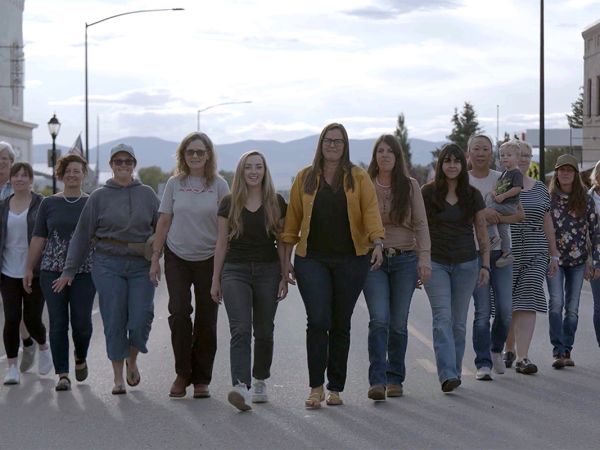
An image from the documentary “The Women of White Sulphur Springs” by director and producer Paige Williams. (Courtesy image)
MISSOULA – For decades, rural communities across America have searched for ways to reverse economic decline, retain young people, attract companies and bring tourists.
A new University of Montana study suggests the answer in one Montana county lies in overlapping investments in education, civic life and local relationships.
The report, “Thriving Rural Communities: Meagher County, Montana – Key Factors for a Thriving Rural Entrepreneurial Ecosystem,” examines how Meagher County – a county of just over 2,000 residents in central Montana – transformed itself from a community struggling with the loss of its timber industry into an emerging entrepreneurial hotspot marked by business growth, civic engagement, and an influx of new and returning entrepreneurs.
“Meagher County’s revival was not driven by a major corporation, a large government program or a single economic development initiative,” said Morgan Slemberger, senior director of the UM’s Rural Entrepreneurship and Leadership Co-Lab and principal investigator on the study. “It emerged from decades of investment in people, education, relationships and a supportive community culture that encourages individuals to build, contribute and stay.”
The REAL Co-Lab study surveyed 56 business owners and 10 business support organizations and conducted more than 30 interviews with local entrepreneurs and community leaders. Researchers sought to answer a simple question: Why is entrepreneurship thriving in a place that defies nearly every demographic and geographic advantage typically associated with business growth?
Among the study’s most significant findings is the role of education. Seventy-seven percent of surveyed business owners reported some form of post-secondary education, while 57% hold a bachelor’s degree or higher.
Researchers identified a local scholarship for college-bound students as a potentially transformative force behind this trend. Since 1976, the Charles M. Bair Memorial Trust Scholarship program has invested more than $15 million in higher education for students from Meagher County and neighboring Wheatland County, helping create a generation of educated professionals, entrepreneurs and community leaders.
“The education story in Meagher County is not simply about sending students away to college,” the report notes. “It is about creating pathways for people to return, invest and lead.”
The study also found that entrepreneurship in Meagher County is powered by an unusually strong culture of community involvement. Ninety-eight percent of surveyed business owners reported volunteering in their community. Researchers found that trust, neighboring and civic participation function as economic assets, helping entrepreneurs access referrals, mentorship, customers and support networks.
The authors noted Meagher County community members give time out of necessity due to being a minimum of 90-minutes away from a larger city, but also due to the community fabric. A business owner described the history and culture of branding days in ranching and the requirement of community members coming together to work hard at no gain of their own – other than knowing that when it was their turn the community would show up for them.
That culture of quiet contribution continues today and is demonstrated through multiple businesses, especially women-owned businesses. The entrepreneurs work to solve community problems and volunteer outside their business by serving on boards or even being the town volleyball coach.
Women are a major driving force behind the county’s economic momentum, making up 77% of survey respondents. Researchers found a strong pattern of women mentoring one another, supporting new ventures and creating businesses that are deeply connected to community needs.
The report highlights several additional factors contributing to the county’s success, including strong ties to local financial institutions, a collaborative business culture, and strategic use of natural assets such as a nearby hot springs, Showdown Montana Ski Area, the Smith River and outdoor recreation opportunities.
Additionally, the annual Red Ants Pants Music Festival – which brings an estimated 15,000 to 17,000 visitors to Meagher County and White Sulphur Springs each year –was frequently cited by participants as an important catalyst for business growth and community confidence.
While challenges remain – including housing shortages, workforce recruitment, childcare availability and access to capital – the report concludes that Meagher County offers important lessons for rural communities nationwide.
The new study is online at: https://bit.ly/UMruralThriving.
###
Contact: Morgan Slemberger, senior director, UM Rural Entrepreneurship and Leadership (REAL Co-Lab), 406-243-6720, morgan.slemberger@mso.umt.edu.