Formulations Research
-
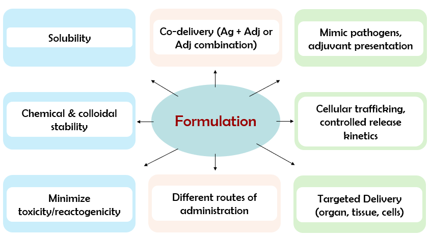
Vaccines and immunotherapies have revolutionized medicine, significantly improving global health. The next generation of these therapeutics must enhance safety while exceeding current efficacy. Our research leverages nanoparticle and bioconjugation technologies to precisely deliver antigens, adjuvants and immunomodulators to target immune cells, optimizing responses for specific diseases.
By fine-tuning immune activation, we enhance vaccine efficacy while minimizing side effects, improving overall safety. Various nanoparticle platforms—including liposomes, emulsions, lipid nanoparticles, polymers, and silica nanoparticles—enable the co-delivery of adjuvants and antigens, amplifying and refining immune responses.
To ensure quality and performance, we employ advanced analytical techniques such as HPLC, LC-MS, DLS, EM, Cryo-TEM, SAXS, AUC, AF4, and UV spectroscopy. Through precise formulation design and characterization, we aim to bridge the gap between experimental vaccine designs and clinical applications, ultimately leading to safe, durable, and effective therapeutics against infectious diseases, cancer, and autoimmune disorders.
-
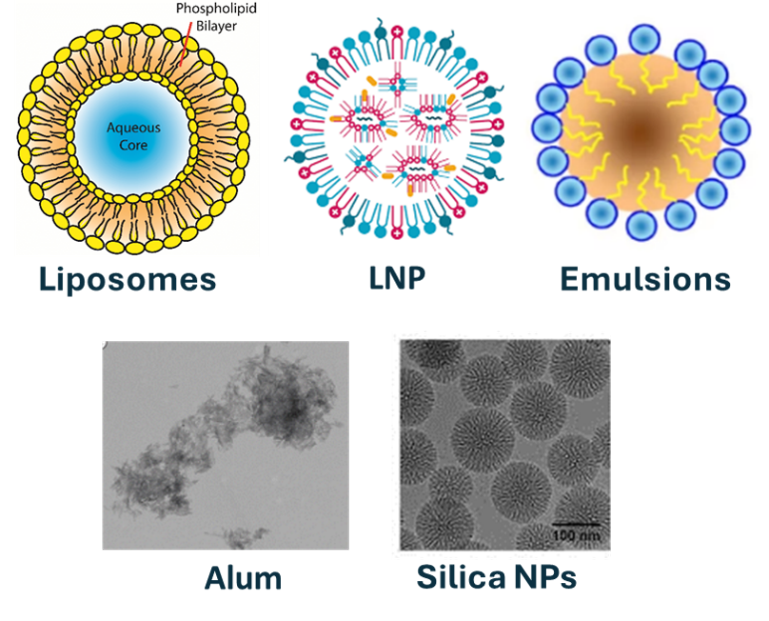
Particulate-based nanovaccines represent a cutting-edge approach in vaccine development, offering significant potential to enhance both safety and efficacy. Delivery systems such as liposomes, emulsions, silica nanoparticles (SNPs), lyotropic liquid crystals (LLCs), and polymeric nanoparticles (PNPs) provide unique advantages for delivering antigens and adjuvants to the immune system. These nanoparticles can protect antigens from degradation, facilitate targeted delivery, and enable controlled release, thereby amplifying immune responses.
Nanoparticles allow precise control over size, shape, and surface modifications, all of which influence immune recognition and uptake. Liposomes, for example, are widely studied for their biocompatibility and ability to mimic natural cell membranes, while polymeric nanoparticles offer design flexibility and sustained release properties. Engineered nanomaterials such as SNPs further enable pathogen mimicry and controlled release, enhancing immune activation.
-
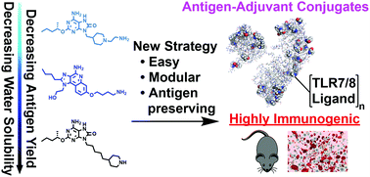
Our research centers on developing innovative conjugation technology to improve the therapeutic index and efficacy of various haptens (Toll-like receptor agonists, peptides, fentanyl, etc.). For example, TLR7/8 agonists can stimulate strong immune responses but face challenges in being effectively co-delivered with vaccine antigens due to their differing chemical properties.
Our approach focuses on using polyethylene glycol (PEG) linkers to successfully deliver both components to dendritic cells (DCs), thereby enhancing immune responses and reducing potential side effects. By conjugating TLR7/8 agonists with relevant antigens, we hope to improve immune protection in these areas including for fentanyl use disorders. We also explore incorporating cleavable peptide sequences into the conjugates to boost the adjuvant effect while minimizing side effects.
-
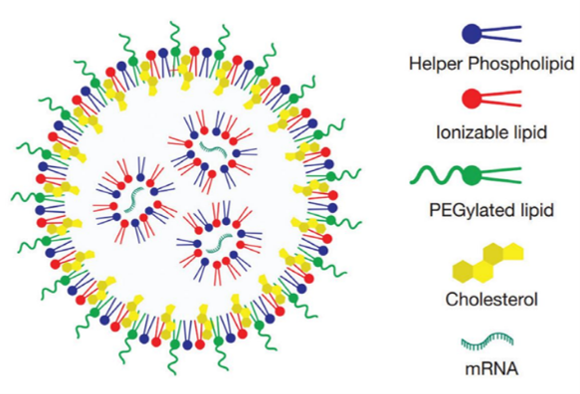
mRNA vaccines have revolutionized the fight against infectious diseases by instructing cells to produce proteins that trigger immune responses. At CTM-ART, our research focuses on formulating mRNA-based vaccines using ionizable lipid nanoparticles (iLNPs), which protect fragile mRNA and ensure efficient delivery to target cells. These nanoparticles not only shield mRNA from degradation but also enhance its uptake by immune cells, enabling precise and effective antigen presentation.
We are advancing iLNP design to optimize safety and efficacy by incorporating adjuvants, targeting ligands, and novel low-reactogenic ionizable lipids. This approach minimizes off-target effects while fine-tuning immune responses to enhance the potency, breadth, and durability of mRNA vaccines. Our goal is to fully harness next-generation mRNA delivery systems for infectious disease prevention and cancer immunotherapy, providing a scalable, rapid, and safe platform for immunotherapeutic development.
-
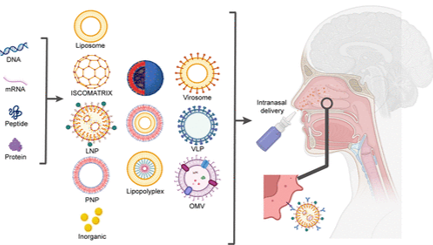
Mucosal vaccines offer the potential to trigger not only protective immune responses at the predominant sites of pathogen infection but also robust systemic immune responses. Furthermore, mucosal vaccination at one site can also induce immunity at distal mucosal sites, e.g.: nasal vaccination can induce IgA titer at tracheal and vaginal mucosa.
Despite the advances of mucosal subunit vaccine formulations, none has been successfully translated into licensed mucosal vaccines, which currently comprise solely live attenuated and inactivated whole-cell preparations. Our group is currently working on developing intranasal subunit and mRNA vaccines against respiratory diseases like RSV, flu, and TB. By incorporating our synthetic small molecule vaccine adjuvants (TL4, TLR7/8, and CLR agonists), we design vaccine formulations that can deliver the subunit antigen and induce desired humoral and cellular immunity.
-
At our translational lab, we don’t just innovate in the pre-clinical realm; we bring groundbreaking adjuvanted vaccines one step closer to saving lives. Our mission is to seamlessly move novel vaccine candidates from the lab bench to the patient’s bedside. With cutting-edge facilities and a team driven by creativity and precision, we ensure that each formulation we develop is meticulously designed for clinical impact.
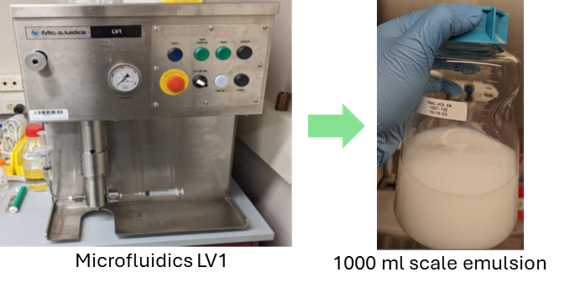
Our lab has the capacity to scale production to the liter level, allowing us to swiftly move from research to real-world application. In partnership with CDMOs, we navigate the complexities of fill-finish and cGMP manufacturing, ensuring every step is ready for clinical use. We’ve already supported GLP toxicity studies and Phase 1 clinical trials for groundbreaking vaccines targeting heroin and fentanyl addiction, as well as two promising influenza vaccines.
-
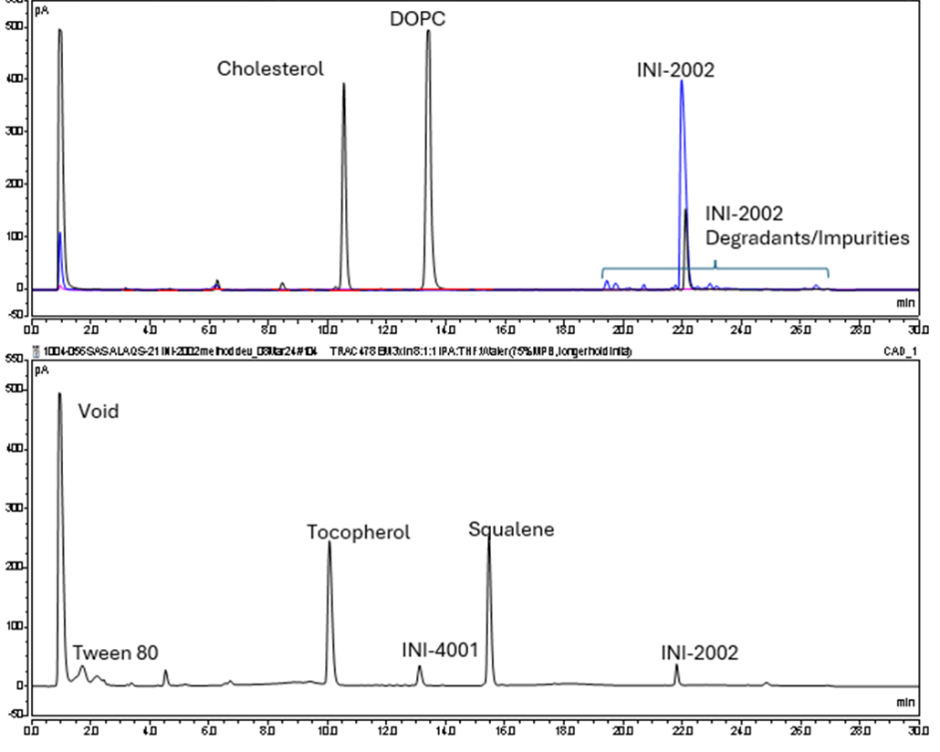
Analytical method development in the realm of translational medicine, particularly for small molecule adjuvanted vaccines, is crucial for ensuring safety, efficacy, and consistency. This process involves the design and optimization of robust analytical techniques that can accurately characterize the vaccine components and their interactions with the immune system. Techniques used in our labs, such as liquid chromatography (LC), mass spectrometry, and bioassays are employed to quantify active ingredients, assess stability, and evaluate immunogenicity.
By establishing reliable methods that can measure the critical quality attributes of these vaccines, our researchers facilitate the transition from laboratory discoveries to clinical applications, ultimately enhancing patient outcomes and accelerating the development of novel immunotherapies. Due to the diverse formulation delivery platforms used in the CTM-ART team, the use of LC and MS are vital analytical techniques that are used to provide precise quantification of active pharmaceutical ingredients (APIs) and can detect degradation products, ensuring that the formulation maintains its intended potency over time.
Ultimately, our team develops robust HPLC methods which are essential for ensuring that our translational drug formulations meet regulatory requirements and maintain their efficacy throughout their shelf life. This information is critical not only for product development but also for ensuring patient safety and therapeutic effectiveness.