Literature
-
3 Credits
Mondays / Wednesdays / Fridays 11:00 – 11:50
Prof. Mac Miller
Gen Ed Attributes: Lit & Artistic Studies (L); Writng Across Curriculum
-
3 Credits
Tuesdays / Thursdays 9:30 - 10:50
Prof. Erin Costello Wecker
Gen Ed Attributes: Lit & Artistic Studies (L); Writng Across Curriculum
-
3 Credits
Tuesdays / Thursdays 11:00 – 12:20
Prof. Eric Reimer
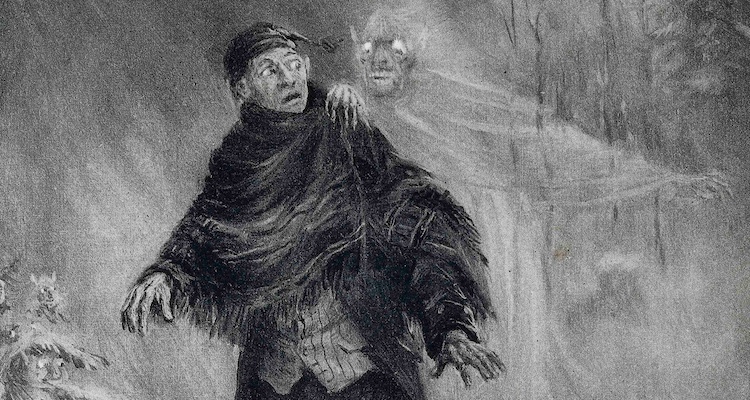
This course will explore the rich and abiding tradition of the Irish ghost story. Ireland’s magical (and magically imbued) landscape – with its many ring forts, isolated hermitages, sacred caves, Neolithic portal tombs, and supposed meeting places of the faeries – seem to ensure that the supernatural and the spiritual remain part of daily existence for the Irish. We will consider how the currents of Irish folklore, the echoes and continuing resonance of its pre-Christian past, and, in particular, the appearance of ghosts (understood broadly) reveal something about the way the Irish view the world. The important part of our inquiry will be to uncover the cultural, psychological, and the socio-political implications of the presence of the supernatural, the unknown, the uncanny, and we will likely spend much time considering the spectral hauntings of Ireland as it responds to its various historical traumas (English occupation, the Great Famine, the War of Independence, the Northern Irish Troubles, etc.). Course texts may include Wilde’s The Picture of Dorian Gray, Stoker’s Dracula, Joyce’s “The Dead,” Friel’s Dancing at Lughnasa, Trevor’s Fools of Fortune, McPherson’s The Weir, O’Connor’s Star of the Sea, Deane’s Reading in the Dark, Neville’s Ghosts of Belfast, poetry by Heaney, Boland, and others, and assorted folk tales, as well as a full-length film and various visual art.
Gen Ed Attributes: Lit & Artistic Studies (L); Writng Across Curriculum
-

3 Credits
Section 02: Mondays / Wednesdays / Fridays 10:00 – 10:50
Section 03: Mondays / Wednesdays / Fridays 11:00 – 11:50
Prof. Rob Browning
At a time when nobody seems to know where our entanglements with artificial intelligence are taking us, is it possible that creative literature authored by human beings can help us in finding our way? This class will be dedicated to exploring the possibility that it can. After a short survey of pre-modern speculations about artificial intelligence, we will study several novels and novellas, each of which addresses issues that are of pressing concern to us today. Among these issues are:
- The motivations and psychologies of the scientists and engineers who invented and are currently developing A.I. technology
- Questions about the natures of consciousness, intelligence, and the human imagination
- Efforts to “police” the line between “the human” and “the artificial”
- The linguistic and narrative dimensions of efforts to describe, manage, and engage with A.I.
- Perspectives on A.I. as “author” or “creator”
- Implications of the idea that artificial intelligence is an “alien” entity
Alongside each work of fiction, we will consider recent perspectives and developments relevant to the questions it raises. Since there now seems to be signficant news from the artificial intelligence “frontier” on a nearly daily basis, this class will adjust in ways that make sense to us as we go along.
Tentative primary texts: Mary Shelley, Frankenstein (1818); E. M. Forster, “The Machine Stops” (1909); Philip K. Dick, Do Androids Dream of Electric Sheep? (1968); Richard Powers, Galatea 2.2. (1995); either Stanislaw Lem, Solaris (1961) or Peter Watts, Blindsight (2006); Ted Chiang, The Lifecycle of Software Objects (2010); Benjamin Labatut, The MANIAC (2023).
Gen Ed Attributes: Lit & Artistic Studies (L); Writng Across Curriculum
-
Credits 3
Tuesdays / Thursdays 12:30 – 1:50
Prof. Katie Kane
In this introductory course in literary and cultural theory, we will attempt to explore representative schools of and issues in contemporary criticism (formalism, postmodernism, eco-criticism, postcolonial/colonial criticism, critical race theory, trans-studies, psychoanalytic criticism and others). We will be working, therefore, to build an analytic and critical vocabulary for the activity of reading select number of texts from the canons of literary criticism and from the canons of Anglophone culture. Prior to engaging with the core of the class, we will consider the multiple ways in which both the truth and research methodology are in flux in our era: we will consider what it means to read a theoretical text, what it means to create an argument or assertion, and what it means to do research in Literary and Cultural Studies.
In addition to these “first-principles” objectives, however, we will also attempt to engage with such complexities of the current theoretical debate such as the role of emotion in art,
the question of aesthetics in the Anthropocene, the problematic of decolonization, the use value of economic and political theory (among other concerns)., and, finally, with the crucial issues of race, class, gender, and sexuality. Throughout the course we will be moving toward our current early twenty-first century moment in which the range and scope of the labor of the literary critic seems—in light of the rise of a host of non-traditional representational and narrative forms—to be both expanding and contracting. Film, video games, the world of the digital, social media, all require the decoding and demystifying work of the engaged critic. A specific focus on the filmic texts of Sinners and Adolescence will allow for us to work through major issues and schools of cultural criticism.
Gen Ed Attributes: Writing in the Disciplines
-
3 Credits
Mondays / Wednesdays 4:00 – 5:20
Prof. Casey Charles
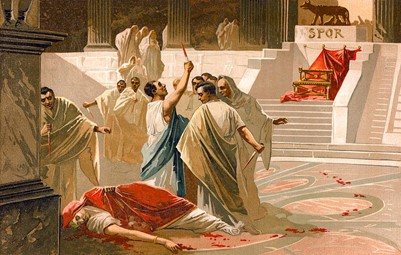
This course introduces Shakespeare through a lens that sheds light on the way authority of all kinds—political, familial, romantic, economic—works as a kind of fulcrum in the dramas that individuals and societies have faced both historically and in our present moment. “Not of an age but for all time,” Ben Jonson wrote about his friend William Shakespeare, and our study of state power (Julius Caesar), familial power (Hamlet), romantic power (As You Like It) and religious power (Measure for Measure) will also provide a look at the various genres in Shakespeare’s work: history, comedy, tragedy, and what critics call a “problem play.”
On the page, on stage, on the screen, Shakespeare’s plays have arguably become a centerpiece in our cultural consciousness. This course will primarily focus on the way the Shakespearean text, line by line, creates insight into the predicaments characters confront in an often-unjust world. In keeping with this emphasis, students will have an opportunity to memorize or lead a discussion of a passage from one of the plays in addition to assigned written analysis.
Gen Ed Attributes: Lit and Artistic Studies (L); Writing in the Disciplines
-
Credits 3
Tuesdays / Thursdays 2:00 – 3:20
Prof. Robert Baker
Can poetry still speak to our deepest concerns in an age of polycrisis, an age in which everything seems to be unravelling? Or has everything always been falling apart? “The singers were singing the world into place,” Joy Harjo has written, “even as it continued to fall apart.”
This course is an introduction to American poetry of the last forty years through a reading of a range of quite different poets. In the first half of the course we will study in some detail the work of Louise Glück, Joy Harjo, and Ross Gay, engaging two or three books by each of these poets. In the second half of the course, moving a little more quickly from poet to poet, we will study a single book by each of several poets, including Forrest Gander, C. D. Wright, Julianna Spahr, Tommy Pico, Kevin Young, Maggie Nelson, and Sandra Lim. We will attend to the particular. vision of every poet we read while at the same time reflecting on broad orientations in contemporary American poetry at large: a quasi-confessional mode that has been reinvented time and again in recent decades; the intertwining of a personal mode and a capacious historical mode; different sorts of environmentalist or ecopoetic modes; and elegies and odes, or songs of grief and songs of praise, that are as old as the lyric tradition itself and as new as any morning.
Provisional list of books:
- Louise Glück: The Wild Iris; Averno; Faithful and Virtuous Night
- Joy Harjo: How We Became Human; Crazy Brave
- Ross Gay: Catalog of Unabashed Gratitude; Be Holding
- Forrest Gander: Torn Awake
- Juliana Spahr: Ars Poeticas
- Tommy Pico: Nature Poem
- C. D. Wright: One Big Self
- Kevin Young: Dear Darkness
- Maggie Nelson: Bluets
- Sandra Lim: The Curious Thing
-

Credits 3
Tuesdays / Thursdays 2:00 – 3:20
Prof. Eric Reimer
This course will consider - broadly and diversely, in each case - the ocean and the desert as venues and metaphors for positing some of life’s biggest questions. In addition to thinking about the ontological uncertainty occasioned by their role in various works of literature, we will also consider the ocean and the desert as archetypal places of sharing, as locations of historical trauma, as sites for the exchange of goods and cultural productions, as fluid, changeable spaces that facilitate communication across cultures and languages, as invitations to realize more accommodating and plural notions of identity, as locations that force us to adjust our understanding of time and space. The course will thus give us the chance to consider problems and raise questions related to nationality, ethnicity, location, identity, and historical memory, while also enjoying literature from an intercultural and transnational perspective. Featured primary texts may include works by Michael Ondaatje (The English Patient), Paul Bowles (The Sheltering Sky), Bruce Chatwin (The Songlines), T.S. Eliot (The Waste Land), Derek Walcott (The Odyssey: A Stage Version), S.T. Coleridge ("The Rime of the Ancient Mariner"), Caryl Phillips (Crossing the River), Salman Rushdie (Haroun and the Sea of Stories), and others, as well as assorted short stories and poems. Secondary texts may include works by Schopenhauer, William Thesiger, Mary Austin, Antoine Saint-Exupery, Ellen Meloy, Paul Gilroy, and others. We will also play and study the video game Journey.
-
Credits: 3
Tuesdays / Thursdays 2:00 - 3:20
Staff
-
Credits: 3
Thursdays 4:00 - 6:50
Prof. Robert Baker
In this capstone we will explore the place of beauty, awe, and wonder in our lives.
Sometimes we say of a lake, what a beautiful lake; or of something a person has done, what a beautiful thing to do; or of a story, what a beautiful story. Perhaps the first thing we could note about beauty, awe, wonder, and their many kin, then, is that they are capacious terms.
We will begin the seminar by reading Rebecca Solnit’s Orwell’s Roses, a book that is, among other things, a meditation on the significance of beauty in a world marred by widespread ugliness, violence, and injustice. We will then briefly step back in time, looking at a few older ideas about beauty, awe, and wonder, in particular ideas developed in the Romantic Era, many of which are still influential in our culture today. We will then turn back to the present and address some ways that questions of beauty, awe, and wonder are explored in different fields of concern in contemporary culture: in discussions of our ecological situation; in discussions of the burdens and promises of history; and in discussions of human experience in general in a world in which nearly everything, including beauty, seems to be commodified or turned into a hustle.
Our readings will be far from comprehensive. They are meant to open up perspectives, to generate questions. In the second half of the course every student will undertake a project of their own, based on writers important to them, about the meaning of beauty, awe, and wonder in our lives today. We will hold a sort of mini-conference at the end of our journey.
Provisional (very provisional) list of readings:
- Rebecca Solnit, Orwell’s Roses
- Longinus, selections from On the Sublime
- Friedrich Schiller, selections from On the Aesthetic Education of Man
- William Wordsworth, poems, and Elizabeth Bishop, poems
- Nan Shepherd, The Living Mountain
- Elizabeth Kolbert, Under a White Sky: The Nature of the Future
- Theodor Adorno, “Education after Auschwitz”
- Ross Gay, Inciting Joy
- Jenny Odell, How to Do Nothing: Resisting the Attention Economy
- Ali Smith, Autumn
-
3 Credits
Mondays 6:00pm – 8:50 pm
Prof. Katie Kane
-
3 Credits
Tuesdays 3:00pm – 5:50
Prof. Louise Economides
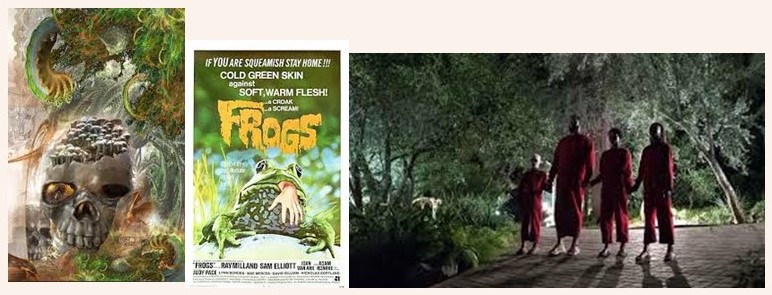
This course will explore two innovative (and interrelated) aesthetics that have emerged in the Twenty-First Century: the New Weird and Ecohorror. Both build upon previous genres/movements ("old weird" pulp and speculative fiction, surrealism and the gothic to name a few) but re-imagine these forms in order to explore pressing socio-ecological crises such as climate change, petromodernity, neo-authoritarianism and mass extinction. In their introduction to an anthology titled The New Weird (2008), Jeff and Ann VanderMeer define this aesthetic as “a type of urban, secondary-world fiction that subverts the romanticized ideas about place found in traditional fantasy" while adopting a genre-bending style that hybridizes elements from surrealism, horror and science fiction. In embracing such non-realist forms in order to address "real world" problems, weird fiction challenges Amitav Ghosh's assumption (in The Great Derangement) that "serious" literature which addresses issues such as climate change must avoid surrealism or magical realism for fear such treatment would rob global warming's "highly improbable occurrences" of their "urgency . . . [the fact] that they are actually happening on the earth, at this time." We will address links between New Weird art and psychoanalysis, new materialism, feminism, queer theory and ecocriticism in order to challenge such notions. Likewise, ecohorror “assumes that environmental disruption is haunting humanity’s relationship with the non-human world” in the Anthropocene era, to quote ecocritics Stephan A. Rust and Carter Soles. This new genre addresses ecophobia (fear of nature) but also ways that ecohorror can mobilize environmental consciousness, or fear for jeopardized ecosystems via "revenge of nature" tropes, creature features and hauntology. We'll explore literary expressions of the New Weird and eco-horror in work by authors such as Jeff VanderMeer (the Southern Reach trilogy), China Miéville (The City & The City, Last Days of New Paris), Karen Russell (Orange World, The Antidote) and Nnedi Okorafor (Death of the Author), as well as significant films/television series that reflect these aesthetics (The Last Winter, Frogs, Us and The Last of Us).
Creative Writing
-
This beginning writing workshop emphasizes the reading, discussion, and revision of students' short fiction. Students will be introduced to the technical elements of writing fiction. No prior experience in writing short fiction required.
Gen Ed Attributes: Expressive Arts Course (A)
3 Credits
-
This beginning writing workshop focuses on the reading, discussion, and revision of students' poems. Students will study and use models of poetic techniques. No prior experience in writing poetry required.
Gen Ed Attributes: Expressive Arts Course (A)
3 Credits
-
A study of the art of nonfiction through reading and responding to contemporary nonfiction and the writing of original nonfiction works. Focus is on creative expression, writing technique and nonfiction forms. Students begin with writing exercises and brief essays, advancing to longer forms as the semester progresses.
Gen Ed Attributes: Expressive Arts Course (A)
3 Credits
-
Credits 3
Mondays 3:00 – 5:50 pm
Prof. Robert Stubblefield
This course is open to undergraduates who have completed at least one semester of creative writing. Students focus on the editing, design, layout and marketing of The Oval, University of Montana's undergraduate literary magazine. Students will read, discuss and develop responses to to recongnized literary works, as well as developing criteria for each volume's content and design. The class will include the evaluation and selection of fiction, nonfiction, poetry and visual art submissions to The Oval. Students are required to keep a reading journal, and compile a portfolio of writing exercises, responses to texts and critiques of published works.
-
Credits 3
Tuesdays / Thursdays 12:30 - 1:50
Prof. Jules Ohman
Prereq, completion of CRWR 210A with a "B" average or better. An intermediate fiction writing workshop. Students will be expected to finish 3 or 4 substantial stories for the course. Although some outside material will be considered, the primary emphasis will be analysis and discussion of student work.
-
Credits 3
Tuesdays / Thursdays 12:30 - 1:50
Prof. Brian Blanchfield
CRWR 211A. An intermediate workshop involving critical analysis of students' work-in-progress as well as reading and discussion of poems in an anthology. Numerous directed writing assignments, experiments, exercises focused on technical considerations like diction, rhythm, rhyme, and imagery.
-
Credits 3
Mondays / Wednesdays 12:30 – 1:50 pm
Prof. Sam McPhee
Prereq., completion of CRWR 212A or CRWR 210A with a "B" average or better. An intermediate nonfiction workshop. Students read and respond to model essays, in addition to creating and revising original essays for workshop review. Assignments and exercises focus on writing craft and research techniques.
-
3 Credits
Tuesdays / Thursdays 11:00 - 12:20
Staff
-
3 Credits
Tuesdays / Thursdays 3:30 - 4:50
Prof. Sean Hill
Combining “eco” from the Greek oikos (house) and “poet” from the Greek poietes (maker), an ecopoet asks what can be made of this gas-wrapped sphere we call home, the Earth? In this course, we will study and write poetry that engages with this house of ours—its biomes, its ecosystems. We will consider our neighbors, the plants and animals who share our home with us. We will explore the connectedness and interdependency of all things—living and non-living—plants, animals, soil, rivers, and oceans, etc. We will consider diverse perspectives of our connected relations through such lenses as gender, race, class, and culture. We will explore the intersections such as that of the non-human world, history, and science. We will read contemporary poets such as Camille Dungy, Jennifer Chang, Elizabeth Bradfield, and Ed Roberson as models and guides.
Reading List:
- Cascadia Filed Guide: Art, Ecology, and Poetry edited by Elizabeth Bradfield, CMarie Fuhrman, and Derek Sheffield
- Black Nature: Four Centuries of African American Nature Poetry edited by Camille Dungy
- Some Say the Lark by Jennifer Chang
- Tread Upon by Christopher Kondrich
- Not For Luck by Derek Sheffield
-
Credits 3
Wednesdays 12:00 – 2:50
Prof. Emily Ruskovich
Prereq, junior standing and CRWR 310. An advanced writing workshop in which student manuscripts are read and critiqued. Rewriting of work already begun (in CRWR 310 classes) will be encouraged.
-
Credits 3
Wednesdays 3:00 – 5:50
Prof. Robert Stubblefield
Prof. Kelly Schirmann
The BFA capstone is the ultimate course for students prior to graduation. This is a hands-on course and a mentorship, though some elements may be be offered electronically. Restricted to students in the Creative Writing BFA program.
Prereq., CRWR 410 or CRWR 411 or CRWR 412 with a minimum grade of B.
-
Credits 3
Thursdays 3:00 – 5:50
Prof. David Axelrod
-
3 Credits
Mondays 3:00 - 5:50
Prof. Erin Saldin
-
Credits 3
Wednesdays 3:00 – 5:50 pm
Prof. Jules Ohman
Prereq, consent of instr. A creative writing workshop focused primarily on fiction.
Level: Graduate
-
Credits 3
Wednesdays 3:00 – 5:50 pm
Staff
Prereq, consent of instr.
Level: Graduate
-
Credits 3
Tuesdays 6:00 – 8:50 pm
Prof. Sean Hill
Creative Writing 511 is a writing intensive course designed to facilitate the development of new poetry through the vital encouragement of faculty and peers in a workshop setting. Students in this course should already exhibit an advanced understanding of craft in at least one of the following areas: fiction, poetry, memoir, personal essay, or dramatic writing, as well as have experienced the writing workshop environment. We will also explore other aspects of the writing life and consider our goals and our roles in the greater literary and artistic community.
Prereq., consent of instr.
Level: Graduate
-
Credits 3
Thursdays 6:00 - 8:50
Staff
A creative writing workshop focused primarily on personal essay and narrative nonfiction. Attention given to writing and publishing professional magazine essays. Students complete two substantial essays.
Prereq., consent of instr.
Level: Graduate
-
Credits 3
Tuesdays 3:00 – 5:50 pm
Prof. Brian Blanchfield
This graduate seminar concentrates around examples of modern and contemporary literature that may be called studies. Studies can be sketches or etudes or maquettes, as well as analyses and annotations and cultural close reading. Our reading will include life writing, narrative dispatch, experimental criticism, intellection, and literary essay which in one way or another conducts a study of its subject. (Research nonfiction will not be our focus, but it is not excluded from practices we’ll encounter.) Authors we may consider include Virginia Woolf, Nan Shepherd, Roland Barthes, Dionne Brand, Wayne Koestenbaum, Alison Bechdel, Renee Gladman, Stephen Van Dyck, Kate Briggs, Rachel Cohen, Janet Malcolm, Aisha Sabatini Sloan, and Shawn Wen. Fully half of each class is designed as a writing studio, for working together and individually to exercise and explore technique that we isolate in the reading. There is opportunity here to re-envision, drive, and deepen ongoing work and to generate, develop, and share new nonfiction prose projects. The semester is capped with your presentation of an extended, original prose study.
Prereq., consent of instr.
Level: Graduate
-
Credits 3
Mondays 3:00 – 5:50 pm
Prof. Emily Ruskovich
Prereq., consent of instr.
Level: Graduate
-
Credits 3
Wednesdays, 3:00 - 5:50
Prof. Chris Dombrowski
Prereq, consent of instr.
Level: Graduate
Irish Studies
-
Credits 3
Tuesdays / Thursdays 11:00 – 12:20
Prof. Erin Costello Wecker
This course places the work of Irish women writers at the center of our inquiry. Women were often seen as emblems of nation and motherhood; this course disrupts that binary to include Irish women as literary creators. To do this we will survey a range of Irish women’s writing, including novels, plays, poetry, and films.We will discuss social, political, and cultural developments such as the formation of an Irish identity for the newly independent nation, women’s role in post-independent Ireland, the literary trope of woman-as-nation, and issues of gender, sexuality and ethnicity in the “new Ireland.”Gen Ed Attributes: Writing Across Curriculum (W)
Writing
-
3 Credits
Staff
UM: Offered every term. Prereq., WRIT 095 or proof of passing score on writing diagnostic examination, ACT English, 22-27, ACT Combined English/Writing 18-31, ACT Writing subscore 7-10, SAT Writing Score 440-690, SAT Essay subscore 7-10, ACT Writing subject score 19-32, ACT English Language Arts (ELA) score 18-31, SAT Writ/Language Test score 25-36. Emphasis on rhetorical understanding, textual analysis, and genre flexibility. Grading A-F, or NC (no credit).
Missoula College description for this course: Offered every term. Prereq., WRIT 095 or proof of passing score on writing diagnostic examination, ACT English, 22-27,ACT Combined English/Writing 18-31, ACT Writing subscore 7-10, SAT Writing Score 440-690, SAT Essay subscore 7-10, ACT Writing subject score 19-32, ACT English Language Arts (ELA) score 18-31, SAT Writ/Language Test score 25-36., WRIT 095 or proof of appropriate SAT/ACT essay, English/Writing, writing section scores, appropriate MUSWA scores, or proof of passing scores on Writing Placement Exam). Expository prose and research paper; emphasis on structure, argument, development of ideas, clarity, style, and diction. Students expected to write without major faults in grammar or usage. Grading A-F, or NC (no credit). Co-Requisite Support sections of WRIT 101 are 4 credits; they are offered Autumn and Spring. Placement is based on UM Writing Placement Assessment score, ACT Combined English/Writing <18, ACT Writing subscore <7, SAT Writing Score <440, SAT Essay subscore <7, ACT Writing subject score <19, ACT English Language Arts (ELA) score <18, SAT Writ/Language Test score <25, or referral by WRIT 101 instructor. Designed for students who need additional instruction, support, and practice integrating critical thinking, reading and writing.
Gen Ed Attributes: Introductory Writing
-
3 Credits
Offered every term. Offered at Missoula College. Prereq., WRIT 101 (or higher) or equivalent or proof of appropriate SAT/ACT essay, English/Writing, writing section scores, appropriate MUSWA scores, or proof of passing scores on Writing Placement Exam. Introduction to technical writing situations that integrate text, design, and graphics. Emphasis is on evidence-based, informative writing that uses design and graphics to visually represent logic and organization. Course focuses on writing as a process and includes student self-assessment. Major assignments include a pure technical document, exploration of credibility, and public science writing. Students are expected to write without major faults in grammar or usage and to have basic computer literacy.
Gen Ed Attributes: Writing Across the Curriculum WRIM
-
3 Credits
Staff
Offered autumn and spring. Prereq., placement or C or better in WRIT 101; ACT English 28 or higher; ACT Combined English/Writing 32-36; ACT Writing subscore 11-12; SAT Writing Score 700-800; SAT Essay subscore 11-12; ACT Writing subject score 33 or higher; ACT English Language Arts (ELA) score 32 or higher; SAT Writ/Language Test score 37 or higher. Offers instruction in rhetorical reading and writing, particularly the study and practice of written argumentation in different academic and civic contexts.
Gen Ed Attributes: Writing Across the Curriculum WRIM; Writing Course - Introductory WRIN