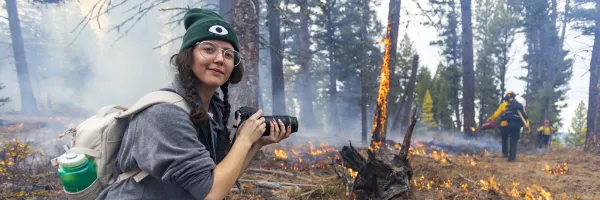
Journalism Undergraduate Program
Tell stories that matter. Start doing it on day one.
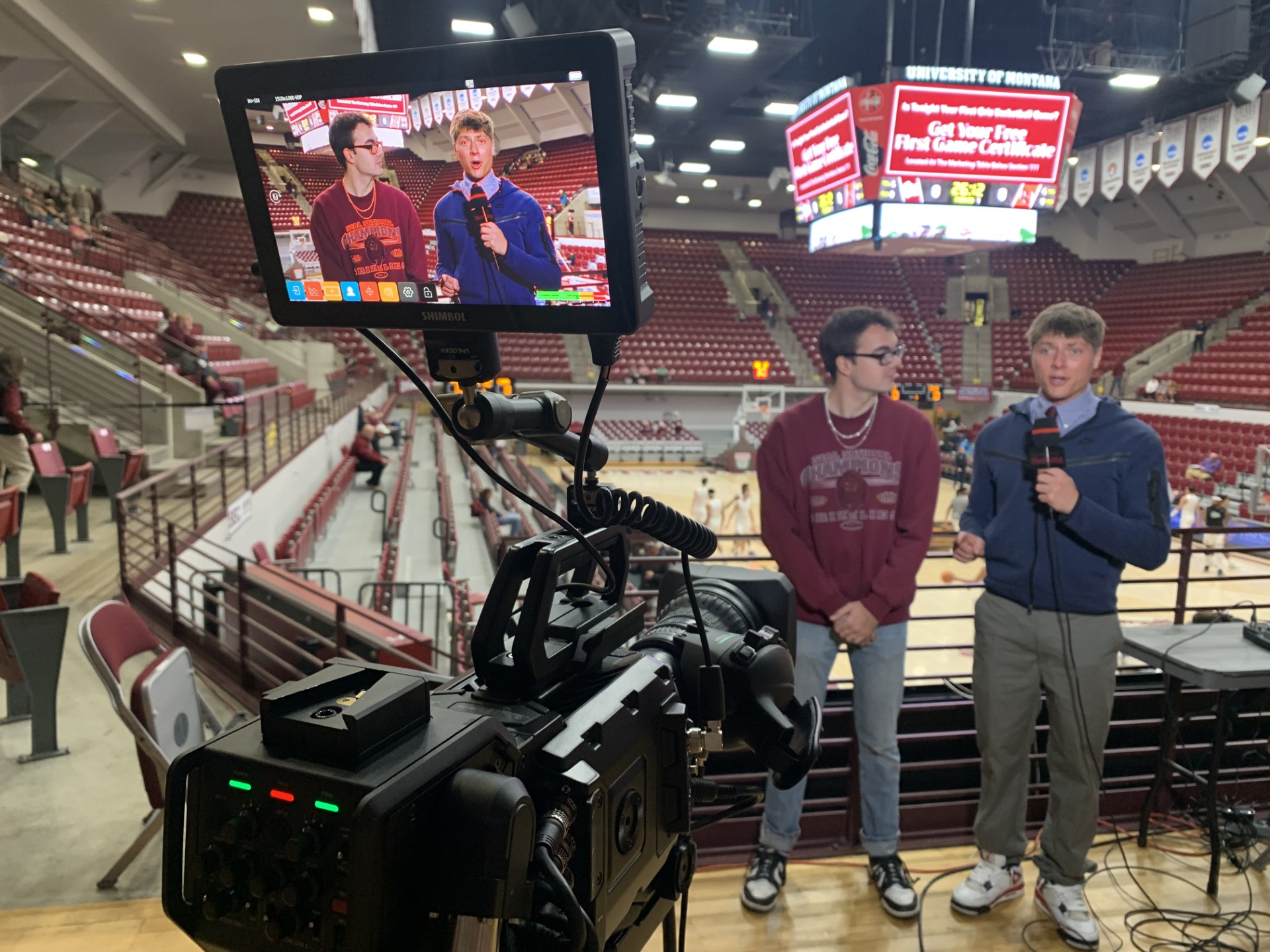
The University of Montana School of Journalism is one of the oldest journalism programs in the country — founded in 1914 and still the only journalism school in Montana. More than a century later, the formula is simple: you learn journalism by doing it, on real deadlines, for real audiences, starting your first semester.
This is a small, intensely professional program. Our students don't practice journalism in simulated newsrooms — they cover the state legislature, tribal nations, report for public radio and other outlets while still undergraduates. They win national awards while still in school. And they graduate with a portfolio of published, produced, broadcast work — not just a diploma.
We are a top-10 Hearst Award-winning school with a great reputation, locally, regionally and nationally. Our students regularly compete for, and win, big national awards in competitions from the Society of Professional Journalists, the Online News Association, the student Emmy Awards, the Broadcast Education Association and more.
You'll work from the start. Hands-on learning in the field is the top factor prospective students say matters most when choosing a journalism school — and it's the core of everything we do here. From your first semester, you'll report, produce, and publish real journalism.
You'll build a portfolio, not just a transcript. Before you graduate, you'll have professionally published clips, produced audio, broadcast segments, or visual work — whatever your track. Our alumni work at the New York Times, NPR, the Washington Post, CBS, and community newsrooms across the country.
You'll be recognized nationally. In 2025–2026, UM ranked 10th overall in the Hearst Journalism Awards — often called the college Pulitzers — among 104 accredited programs. Maddie McCuddy won the national photojournalism championship. Claire Bernard finished second in the nation in writing. Our students compete at this level every year.
Your professors are working journalists. Faculty credentials include a Pulitzer Prize, Emmy nominations, nationally distributed podcasts, and published books. And with small classes and an open-door policy, they know your name and your work. Every incoming student meets personally with the Director before their first semester begins.
It's more affordable than you think. Each year we award more than $426,000 in scholarships to current students, funded by a community of alumni and donors who believe in this program. See scholarships and financial aid →
Degree Options
At the School of Journalism, you can pick one specific track, or you can do it all. Click the options at left or below to explore some of the tracks.
-

Audio and Podcasting
Audio students anchor newscasts on the college radio station KBGA, intern with Montana Public Radio and produce original podcasts alongside some of the nation's best audio journalists — just a few of the projects that get them on air before graduation. -

Writing, Reporting and Editing
Our graduates cover everything from Congress to city council meetings. They break news, hold power accountable and tell the stories of the people living through it — work that runs everywhere from the New York Times to small-town weeklies. -

Photo and Visual Journalism
The photojournalism and visual journalism track at the University of Montana School of Journalism turns out work that wins, not just competes. Students place at the Hearst Journalism Awards — journalism's answer to the Pulitzers — while still undergrads, and graduate into jobs at newsrooms nationwide.
-

TV and Film
Whether your goal is in front of the camera or behind it, the TV and film track at the University of Montana School of Journalism gets you making real work, not just studying it. The Student Documentary Unit capstone produces a full-length documentary for Montana PBS every year, and graduates go on to work as reporters, producers, directors and editors. -

Social Media, Marketing and Public Relations
The social media, marketing and PR track takes core journalism skills — writing, reporting, design, video and photography — and turns them loose on real clients, causes and campaigns. Students build a professional portfolio of actual client work, not hypothetical case studies, before they graduate. Graduates go on to work as communications directors, social media producers, marketing specialists and creative producers. -

All Tracks
You're not locked into one path here — combine tracks, switch lanes, or build your own mix of writing, audio, visual and PR courses as your interests evolve.
Audio and Podcasting
Writing, Reporting and Editing
Photo and Visual Journalism
The photojournalism and visual journalism track at the University of Montana School of Journalism turns out work that wins, not just competes. Students place at the Hearst Journalism Awards — journalism's answer to the Pulitzers — while still undergrads, and graduate into jobs at newsrooms nationwide.
TV and Film
Social Media, Marketing and Public Relations