UM Students Bag Big Game With Help From Hunting Mentorship Program

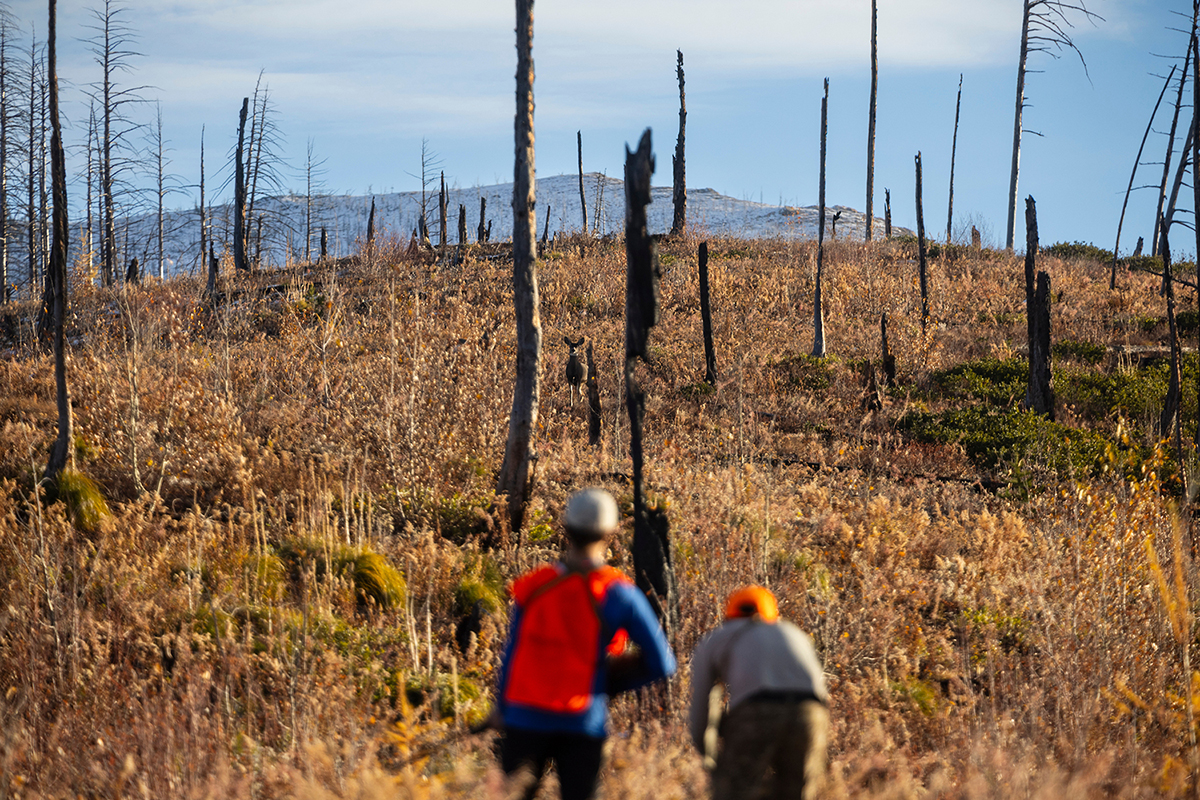
A University of Montana student peers through binoculars in search of wild game during a Hunting Mentorship Program hunt near Lubrecht Experimental Forest. UM's Hunting Mentorship Program offers students interested in learning to hunt an opportunity to get out in the field with experienced hunters. (UM photos by Marley Barboeisel)
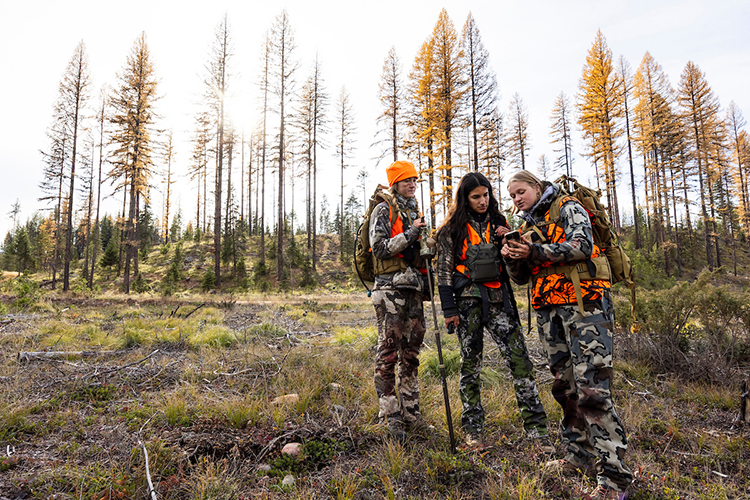
View an enhanced version of this news release with video and more photos.
By Jessica Abell, UM News Service
MISSOULA – Hunting is a rite of passage for many Montanans. Growing up less than an hour outside of Chicago, University of Montana freshman Natalie Spector had never hunted big game before bagging a handsome mule deer on her first outing with the Backcountry Hunters and Anglers student club’s mentorship program.
Spector, a Parks, Tourism and Recreation Management major in the W.A. Franke College of Forestry and Conservation, had accompanied her father on hunts as a child, but had never hunted herself.
“I just got my hunting license two weeks ago,” she grinned upon returning with her prize.
Spector and her graduate student mentor, Alden Whitney, who grew up near Olympia, Washington, started hiking in search of game before the sun rose on a recent Saturday morning near UM-managed Lubrecht Experimental Forest.
“It’s so much different than where I’ve been hunting,” Spector said. “We usually go way up north in Wisconsin to hunt, and it’s just such a different experience out there. The scenery out here is just so much more amazing. I’m used to sitting and watching and waiting for the animals to come, but this was my first time hiking in and out of the area.”
About three miles in, Whitney spotted the ungulate from the trail and the pair stopped. The spike buck started to run, and just as Spector thought she had lost her chance, the young deer stopped and stared back at the hunters.
“It took me a minute to find him again, and then I was sitting there waiting to shoot, and it was such a nerve-wracking experience,” she said. “Then I just shot, and it was such a big adrenaline rush. It was just amazing.”
A clean shot. The animal fell where it stood.
“I swear I could hear my heart beating. It was crazy, and I was shaking so much I thought I was gonna miss the shot, but I took a minute and I took a breath, and then I shot, and then it was all good,” she said. “I was taught you don’t shoot unless you're confident, and it took me a minute to find that confidence, but once I did, it was an easy shot, and it stopped in its tracks.”
Spector is one of around 20 students who participated in the hunting mentorship program this fall. Amory Kindle, president of UM’s Backcountry Hunters and Anglers student chapter, said the program is designed to give students who wouldn’t otherwise have a chance to try hunting an accessible and welcoming opportunity to get in the field.
“There are just so many barriers of entry to hunting, from equipment to licensing, to expertise,” Kindle said. "It’s daunting to get into on your own, and so we want to give students a chance to learn.”
Safety is a priority when it comes to hunting. Students learn about responsible gun handling and practice shooting at a local range off campus prior to their weekend hunt. They start out with the basics of how to sight in and confidently shoot a rifle before covering shot placement, various shooting scenarios and what an ethical shot looks like in the field.
Students also learn about fair chase, how to process a game animal and how hunting contributes to conservation efforts across Montana. Kindle said they are paired with peer mentors who are experienced in backcountry hunting, which is a core pillar of the program.
“Our hope with having peer mentors is that mentees feel inspired and empowered to continue hunting, and to go try it on their own,” he said.
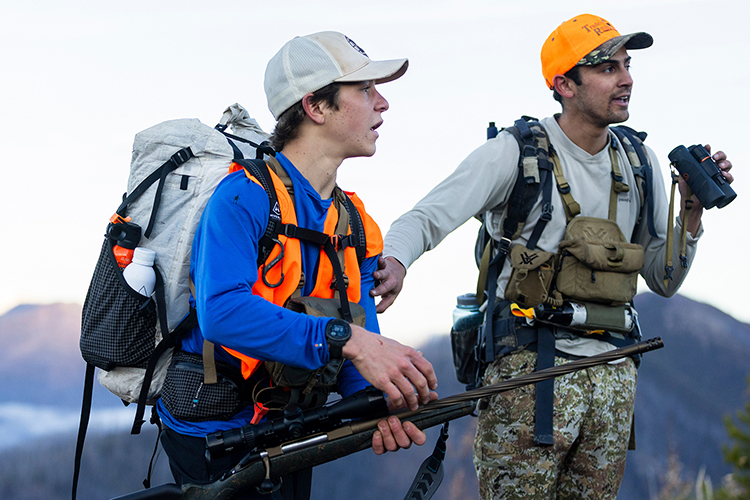
Mentors provided rifles for their mentees, while ammunition, shooting equipment, blaze orange hats and vests are supplied by the student club. Hellgate Hunters and Anglers, a local conservation group, also allowed students to use their gear library, providing them with backpacks, boots and jackets. Students spend the weekend in cabins at Lubrecht Experimental Forest during their inaugural hunt, where they can commiserate over their experiences, adding to the camaraderie of the event.
“We really prioritized making this program entirely free so that it was as accessible as possible for any student,” Kindle said.
Whitney, Spector’s mentor, said he loves being able to share his knowledge of hunting with others.
“I have better memories of me helping other hunters than I do my deer,” he said. “This is the third person I’ve helped get their first deer across the years. I did the mentorship program two years back and helped a buddy get his first deer. It's so fun to be able to share that with people.”
Professor Nicole Tatman, director of UM’s new Center for Hunting and Conservation, helps teach a course on wild sustenance at the Franke College where students can learn the basics of hunting – from how to properly field dress a deer to the difference between lead and copper ammo. She emphasized the personal experience of hunting and its importance to conservation efforts.
“Hunting ties a person to the land,” Tatman said. “They procure their own food from the wild, which builds a deep respect for the animal and a desire to see its species thrive for generations to come. The populations we hunt are managed by trained wildlife biologists, who set harvest levels so that the species stays healthy and present on the landscape. When hunters take an animal within those limits, the harvest supports the conservation of its kind.”
By the end of the student mentorship hunt, many involved already had plans to get out in the field again, Kindle said.
“These are the kinds of friendships that we wanted to form by having an entirely student-led program,” he said. “Hunting is hard. It’s a physically demanding, time-consuming, and emotional experience. I am so impressed by everyone in the program. Witnessing mentors and mentees’ willingness to pour their time and energy into teaching and learning what it takes to hunt on public land, connect on an opportunity with an animal and harvest your own wild meat were some of the most inspiring experiences I’ve had during my time in college.
“I hope that folks carry on this ethos of passion and care for wild places and wild animals, and I am excited to see where hunting takes them,” Kindle said.
Dr. Libby Metcalf, dean of the Franke College, praised the program and the students who worked to pull it all together.
“UM students know the importance of hunting as a conservation management tool,” she said. “They have created a beautiful peer-to-peer mentorship program that will ensure students get the right training and build skills that will serve them as they move through their hunting journey.”
###
Contact: Dave Kuntz, UM director of strategic communications, 406-243-5659, dave.kuntz@umontana.edu; Jessica Abell, Marketing and Communications, W.A. Franke College of Forestry and Conservation, jessica.abell@mso.umt.edu.