UM Secures $2.3M Grant to Launch Neurodevelopmental Disability Training Program
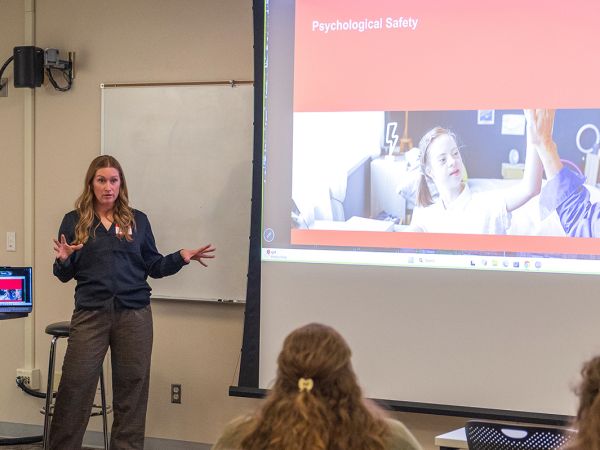
Leah Meloy leads the first session of a new training offered at the University of Montana for people working with individuals who have neurodevelopmental disabilities. (UM photos by Noah Epps)
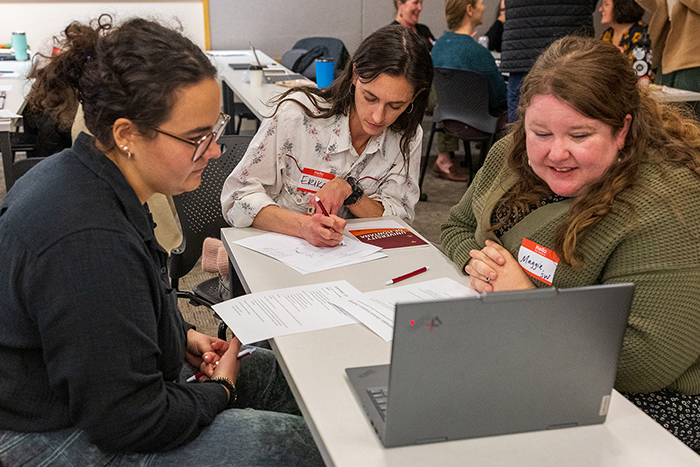
MISSOULA – This month, a cohort of University of Montana graduate students and community members began a yearlong comprehensive training program focused on improving healthcare outcomes for people with autism and other neurodevelopmental disabilities.
Thanks to a $2.3 million federal grant secured this fall by a multidisciplinary team at the Rural Institute and the College of Health, UM’s campus is now home to the state’s first-ever in-house Leadership Education in Neurodevelopmental and Other Related Disabilities (LEND) program.
“Montana LEND will work toward improving the health-related quality of life of Montanans with neurodevelopmental and related disabilities by providing high-quality training to graduate students, community providers and people with lived experience of disability,” said Leah Meloy, a clinical assistant professor in the School of Speech, Language, Hearing and Occupational Science and a member of the team that helped launch the program at UM.
The federally funded LEND programs exist in states across the country and are geared toward graduate students in health fields but also accept practicing providers in the community and family members or caregivers for individuals with neurodevelopmental disabilities.
The training provides participants with a specialized expertise in the systemic deficiencies and barriers people with neurodevelopmental disabilities face in health settings and aims to provide the tools needed to work toward solving those issues.
The cohort participates in 300 hours of training split into three sections. The first portion includes a series of seminars featuring experts, guest speakers and people with lived experience to create a framework for understanding how to better serve people with disabilities. The seminars cover everything from theoretical topics like social determinants of health and systemic issues with policy and disability law to clinic-specific issues like screening and diagnosis.
“One of the coolest things about this curriculum is that it’s relevant for everyone (in the health fields), and you get to see so many things that are outside your discipline that do still really inform your practice,” Meloy said.
The second section sends them out into the field to observe in clinics, hospitals and other healthcare settings to see how interdisciplinary care and best practices happen on the ground.
Finally, the trainees complete a group project to demonstrate their skills in leadership and working with a team to solve an issue.
“What it does is train more practitioners who are able to address these big-time barriers and really think through what do we need to change at the state level to ensure that services are being delivered appropriately and with best practices in mind,” said Molly Kimmel, executive director of the Rural Institute.
As the state’s University Center for Excellence in Developmental and Related Disabilities, the Rural Institute is tasked with providing research, evaluation, service and training related to disability across the lifespan, Kimmel said.
“Currently, the (LEND) program is housed under the Rural Institute umbrella but reaches across campus,” she said. “And the intention is really that we reach trainees across the state too.”
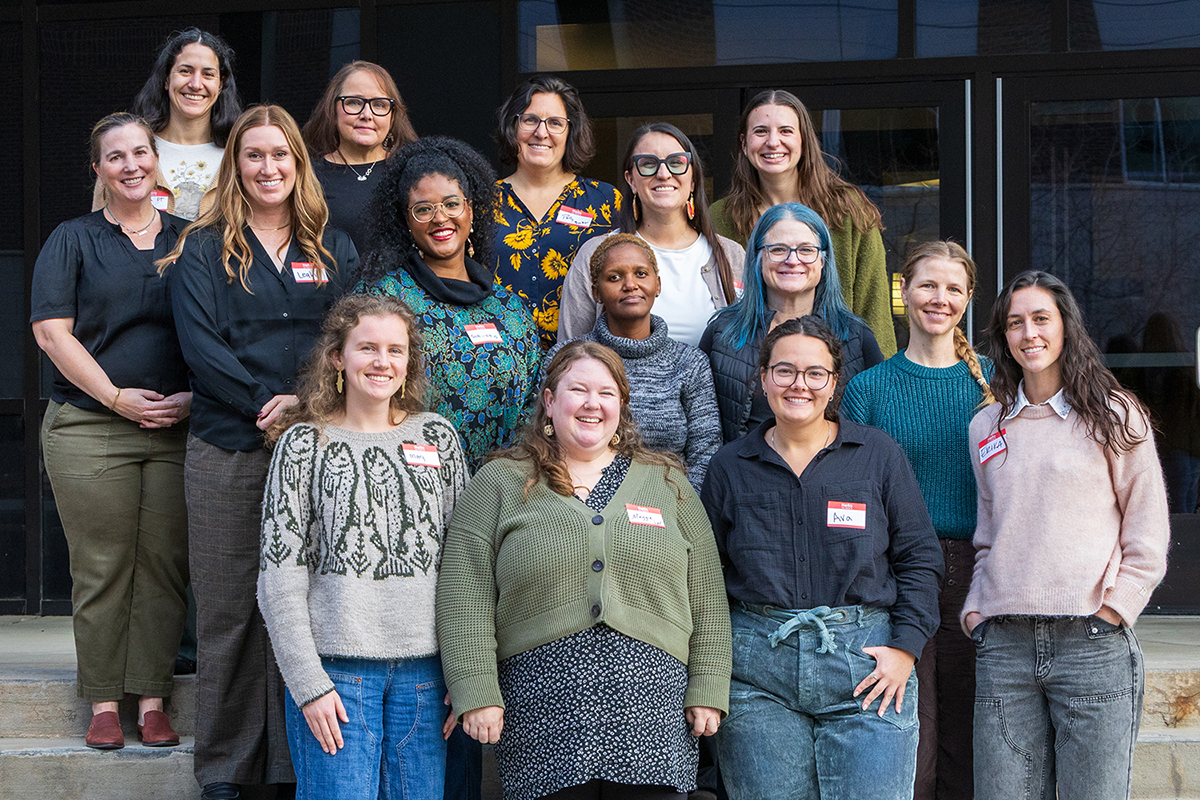
This year’s cohort includes a mix of UM graduate students across a range of health fields, as well as community members.
“I think it’s a cornerstone of the program that there are people with lived experience of disability and family members of people with disability who are at the same level as the rest of the cohort, doing the same amount of work and providing their experience,” Kimmel said.
The students who participate become part of a network of LEND-trained professionals across the country, opening doors for collaboration and opportunity.
“No matter where you go with your career, you are going to be adjacent to someone who has participated in a LEND training if you continue to work in (healthcare),” Kimmel said.
The ideal candidate for the program is “someone who already has some experience in the world of neurodevelopmental disabilities and is ready to take that next step to expand their understanding of system-level barriers and thinking through their own leadership path.”
The multidisciplinary team leading the new LEND training program includes Kimmel and Meloy; Julia Mazzarella, assistant professor in the School of Physical Therapy and Rehabilitation Science; Kim McKearnan, Occupational Therapy doctorate program director; Jenn Banna, project coordinator at the Rural Institute; Krys Standley, research project director at the Rural Institute; and Luke Santore, Rural Institute research associate.
The $2.3 million grant will fund UM’s LEND program for the next five years. Applications for the 2027-28 program will open in the spring. To learn more about UM's LEND program, visit the Rural Institute’s webpage on education and training opportunities.
###
Contact: Leah Meloy, LEND program co-director, 406-243-4995, leah.meloy@umontana.edu; Kim McKearnan, LEND program co-director, 406-243-6930, kim.mckearnan@mso.umt.edu.