Site Characteristics and Fire Interact to Shape Juvenile Tree Populations in High-Elevation Whitebark Pine Forests
Abstract
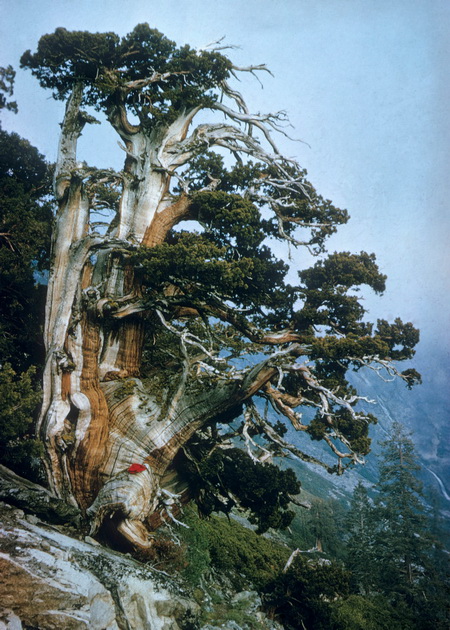
Climate change and shifting fire regimes are expected to alter tree regeneration dynamics, yet these impacts remain poorly resolved in high-elevation forests. Whitebark pine (Pinus albicaulis) is of particular concern as a federally threatened species experiencing severe decline due to white pine blister rust (Cronartium ribicola) and mountain pine beetle (Dendroctonus ponderosae). Using a 2 x 2 factorial design (burned vs. unburned, upper vs. lower elevation) across 10 sites in the Selway-Bitterroot Wilderness (Montana and Idaho, USA), we modeled seedling and sapling presence and abundance of whitebark pine, subalpine fir (Abies lasiocarpa), alpine larch (Larix lyallii), and Engelmann spruce (Picea engelmannii) as a function of fire occurrence, topography, forest structure, ground cover, burn severity, and post-fire climate. We also developed a geospatial model predicting whitebark pine juvenile presence and abundance at 10 m resolution across the Bitterroot Range.
Citation
Josh Beisel, Sean A. Parks, C. Alina Cansler, David L. R. Affleck, Ashley P. Ballantyne, and Andrew J. Larson. Site characteristics and fire interact to shape juvenile tree populations in high-elevation whitebark pine forests. Fire Ecology 22, 131 (2026). https://doi.org/10.1186/s42408-026-00543-y