People

Vicky Dreitz
Vicky Dreitz is Director of the Avian Science Center and Professor in Wildlife Biology Program. A native of northeastern Colorado, she earned her BS from Colorado State University and PhD from the University of Miami (Florida). Before joining UM, she worked as a research scientist for Colorado Parks and Wildlife.
Her research spans conservation biology, wildlife management, and systems ecology, focusing on how human activities affect ecological processes across species, communities, and ecosystems. Vicky’s collaborative projects bring together private landowners, agency managers, research scientists, NGOs, and philanthropic partners to address complex conservation challenges.
She is committed to mentoring the next generation of wildlife professionals, including women in wildlife biology. Outside of work, she enjoys time with family, trail running, fly fishing, Nordic skiing, yoga, baking, and gardening.
Email: victoria.dreitz@umontana.edu
Phone: 406.243.5476
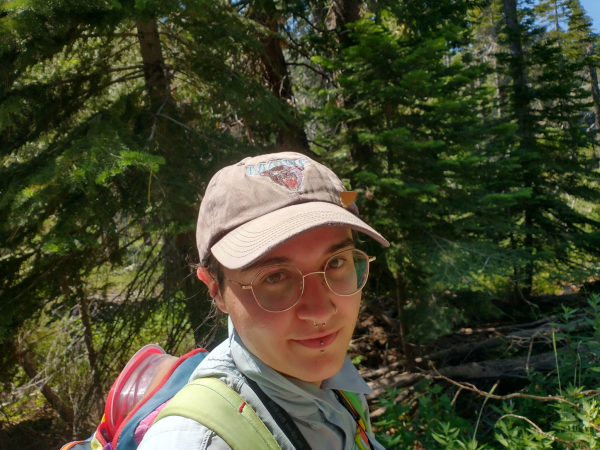
Cas Carroll
Cas F. Carroll grew up in the heavily modified landscapes of New England and came to ecology by way of an interest in addressing environmental problems such as pollution and overconsumption. This interest led them to the interdisciplinary Ecology and Environmental Science B.S. program at the University of Maine, where they led a fossil fuel divestment campaign and worked on several forest, insect, and paleo-ecology projects. Their work in applied conservation eventually led them west to the Great Basin and the University of Nevada, Reno to collaborate with the USFWS to address questions about the federally endangered Carson wandering skipper butterfly. For their Ph.D., they studied two rare grass skipper butterflies of conservation concern, working with numerous federal and state agencies as well as nonprofits to address questions that will help inform and advance conservation for the species. As a postdoc at the University of Montana, they are working with the NPS to address questions about the distribution of a rare firefly and using the species as a case study to help develop decision making frameworks to help managers make informed decisions for other rare species.
Cas' work broadly addresses knowledge gaps about rare and data-limited invertebrates. The methods they use are driven by the conservation needs as well as the type and quality of data available (including observational ecological studies to population genetic analyses and ecological modelling). They are very interested in forming interdisciplinary collaborations to address conservation problems broadly, and forming local networks of conservation professionals to respond more quickly to the problems and needs in our communities.
In their free time Cas enjoys cooking and sharing meals, hanging out with their dog, caring for plants, watching bugs through binoculars, crocheting, reading, hiking, biking, and swimming.
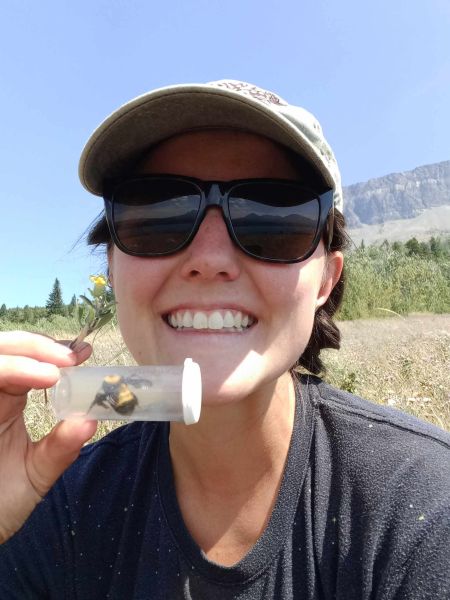
Kelsey Cronin
Kelsey's journey into wildlife biology began with a transformative experience while working on a backcountry trail crew in Yellowstone National Park, where she first encountered a wildlife biologist. This encounter inspired her to pursue higher education, leading her to earn a Bachelor's degree in Biology from Oregon State University. Over the next five years, Kelsey gained diverse field experience through various wildlife projects, including studying bumblebee survey methods, investigating the interactions between golden eagles and windmills, and researching the population demography of Antarctic seals. Now, she is excited to return to the Greater Yellowstone Ecosystem for her Master's research, where she will contribute to RCF's mission of studying and protecting the Common Loon.

Christain Dupree
Christian Dupree grew up in South American, living mainly in Chile and Peru. Spending years discovering the unique wildlife of the Amazon, Andes, and Patagonia while his father worked on development projects. In 2006 his family moved back to the US, and he joined the Air Force soon after. While serving he spent much of his free time volunteering on habitat restoration and cleanup projects in Guam, Qatar, and several US states. Honorably discharged in 2018 he moved to Montana to be closer to his family and use the GI bill to get a B.S. in wildlife biology at the UM. Currently he is working on the implementation of A.I. in projects for the ASC. He is primarily interested in exploring how to use emerging technologies and improve techniques of wildlife monitoring and data analysis that can be easily and effectively used by agencies in developing countries. When he’s not trapped in an office typing away, he enjoys working on his small hobby farm in Arlee, fishing, hiking, fixing old things and painting.
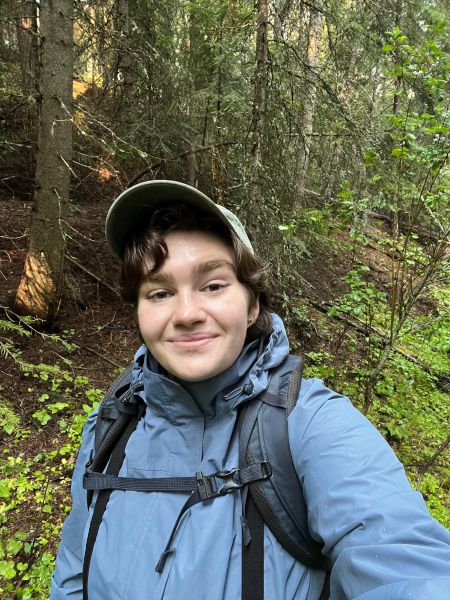
Lauren Hatch
Lauren grew up in Colorado and spent much of her childhood exploring the Colorado Rockies, Black Hills, and Great Plains, which fostered a connection and appreciation for the natural world. While completing her bachelor’s degree in Fish, Wildlife, and Conservation Biology at Colorado State University, Lauren caught the birding “bug” while taking Ornithology and developed a deep passion for avian ecology and conservation. Since then, she has worked as a technician for Audubon and the US Forest Service surveying birds and mammals in the Northern Great Plains, Rockies, and Sierra Nevada. Lauren’s experience working for Audubon Great Plains fostered an interest in grassland birds and private lands conservation, which eventually brought her to the Avian Science Center in 2024 where she started her master’s degree. Her research is focused on identifying limiting factors in two imperiled species of grassland birds – Chestnut-collared and Thick-billed Longspur, in central Montana. Broadly speaking, her research interests include grassland conservation, avian ecology and conservation, quantitative ecology, and spatial ecology. In her spare time, you can usually find Lauren birding, hiking, camping, skiing, or cooking.
Amanda Kimball
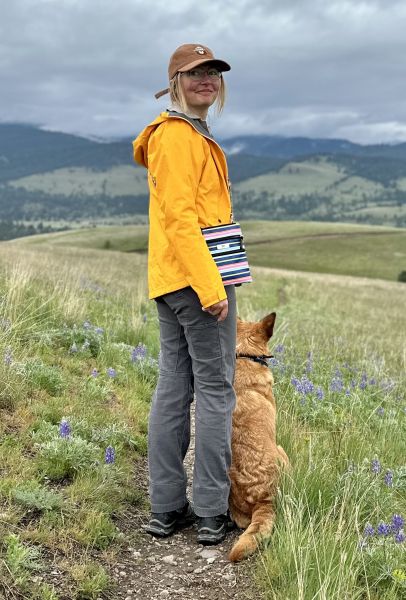
Amanda is a pursuing a professional masters of science in partnership with the Bitter Root Land Trust (Hamilton) to study wildlife habitat conservation and restoration on private lands. She got her B.S. in Conservation Ecology and a certificate in Leadership Studies from Montana State University with a semester spent with the Wild Rockies Field Institute (Missoula) studying land use ethics and regional ecology. A year volunteering with Montana Conservation Corps and two years as a Biological Sciences/Wildlife Technician for the U.S. Forest Service let her work and travel across the Rockies. She's happiest when her work and free time overlap; be it hiking, cooking (stove or campfire), paddling, reading, skiing and/or dancing.
Morgan Mcdonnell
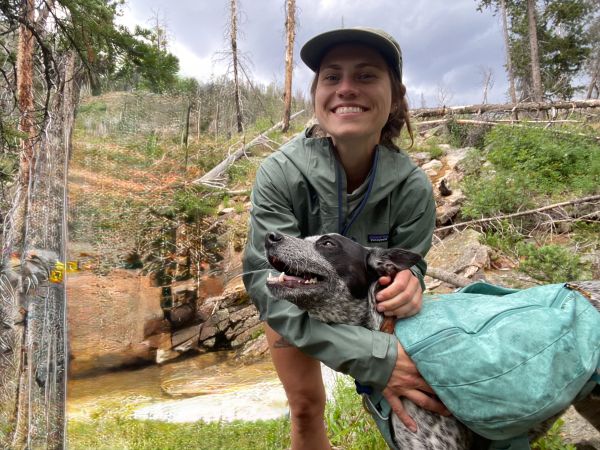
Morgan McDonnell is a PhD student researching fish-eating raptors in the Greater Yellowstone Ecosystem. Before pursuing a degree in the Wildlife Biology Program, Morgan earned a bachelor’s in geological sciences at SUNY Geneseo and a master’s in geography at the University of Utah. She has worked as a cave technician, field geologist, and most recently as a hydrologist for the U.S. Geological Survey. While living in Salt Lake City, she gained a passion for raptors volunteering at Hawkwatch International as an education docent. She is interested in integrating her knowledge about hydrologic systems with the ecosystems they support to advance conservation science.