Cold Nights and Arctic Discoveries Lead UM Graduate to Dream Job in Missoula
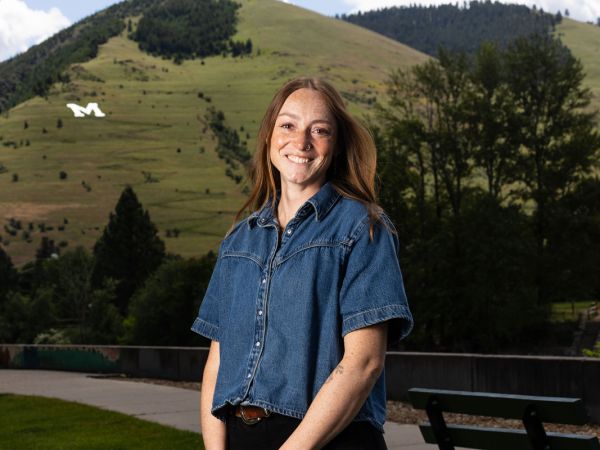
Kristen Gehl, a recent University of Montana graduate, leveraged the education and mentorship she gained as a student to secure her dream job as a hydrogeologist in Missoula. (UM photo by Cassi Evans)
By Abigail Lauten-Scrivner, UM News Service
MISSOULA – Like many college students who graduated during the COVID-19 pandemic’s peak, Kirsten Gehl found herself at a crossroads in 2020 and unsure what to do with her new geology degree during a time of mass uncertainty and unpredictable job prospects.
After returning home to New Hampshire for a few months, a series of moves out west ultimately landed Gehl in Missoula working on a trail crew for the Montana Conservation Corps – a choice that set her on the path of becoming a University of Montana graduate student, publishing research and eventually landing her dream job.
“As I started my work with MCC, I was starting to feel that connection again to the natural world and the physical world and the science that I had been trained in and really wanted to work with,” Gehl said. “It invigorated me to look at grad school.”
Gehl had become attached to Missoula’s vibrant community and outdoor access, envisioning herself making the region home for a long time. She applied to study with UM Professor of Geosciences Joel Harper and was accepted to start graduate school in UM’s geosciences program in 2023.
Harper’s expertise lies in snow and ice and how they interact with climate. A UM professor of 21 years, his work takes Harper and his students on frequent research expeditions to the Greenland Ice Sheet and other glaciers in North America. Gehl was excited by the opportunity to get a background in snow sciences and incorporate that field into a water management perspective.
“She both had the academic chops and had done a lot of interesting outdoor stuff – and my work involves both,” Harper said of Gehl. “I need somebody who can bang on a computer but also go and do field work in a place like Greenland.”
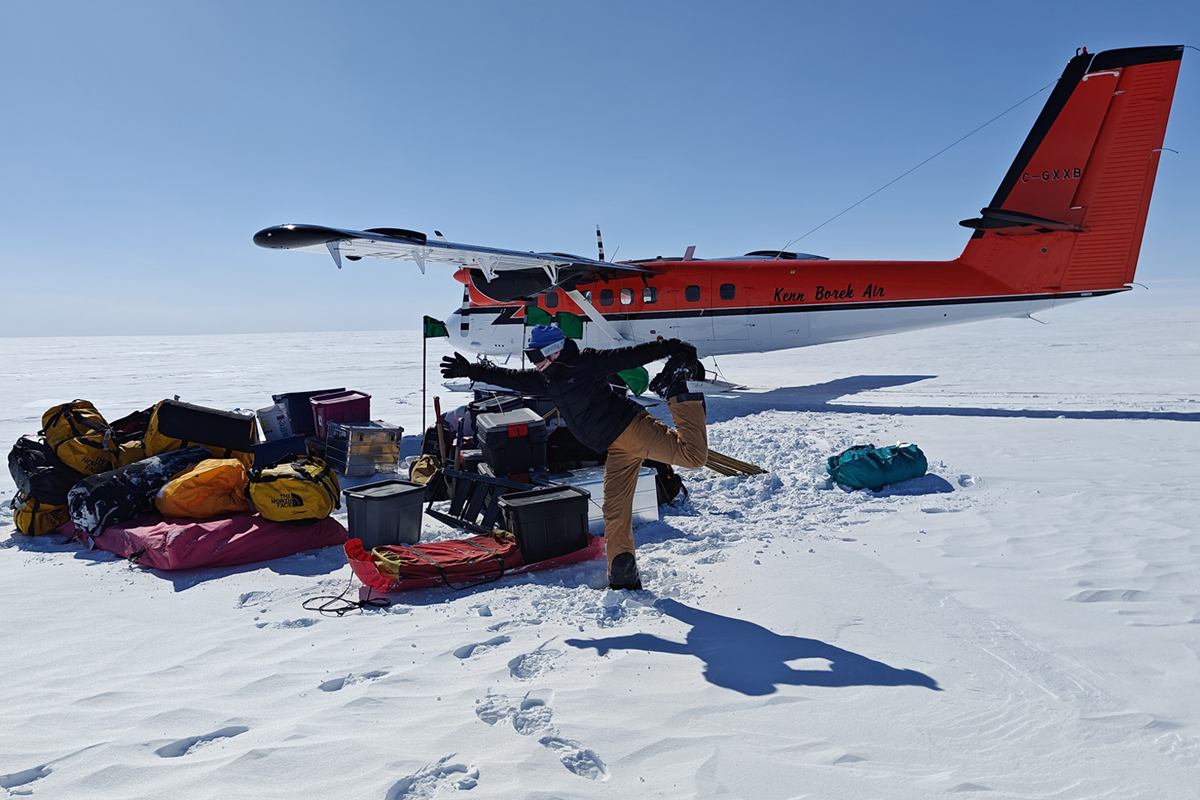
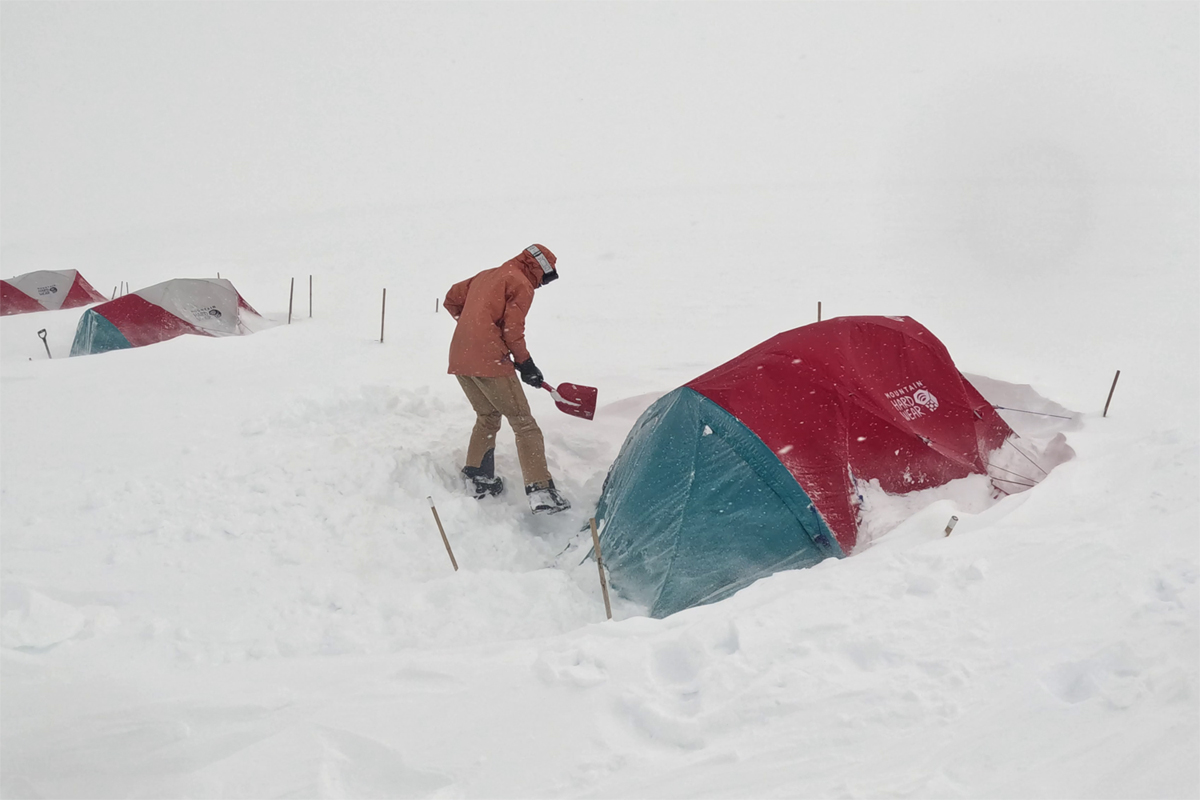
Gehl was thrown into the field season right away, flying to Greenland with the research team her first semester of grad school. They winter camped in minus-10-degree temperatures after traveling by snow plane to the remote location on the ice sheet.
“We were completely separated from the outside world for those three weeks,” Gehl said. “But it was a really great experience as far as building resiliency and just learning how to push through a lot of physical discomfort in the name of science, which trail crew prepared me for.”
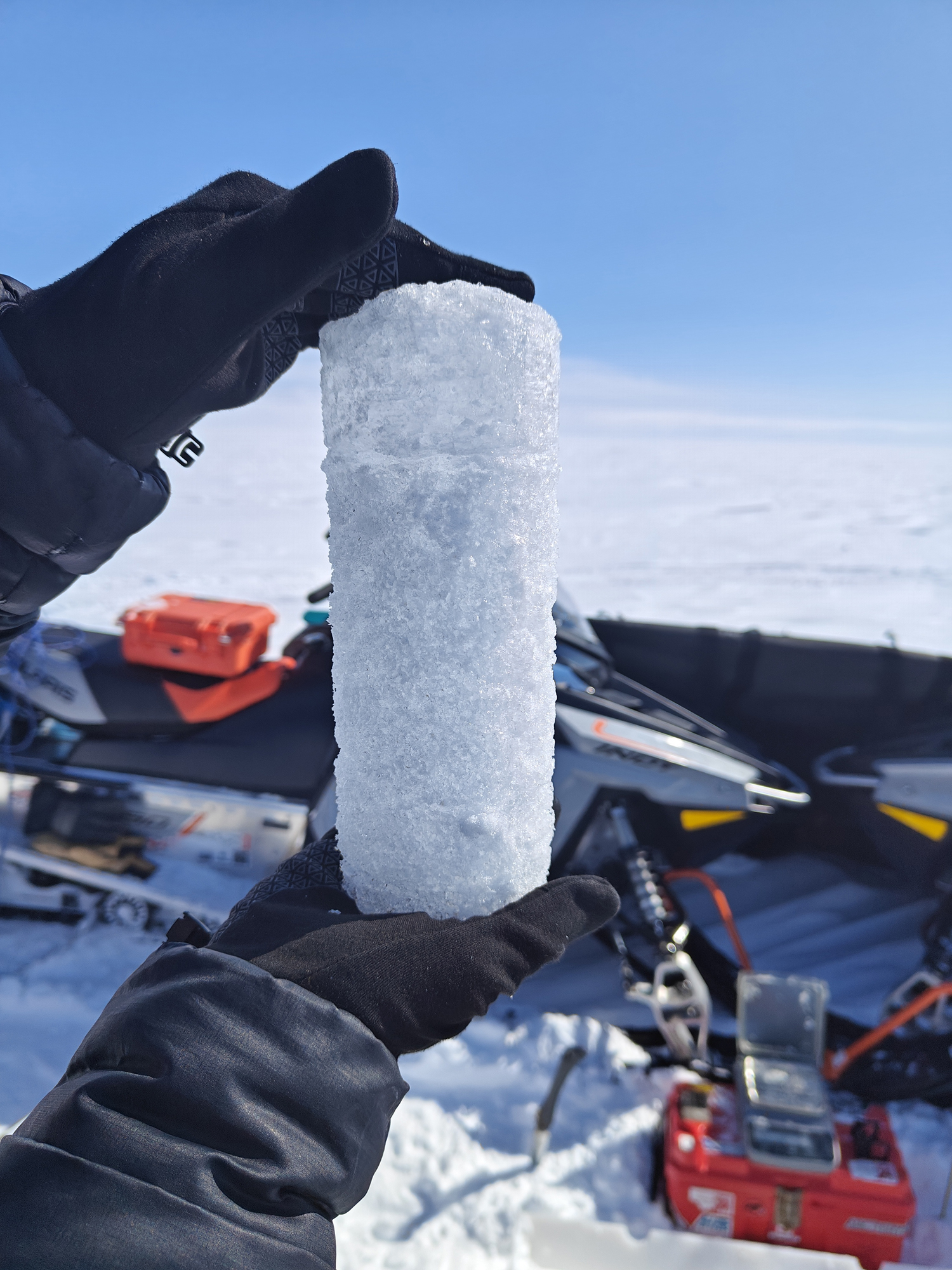
Gehl’s research examined how snow grains on the surface of the Greenland Ice Sheet change shape and size based on heat flow in and out of the snowpack. Harper noted the project might sound small in scale but actually has global implications. The snow grains’ size and shape impact how much space is created for storing surface layer snow melt.
“If the surface melt is stored in that space, it doesn’t end up in the ocean,” Harper said. “So it’s really important to understanding sea level rise and understanding and projecting where sea level is going.”
The work involved drilling down 30 meters into the Greenland Ice Sheet to install temperature sensors, as well as taking snow and ice core samples. Gehl generated hypotheses from the field observations and tested them using scientific models.
Gehl’s findings were published in the journal The Cryosphere. Harper said the research will help inform and improve scientific modeling approaches applicable to issues of water storage and sea level rise.
“Her work will definitely be incorporated into forthcoming work – this is very much a moving front of understanding with our ice sheet models,” he said. ”She did really fundamental work, but it has very big implications.”
Gehl said she’s excited about her work helping advance science forward and hopes it can be used for good.
The process of seeing a research project through from start to finish, as well as the classes and mentorship that shaped her education at UM, helped position Gehl competitively in the job market after graduating. She said the tight-knit department meant she could freely talk to any of the professors and get relevant, applicable career advice.
Beyond the essential skills and science taught in the geosciences department, Harper emphasized he and his peers also focus on teaching students to adaptively think in a rapidly changing world with constantly changing tools, such as artificial intelligence.
“I felt very well prepared to apply for jobs and market my skills after receiving this kind of mentorship from the department and my colleagues, because they really made it clear that I had something to offer,” Gehl said.
Gehl now works as a hydrogeologist at an environmental consulting firm called GSI Environmental, working with data and modeling various project sites to check that water quality is within reasonable limits.
“I get to do really, really good science every day with a bunch of other really, really, really talented scientists,” she said. “And that’s kind of the whole point, I think, for me.”
Based in the firm’s Missoula office, Gehl described getting to stay in town while directly applying her degree as a dream. In addition to her hard work and skillsets she learned at UM, she said her strong mentorship relationship with Harper and his connections throughout the field were instrumental in helping her secure the competitive position.
“I think a lot of students would love to have a job like that in a place like this,” Harper said. “She's doing stuff that she's passionate about – helping solve water problems, deal with mine waste. So I know she’s going to go on and do great there. And have a good life in Missoula, Montana.”
###
Contact: Dave Kuntz, UM director of strategic communications, 406-243-5659, dave.kuntz@umontana.edu.