People
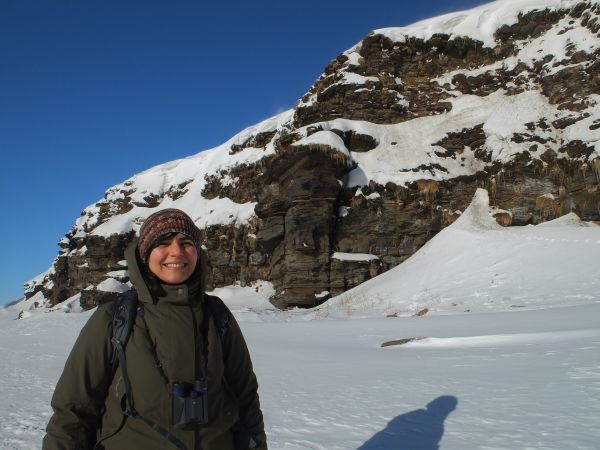
Mahdieh Tourani
Mahdieh Tourani is an Assistant Professor of Quantitative Ecology in the Department of Ecosystem and Conservation Sciences, and the Wildlife Biology Program at the University of Montana, Missoula. She has worked and studied in seven different institutes across three continents. She completed her PhD in 2020 at the Norwegian University of Life Sciences on carnivore population monitoring in Scandinavia and South Asia. After her PhD, Mahdieh has worked as a postdoctoral scholar at the University of California, Davis, where she performed research on North American mammal communities, as well as contributing to Wildlife Insights analytics. Her main interest is to develop statistical models to overcome challenges associated with wildlife population monitoring at large scale, such as data sparsity and imperfect observations. She is also developing decision-support tools to facilitate the use of statistical ecology for wildlife management and conservation.
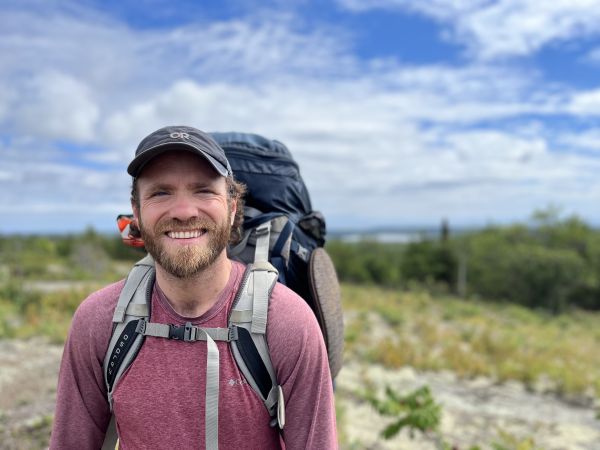
Mauriel Rodriguez Curras
Mauriel is a postdoc working on refining quantitative methods to estimate animal densities of unmarked populations. He is broadly interested in how communities respond to ecological change, with a focus on carnivores, predator-prey dynamics, species interactions, and human-wildlife coexistence. His research combines field ecology, camera traps, GPS collars, diet analyses, and quantitative methods to better understand how species shape communities, ecosystems, and interact with people. Before joining the University of Montana, Mauriel was a postdoctoral researcher with the California Wolf Project at UC Berkeley, where he studied gray wolf recolonization in California. He completed his master’s and PhD at the University of Wisconsin–Madison, where his work focused on large carnivore community ecology.
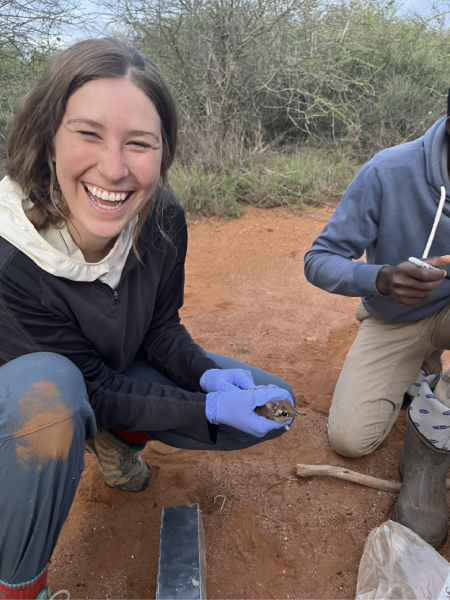
Kat Garrett
Kat is a PhD student in the Tourani lab, where she studies animal behavior and movement. She used ungulate movement data to optimize camera sampling design in northwest Montana for her MS degree. Kat completed her MS degree at the University of Montana in 2026. She grew up around the Black Hills in South Dakota and earned her BS in Zoology from the University of Wyoming. Before beginning her master's, she worked on a wide range of projects with (very rad) mammals - including elephant shrews and lions in central Kenya, bats in the Black Hills, and martens in Wyoming. Outside of research, she often is off the grid hiking or skiing and on stormy days at home reading with her two cats.
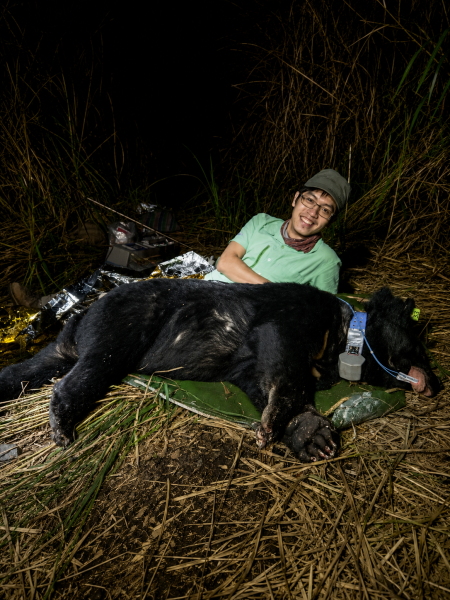
Chunhao Chang
Chunhao is a PhD student in the Wildlife Biology Program. He earned his DVM degree at National Taiwan University and later developed a strong interest in wildlife ecology and conservation. Over the past several years, he has worked as a field researcher and with conservation NGOs, focusing on the ecology and conservation of Asiatic black bears in Taiwan. Through this work, he became increasingly interested in understanding wildlife population dynamics and the ecological processes that shape wildlife populations. He came to the University of Montana to develop his skills in quantitative and spatial ecology. His PhD research focuses on using spatially explicit capture-recapture and integrated population models to better understand grizzly bear populations in British Columbia and inform conservation and management strategies.
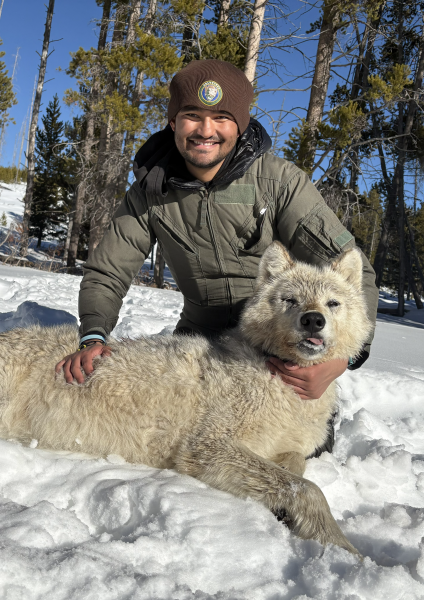
Jeremy SunderRaj
Jeremy is a PhD student at the University of Montana researching gray wolf bioacoustics and social behavior in Yellowstone National Park. Prior to graduating from high school in Colorado, he spent his summers working in Yellowstone, volunteering at a local invertebrate zoo called the Butterfly Pavilion, and observing animals in his free time. He received his B.S. in Wildlife Biology from the University of Montana in 2014. During that time, he spent three summers trapping and radio-collaring wolves for Montana Fish, Wildlife and Parks and one summer conducting transect surveys for snow leopards and wolves in northern India. After graduation, he worked for the Yellowstone Wolf, Cougar, and Elk Project for seven years as a biological science technician. In his free time, he enjoys playing basketball and looking for wildlife.
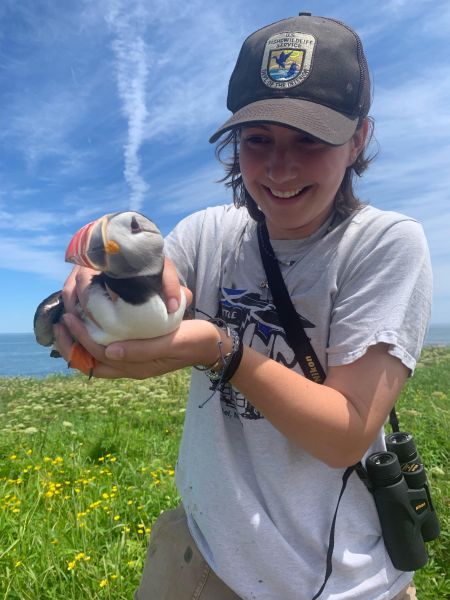
Lilia Membrino
Lilia grew up in Maine, where her love of the wilderness helped develop her interest in wildlife conservation. She received her B.S. in Wildlife Ecology from the University of Maine in 2024. During her undergraduate years, she worked with a variety of wildlife groups, including seabirds, reptiles, amphibians, and mammals. She began her M.S. at the University of Montana in 2025, where she will build skills in quantitative ecology and wildlife monitoring. In the Tourani lab, she will study population size estimation of large mammals in northwest Montana using camera trap surveys. Outside of work, Lilia can be found exploring Montana, hiking, or reading.
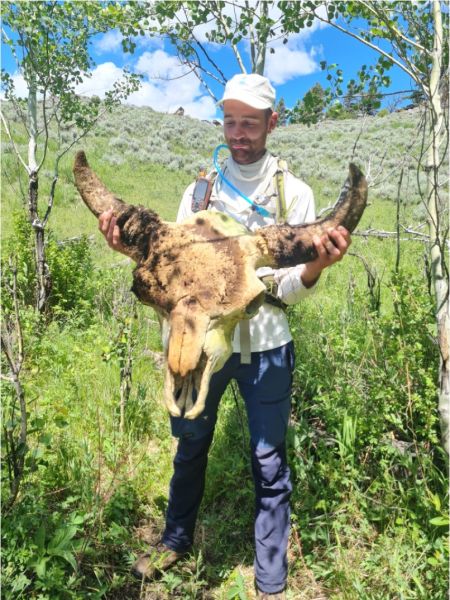
Andrei Dinu
Translocated from the Romanian Carpathians to Montana, Andrei completed his MS in the Wildlife Biology program in 2026. He previously had his BS and MS in Ecology from the University of Bucharest in Romania. His journey as an ecologist began with studying birds in Romanian wetlands and intensive agricultural systems. Eventually, he had the chance to engage in large carnivore conservation by working on the LIFE Lynx project, translocating lynxes from Romania to other parts of Europe, for about three and a half years. A main focus of his MS research was on the spatiotemporal response of carnivores to human activities and the presence of prey species. Andrei is passionate about soccer and enjoys walking, hiking, dancing, and building lasting connections.
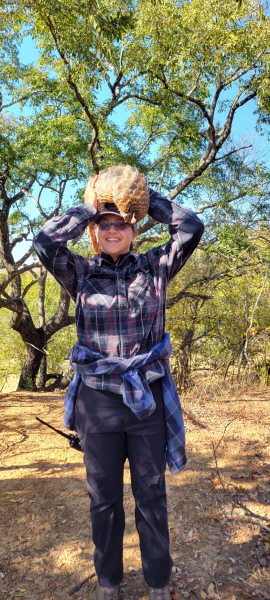
Bella Wengappuly
Bella is completing a dual degree in Wildlife Biology and Computer Science to pursue a career in research for conservation. She strives to advance wildlife conservation by developing research methodologies that incorporate modern technology. These methodologies will include machine learning pipelines for rapid and accurate big data processing, thereby decreasing project cost requirements. Her project investigates how modern technologies can be leveraged for threatened species monitoring using wolverines as a case study. In the photo, there is a young Temminck's Ground Pangolin (Smutsia temminckii) who had been rescued from poachers and was in rehabilitation for reintroduction during Bella's visit to South Africa.