
Appendix B: Laboratory Ventilation and Containment for Biosafety
Categories of Laboratory-ventilated containment equipment
Chemical Fume Hoods (CFH), Laminar Flow Clean Benches (LFCB), and Biological Safety Cabinets (BSC)
| Personnel | Product | Environmental | |
|---|---|---|---|
| Chemical Fume Hoods | ✦ | ||
| Laminar Flow Clean Benches | ✦ | ||
| Class 1 Biological Safety Cabinets | ✦ | ✦ | |
| Class 2 Biological Safety Cabinets | ✦ | ✦ | ✦ |
Chemical (“Fume”) Hoods
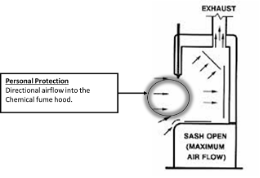
Traditional laboratory chemical (or fume) hoods are designed to capture, contain, and exhaust chemical fumes or vapors and pull them away from the worker. Although the inward flow of air protects the user, chemical hoods do not protect the product or the environment (there is no HEPA filter on the exhaust).
Laminar Flow Hood/Clean Bench
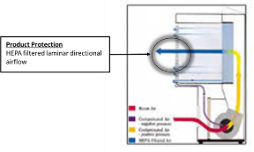
With horizontal laminar flow hoods (LFH), HEPA-filtered air flows horizontally across the workspace directly toward the user.
LFHs provide product protection against microbial contamination, but they do not provide personal or environmental protection. The horizontal flow of air will blow biological agents directly toward the user and into the laboratory. LFHs are not a biological safety cabinet, and they must not be used with any materials (biological, chemical, or radiological) requiring containment for protection of personnel or the environment.
LFHs are acceptable for tissue culture work only with cell lines considered to represent low risk (BSL-1 agents) to laboratory workers (including immunocompromised individuals who may frequent the lab). Human cell lines and nonhuman primate cell lines are considered to be BSL-2 agents and cannot be used in a LFH.
Biological Safety Cabinets
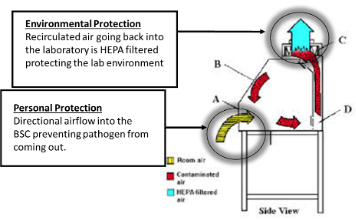
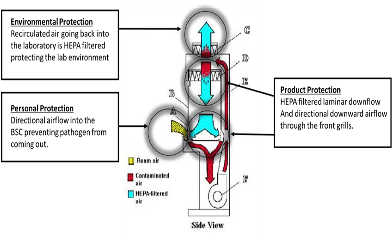
A Biological safety cabinet (BSC) is a necessary containment device when working with potentially infectious materials. BSCs are divided into Class I, II, and III (see schematic below). Class II BSCs are subdivided into type A and type B. All BSCs provide personnel and environmental protection, with Class II BSCs also providing product protection.
- Personnel protection is achieved by inward airflow through the front of the cabinet.
- Product protection is achieved by downward HEPA-filtered airflow from the top of the cabinet.
- Environmental protection is achieved by HEPA filtration of exhaust air.
Class 1 BSC
Class 2 BSC
Summary of ventilation equipment
|
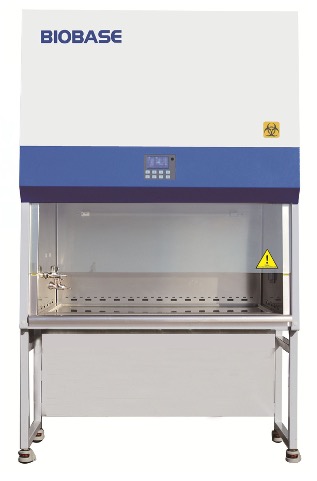
Biosafety Cabinet |
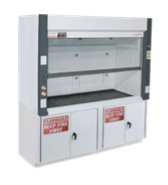
Chemical Fume Hood |
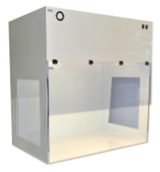
Laminar Flow Hood |
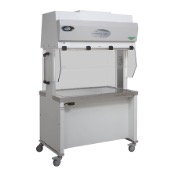
Animal Transfer Station |
|---|---|---|---|
 |
 |
 |
 |
|
Primarily designed to protect against exposure to particulates and aerosols from biological agents. Provides product, personnel and environmental protection. |
Ventilated, enclosed work space intended to capture, contain and exhaust harmful or dangerous chemical fumes, vapors and particulate matter outside the laboratory. |
Primarily designed to provide a sterile work environment. Does not provide any protection to personnel or environment |
Designed to minimize contamination risks and protect lab workers from allergens and ensuring a clean environment for changing animal cages. Provides protection for both the personnel and animal |
|
Should only be used for work with infectious agents or for the capture of nuisance dust and allergens from bulk operations such as animal cage changing or dumping |
The most suitable choice for chemical use including preparation of hazardous drugs and volatile anesthetic gases used for animal anesthesia and/or euthanasia |
Should only be used for work with non-infectious materials, such as media preparation. |
Should only be used for husbandry operations with healthy animals that have not been infected with biological agents or administered hazardous drugs |
|
Never use with:
|
Never use with:
|
Never use with:
|
These are NOT BSC and should never be used with:
|
Certification of BSCs
Field certification of BSCs is required to ensure that the cabinet still performs as it did when it obtained NSF certification at the factory. NIH requires field certification under the following circumstances: (1) upon installation of a new BSC; (2) annually thereafter; (3) after repair or maintenance is performed; and (4) after the BSC is relocated.
CDC recommends that BSCs be recertified annually to ensure proper function. They will also be recertified after being moved to ensure that they have not been damaged. Laboratories are responsible for ensuring that the BSCs are certified prior to use. The contact information to reach the contractor is indicated on the certification sticker affixed on the front of the BSC.
NSF/ANSI 49 provides criteria for construction of BSCs, testing by manufacturers (including biological containment testing), and field certification. NSF has also established a certification program for field certifiers to ensure a minimum level of competency and professionalism. It is recommended that NSF field certifiers be used for field certification of BSCs.
University of Montana BSC PI /Owner Responsibilities and BSC Annual Certification:
Proper operation, maintenance, and annual certifications of a BSC is necessary to ensure protection of personnel.
Annual Certification
- Effective immediately, all BSCs located within University of Montana facilities must be certified, including those that are not actively being used for BSL2 research. The certification process ensures that each BSC meets the operating specifications and as well as providing maximum protection.
- All BSCs located within University of Montana or Missoula College facilities will be certified annually, starting in October 2024.
- Certification will be managed by the Biosafety Officer and certification costs will be covered by the Office of Research and Creative Scholarship.
- PIs with BSCs that require certification outside of the annual scheduled service should contact the Biosafety Officer to arrange for a site visit. PIs will be responsible for certification costs outside of the annual certification schedule, including for certification of new or moved BSCs.
- Environmental Health and Safety personnel, as part of routine laboratory safety inspections, will confirm all BSCs hold current certifications.
PI/Owner Responsibilities
- PIs/owners are responsible for ensuring the proper maintenance and care of BSCs, outside of annual certification.
- PIs must make BSCs accessible for certification during the annual service visits.
- Additional services, such as the replacement of HEPA filters or repairs, beyond annual certification, will be scheduled and paid for by the responsible PI/owner.
- Expense to cover certification of new BSCs brought-online prior to UMs annual recertification date will be covered by responsible PI/owner.
- New BSC cabinet information, i.e., serial and model number, building/room location, PI/owner, will be reported to UM’s Biosafety Officer within 30 days of installation.
- BSCs must be recertified within 30 days of being moved, even within the same lab. The cost to cover recertification will be covered by PI/owner.