UM Announces $5.5M Gift, James C. Kennedy Waterfowl and Wetlands Center
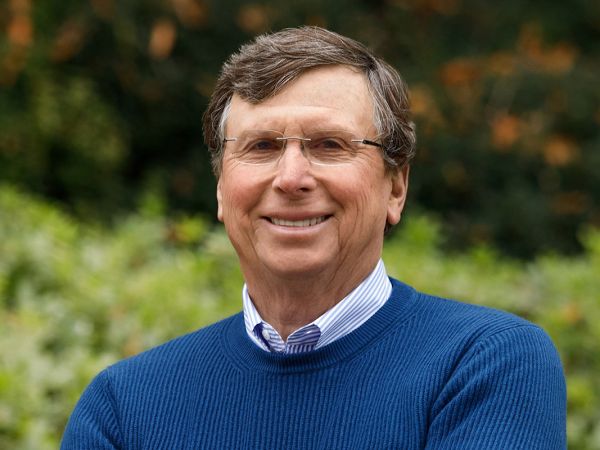
James C. Kennedy has made a significant donation to launch the James C. Kennedy Waterfowl and Wetlands Center at the University of Montana. (Courtesy photo)
MISSOULA – The University of Montana announces a significant gift from Chairman Emeritus of Cox Enterprises and Chairman of the James M. Cox Foundation Jim Kennedy to establish a new academic and research center within the W.A. Franke College of Forestry and Conservation. This gift will meaningfully advance efforts to construct a state-of-the-art campus hub for conservation research and education.
The James C. Kennedy Waterfowl and Wetlands Center will strengthen UM’s nationally recognized Wildlife Biology Program and expand its leadership in research, innovation and stewardship. Kennedy’s generous $5.5 million gift to the UM Foundation will support the new center’s groundbreaking operations and secure its place within the University’s planned new home for the W.A. Franke College of Forestry and Conservation.
The gift also further empowers the W.A. Franke College of Forestry and Conservation as an important educational and economic driver across multiple industries, working with both public and private partners in finding unbiased, data-driven solutions to some of the biggest challenges facing the West. Research and opportunities available through the James C. Kennedy Waterfowl and Wetlands Center will be vital in securing healthy wetlands and waterfowl populations, ensuring the future of Montana’s abundant natural resources and sustaining recreational opportunities in the state and beyond. The center’s work will have profound environmental and economic impact throughout the region.
“We are deeply grateful to Jim Kennedy for his vision and generosity,” said Libby Metcalf, dean of the W.A. Franke College of Forestry and Conservation. “The creation of the James C. Kennedy Waterfowl and Wetlands Center will elevate UM as a world-class institution for waterfowl and wetland research and management. It reflects exactly the kind of transformative investment that strengthens our college, serves Montana and extends our impact nationally by providing a dynamic new facility to support the programs and expertise we have built here.”
The establishment of the James C. Kennedy Waterfowl and Wetlands Center comes at a crucial time, as scientists and researchers strive to keep up with changing waterfowl populations and habitats. The new center will enable researchers to use groundbreaking technology to create models capable of predicting trends in populations and habitats based on real-time data.
“More than half of North America’s wetlands have been lost over the last two centuries,” said Thomas Riecke, the James K. Ringelman Chair in Waterfowl Conservation at UM. “The center will work to map and monitor wetlands across North America and model the linkages between wetlands and waterfowl population dynamics.”
The James C. Kennedy Waterfowl and Wetlands Center will combine Riecke’s population modeling expertise with UM Wildlife Biology Professor David Naugle’s work in satellite imagery, cloud computing and machine learning, as well as Ducks Unlimited scientist Patrick Donnelly’s remote-sensing tools, to map U.S. grasslands in real time and build a more adaptive approach to conservation.
“Ducks Unlimited is widely recognized as the world’s largest and most effective private nonprofit dedicated to science-based waterfowl and wetlands conservation,” said Donnelly, a Ducks Unlimited research scientist and UM Wildlife Biology Program alumnus. “Creating the center offers a unique opportunity to collaborate with the University of Montana to accelerate research that will enhance our ability to deliver meaningful conservation of wetlands and waterfowl for generations to come. It’s a real win-win for ducks and science.”
An avid nature enthusiast, Kennedy has a long history of living and working in the West. After attending college at the University of Denver, he began his career in media working for newspapers in Colorado. Since 2008, he has endowed waterfowl and wetlands conservation programs at several universities. The Waterfowl and Wetlands Center at UM aims to provide managers with science-backed strategies needed to secure the future of North America’s migratory waterfowl.
“The Wildlife Biology Program at the University of Montana has a great reputation,” said Kennedy. “When I talk to the folks there, I sense their passion and commitment. I really think the University of Montana has earned this program, and I wouldn’t have committed to it if I didn’t feel very strongly that it was the right place to invest in work I care so much about.”
Kennedy has served as the chairman for the Colorado Parks and Wildlife Commission and on the board of Ducks Unlimited. Cox Enterprises recently established a $100 million fund through Ducks Unlimited Wetlands America Trust in honor of Kennedy to help conserve prairie lands across North America. In 2025, UM’s Wildlife Biology Program recognized Kennedy with the inaugural Conservator of Montana’s Wildlife Award for his contributions to three endowed positions within the program. The center will improve collaboration among managers and deepen partnerships with nonprofit groups like Ducks Unlimited, the U.S. Fish and Wildlife Service, and state fish and wildlife agencies.
“In supporting this center, Kennedy is further demonstrating his remarkable commitment to the conservation of waterfowl and wetlands for future generations,” said Chad Bishop, director of UM’s Wildlife Biology Program. “We are grateful for his investment and will work especially hard to better inform management decisions in Montana, the West and across the continent.”
The establishment of the center comes amid the UM Foundation and Franke College “Treasure Montana: Cultivating Our Tomorrow” fundraising campaign. The campaign seeks to inspire $20 million in private support to construct a new, state-of-the-art hub for conservation research, education and collaboration with public and private partners. Private support will unlock $52 million committed to the project by the Montana Legislature. It’s the largest single-facility investment in Montana University System history and will elevate the Franke College’s work to support citizens, landowners, partners and industry while advancing innovation and regional economic impact.
###
Contact: Dave Kuntz, UM director of strategic communications, 406-243-5659, dave.kuntz@umontana.edu.