3 UM Students Earn Udall Scholarships for Public Service Leadership
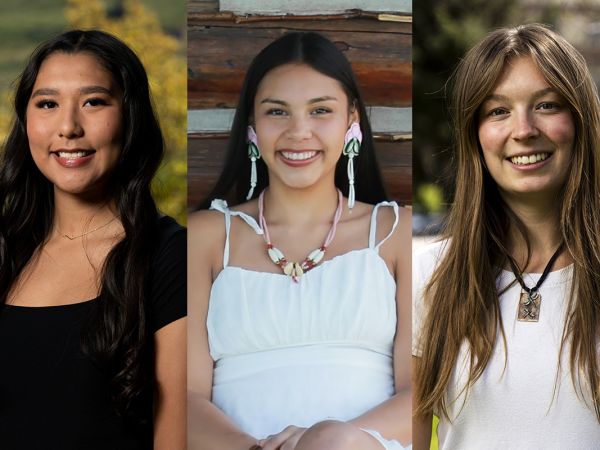
Three University of Montana students have been named 2026 Udall Scholars, earning national recognition for their leadership and commitment to public service in health care, tribal policy and environmental sustainability. The students are (from left) Susan Connelly, Elannah Flat Lip and Vivianne Ostheimer. (UM photos by Ryan Brennecke and Marley Barboeisel)
By Skylar Rispens, UM News Service
MISSOULA – Three University of Montana students have been named 2026 Udall Scholars, earning national recognition for their leadership and commitment to public service in health care, tribal policy and environmental sustainability.
Students Susan Connelly, Elannah Flat Lip and Vivianne Ostheimer are the latest students to receive the honor, which further cement UM’s legacy of being No. 1 in the nation for the number of Udall Scholarship recipients, with 51 total to date. Connelly and Flat Lip are the first Indigenous recipients of the Udall Scholarship from UM since 2006.
“The University’s commitment to engaged learning, service and fostering leaders of tomorrow enables our students to be successful in applying to nationally competitive scholarships that share the same values, like the Udall,” said Kylla Benes, director of UM’s Office of External Scholarships and Fellowships. “All of these women exemplify the Udall Scholarship’s criteria of making a difference through civility, integrity, consensus, nonpartisanship and public service. Each is already using their knowledge and talents to make a positive impact on their communities in inspiring ways.”
The recognition places the three Davidson Honors College students among a growing group of UM scholars committed to addressing complex challenges in their communities. Connelly hopes to improve Indigenous health equity through public health work, Flat Lip plans to serve Native American children and families as a physician in rural and tribal communities, and Ostheimer aims to advance renewable energy and sustainability initiatives through local government leadership.
The scholarship offers up to $7,500 for eligible academic expenses through the Morris K. Udall and Stewart L. Udall Foundation. Established by Congress in 1992 as an independent agency, the foundation honors the careers of Morris K. Udall and Stewart L. Udall, whose work significantly impacted Native America n self-governance, health care and stewardship of public lands and natural resources. This year, the foundation awarded scholarships to 65 undergraduate students from a pool of 383 candidates across 181 colleges and universities.
UM’s most recent Udall Scholar was Hannah Hornyak, who received the award last year.
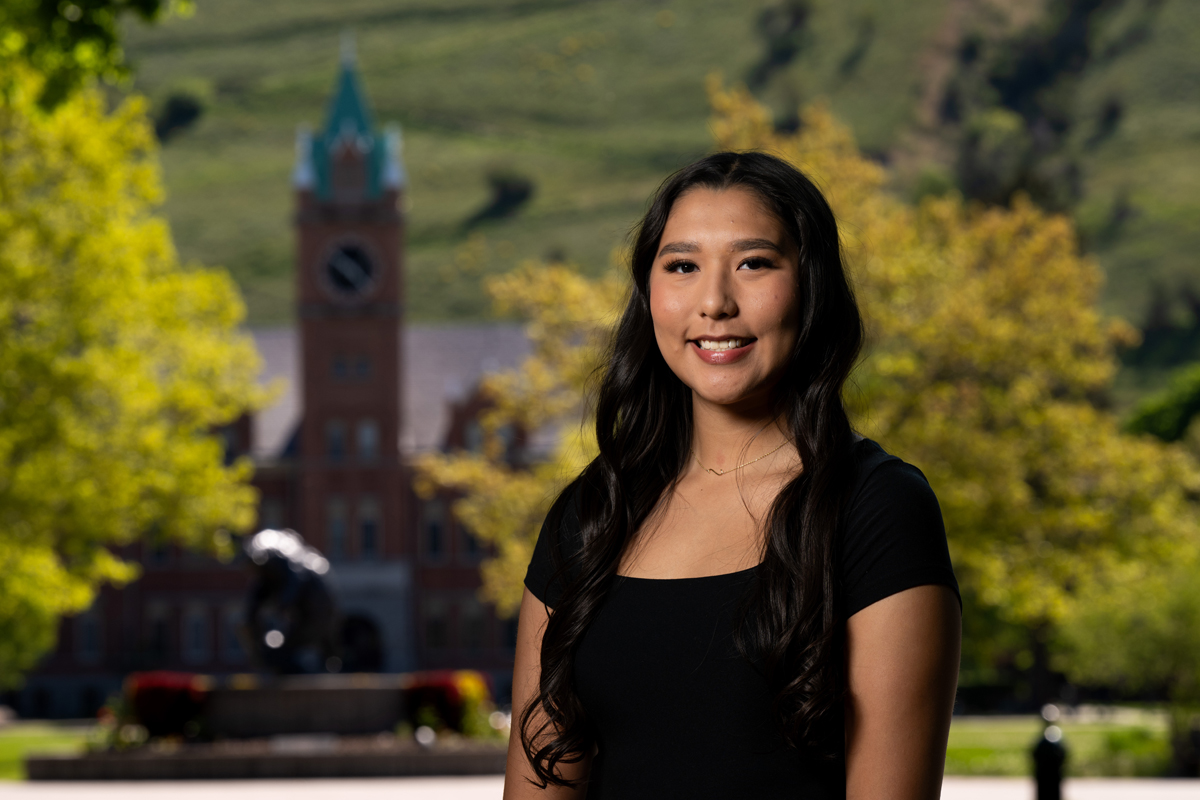
Susan Connelly
Originally from Browning, Connelly is a member of the Blackfeet Tribe and a rising senior majoring in public health. She plans to pursue a master’s degree in public health at UM and ultimately work for the state health department to advance Indigenous health equity related to infectious disease.
“I want to help Indigenous communities, all of them,” Connelly said. “So I think approaching this work from a state level would be more effective while also supporting the entire state.”
Her interest in public health was shaped by watching her mother work as a nurse for decades and later transitioning into a role as an Infection Control Officer in 2016 before the COVID-19 pandemic.
The pandemic deeply affected Connelly and her community. Indigenous people across the country experienced disproportionately high mortality rates during the pandemic. The Center for Disease Control and Prevention found that mortality rates among American Indian and Alaska Native populations were 1.8 times higher than those of non-Hispanic/white populations. This disparity was perpetuated by long-standing structural barriers facing Indigenous communities, including limited access to health care, education and nutritious food.
“That number just kind of jumps out at me and is something that I actually experienced,” Connelly said. “Community prevention and promoting healthy behaviors within Native communities in particular is very important to me because I know it can make a difference.”
Connelly said those impacts of the pandemic were personal for her family. Her grandparents both contracted the virus. Her grandfather recovered, but her grandmother died from complications related to the infection.
Connelly said being named a Udall Scholar as a full-circle moment following a college journey whose beginning was complicated by homesickness, anxiety and grief.
“During my freshman year I struggled very deeply with homesickness after moving away from home for the first time in my life,” Connelly said. “But I was able to overcome that by throwing myself into my studies.”
Much of her time at UM has been spent with the well-being office at Curry Health Center on campus, where she has worked as peer health educator, intern and office assistant. As an intern, her work focused on data from the National College Health Assessment around alcohol education, awareness and social norms.
“I felt a range of emotions when I learned I was named a Udall Scholar, but I was very proud of myself,” Connelly said.
Elannah Flat Lip
Originally from St. Ignatius, Flat Lip is a member of the Crow and Salish Tribes and recently completed her sophomore year at UM majoring in Human Biology and Biomedical Sciences. She hopes to become a pediatrician serving Native American children and their families in rural and tribal health care systems.
Flat Lip said her career goals were influenced by a difficult experience during a medical appointment when a physician asked her mother to leave the room and questioned her in a way that felt culturally insensitive and dismissive.
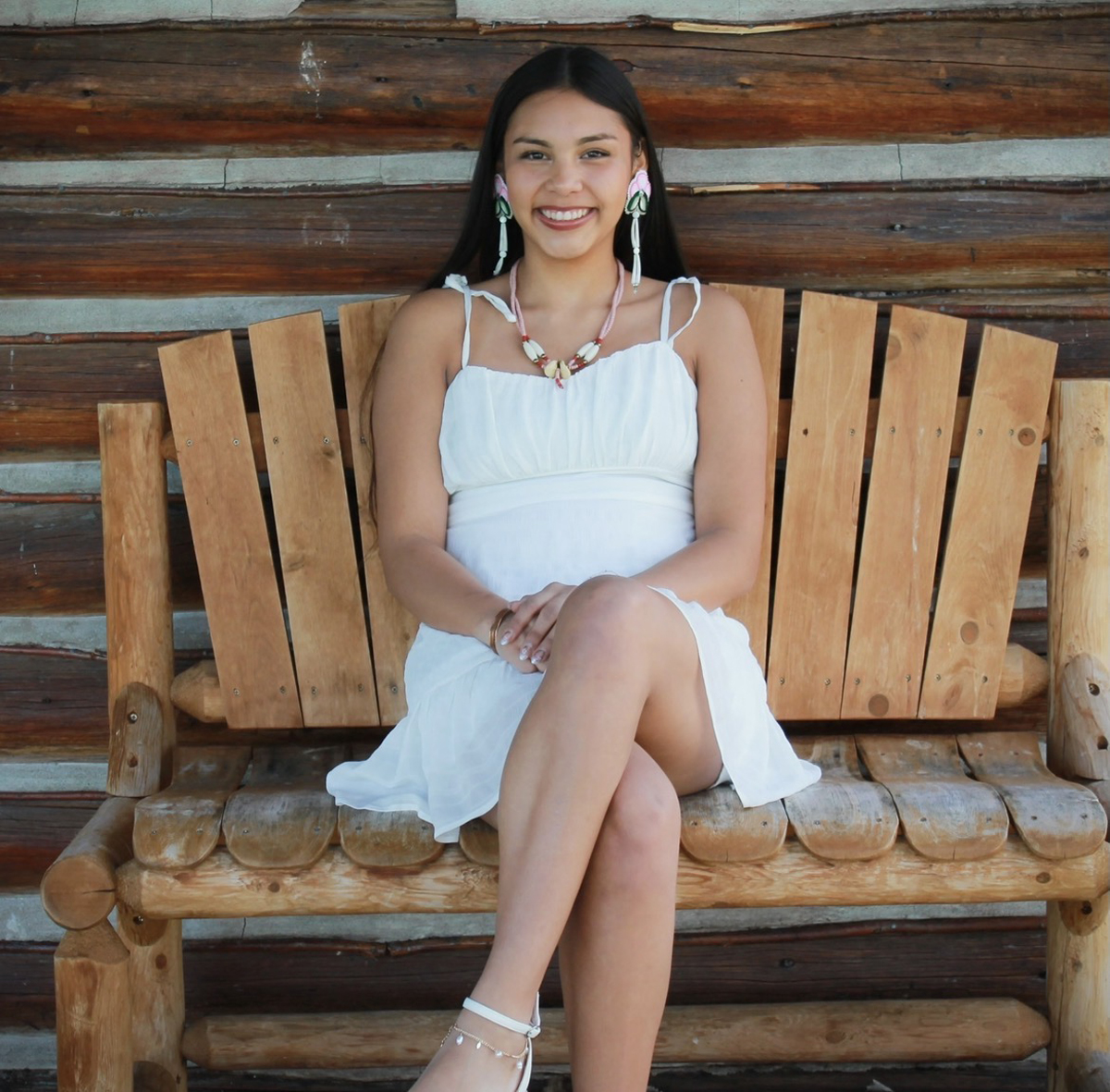
Flat Lip is one of the three University of Montana students to be named Udall Scholars in 2026. She is studying biology and biomedical sciences and hopes to become a pediatrician serving Native American children and their families. (Courtesy Photo)
“The doctor was almost implying that my mom wasn’t properly caring for me,” Flat Lip said. “And I was like, ‘I love my mom, she’s raised me in my culture and education, she gave me a lot of opportunities.’”
Growing up on reservations also exposed her to broader inequities in access to health care for Indigenous communities.
“I really want to be in the health care field because of that,” Flat Lip said. “I’ll have that connection to them and give these communities what they deserve.”
Following the death of her grandfather, a respected Crow oral historian, Flat Lip took on the responsibility of preserving stories, language and traditions by interviewing elders and documenting narratives. She said that work complements her professional goals by helping ensure her future medical practice is grounded in cultural understanding and respect.
“Culture and education can intertwine, you can combine both worlds,” Flat Lip said. “You don’t have to choose between them.”
In the summer of 2024, Flat Lip was named Miss Salish-Pend d’Oreille princess for the Arlee Esyapqeyni Celebration, where she welcomed visitors, shared stories and traditions of her tribes and worked to engage youth in cultural events to foster pride in their heritage.
Flat Lip said receiving the Udall Scholarship affirms her work and serves as an example for younger Indigenous students.
“I’m very proud of this accomplishment because there are these stereotypes about Native Americans not being educated or getting off the reservation, and I feel like this is just a path of hope and inspiration for younger kids that shows them they can do it and anything is possible,” Flat Lip said. “Education is a powerful weapon.”
Vivianne Ostheimer
Ostheimer, a rising senior from Buffalo, Wyoming, is majoring in environmental science and journalism at UM. She plans to pursue master’s degrees in public policy and energy resources and hopes to work in municipal sustainability to help communities transition electric grids to renewable energy.
Earlier this year, Ostheimer also was named a Truman Scholar.
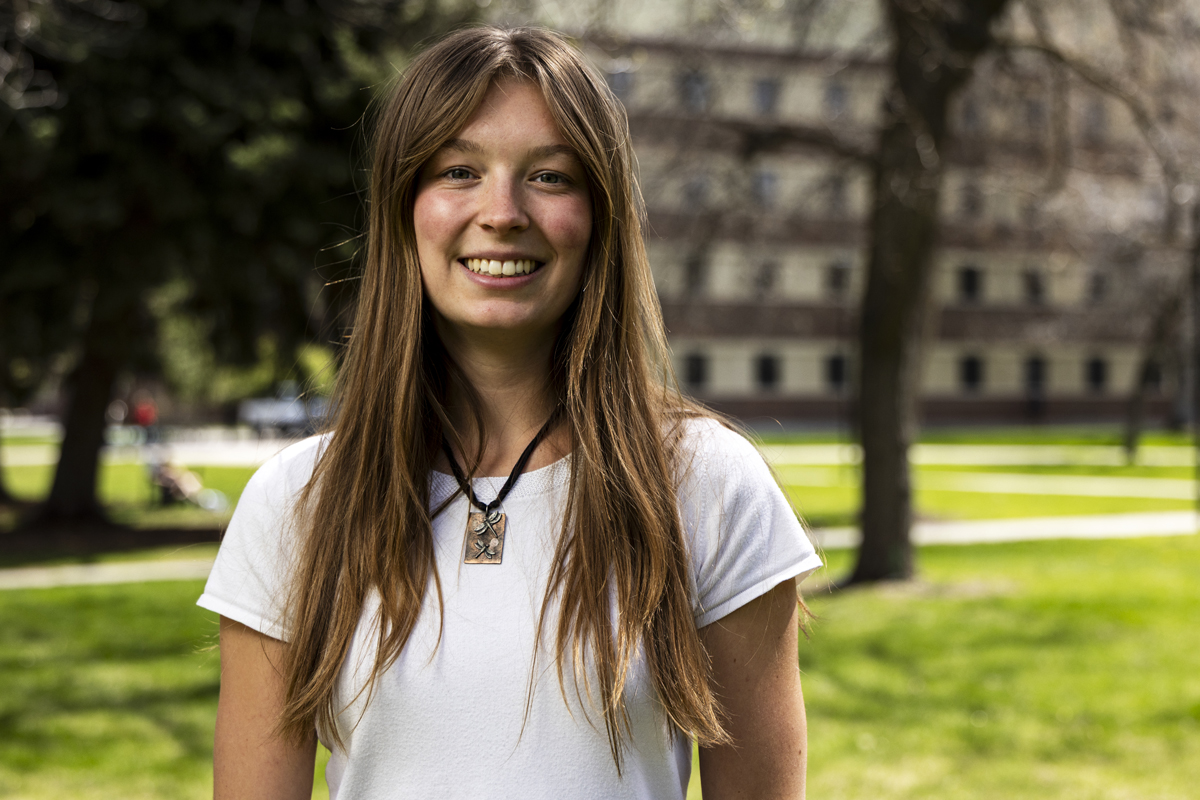
Ostheimer interned with the City of Missoula’s climate team last summer through the Baucus Climate Scholars Program, where she helped create a climate action roadmap designed to advance the city’s sustainability goals.
“I just wanted to do something local that would benefit my community and help me get a better understanding of what Missoula is doing around sustainability, energy and long-term planning,” Ostheimer said. “I chose to work on the roadmap because I felt that it was directly tied to making real, actionable progress on these very ambitious goals that they city set.”
The experience reinforced her belief that local governments play a critical role in addressing climate change because they can tailor solutions to community needs and encourage public engagement.
“I want to do big things and make big changes in my career, but working with the city taught me that you can make big changes locally,” Ostheimer said. “You don’t have to be shaping national and international policies to be making a difference.”
Ostheimer said one of her most formative academic experiences came during her freshman year in a Franke Global Leadership Initiative course titled “Energy Conflicts in a Changing Climate,” which explored the complexities surrounding energy transition efforts in communities such as Colstrip, Montana.
“We had to answer the question: What is responsible leadership when right answers don’t exist? And that’s something I’m still grappling with,” Ostheimer said. “I think that question does directly reflect the Udall values of civility, integrity and consensus. When there’s no right answers, all you can do is have conversations about it and try your best to make a change and follow through, which is what integrity means to me.”
###
Contact: Dave Kuntz, UM director of strategic communications, 406-243-5659, dave.kuntz@umontana.edu.