
Graduate Student Handbook
 Adopted Fall 2026 - Updated July 2026
The University of Montana (UM) Graduate School handbook serves as a foundational resource for graduate students at UM. In addition, please refer to your specific department or graduate program policies or handbook. It is the graduate student’s responsibility to be aware of and comply with all requirements, rules, policies, procedures, and deadlines in these documents, and to refer to your specific department or graduate program policies or handbook. Additional graduate student campus resources can be found on our Graduate Student Resources page.
We would like to recognize the graduate research assistant, Nicole Benally, for helping create and design the UM Graduate School Handbook and resources.
Welcome to the University of Montana
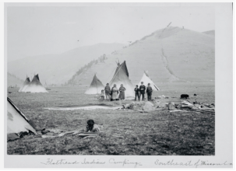
mistéʔes qe es lʔ, ci łu l ,T,atʔ̓ ayaqn u Qlispélixʷ sqlixʷúʔulexʷs t Nłʔaycčstm Kʷtis Snacx̓ ̣łqe̓ ym̓ ín. Qe es putʔem łu Sqélixʷ m̓ im̓ éʔeye̓ ms x̣ʷl ,olqʷštulexʷ łu x̣ʷl ,qł sqlqelixʷ. (Salish text by Aspen Decker)
The University of Montana acknowledges that we are in the aboriginal territories of the Salish and Kalispel people. We honor the path they have always shown us in caring for this place for the generations to come.
UM Graduate School Mission
The University of Montana Graduate School promotes excellence in graduate education through rigorous academic programs, individualized faculty mentorship, and meaningful opportunities for research, scholarship, and creative work. We cultivate the next generation of scholars, innovators, and professionals who advance knowledge and contribute to the well-being of Montana and the global community.
Discover • Innovate • Lead
UM Graduate School Team
The Graduate School staff invites you to contact us for information about any of our graduate programs.

(Left to Right) Ke Wu – Dean; Kelly Speer – Fiscal & Information Systems Manager; Grace Held – Admissions Coordinator; Kendall Kihn – Director of Graduate School
Physical Office Location
Graduate School
Davidson Honors College, lower/garden level, Room 002
Social Media
Facebook
@University of Montana Graduate School
Instagram and LinkedIn
@umontgrad
UM Catalog
-
The UM Catalog is the official source for graduate academic policies, degree requirements, and program information at the University of Montana. It contains course descriptions, Graduate School academic policies, and the requirements for graduate certificates, master's, and doctoral programs. Students are responsible for understanding and complying with the requirements and policies published in the catalog.
UM Student Code of Conduct
-
The University of Montana expects all students to uphold values of honesty, integrity, and accountability. The Code outlines standards for academic and general behavior, as well as student rights and responsibilities. All members of the UM Community are encouraged to review the Student Code of Conduct annually.
Additionally, graduate students should be aware that violations of the Student Code of Conduct may be referred to your graduate program for consideration of whether the conduct also violates your program's requirements. If the conduct is considered a violation, graduate students may face additional programmatic sanctions, which can include anything from an academic improvement plan to dismissal from your program.
UM Graduate School Policies
-
Continuous Enrollment
- Graduate students must maintain continuous enrollment while pursuing their degree.
- Enrollment in a minimum of 3 graduate credits every Fall and Spring semester is required, including the semester in which comprehensive exams, thesis/dissertation defenses, or graduation occur, unless an approved exception has been granted by the Graduate School.
- Students who do not maintain continuous enrollment and have not received an approved leave or exception may be inactivated and required to petition for readmission.
Leave of Absence
- Students may request up to one (1) year of approved Leave of Absence for reasons such as parental leave, medical concerns, or personal circumstances.
- Leave must be approved by the Graduate School before the student stops enrolling.
- While on an approved leave, students do not have access to most university resources.
Grades
- Graduate students must maintain a minimum cumulative GPA of 3.0.
- No grade below a C may count toward a graduate degree, although individual programs may require higher standards.
- Departments may establish additional academic or professional expectations that students must meet to remain in good standing.
Academic Standing
- Good Standing: Graduate students are considered in good standing when they maintain an overall graduate GPA of 3.00 or higher, are making satisfactory progress toward their degree, and meet the professional and ethical standards of their academic program. Some graduate programs require a GPA higher than 3.00 and/or have additional academic standards as outlined in the program's graduate student handbook. Students are responsible for understanding and meeting both Graduate School and program-specific requirements.
- Academic Probation: A student may be placed on academic probation if their overall graduate GPA falls below 3.00 or if they fail to make satisfactory academic progress or comply with the professional or ethical standards established by their program. The Graduate School will notify both the student and the academic department when probation is imposed. The department will provide specific expectations and timelines for returning to good standing. Academic probation serves as an opportunity to address academic or professional concerns and work with faculty advisors and program leadership to develop a plan for improvement.
- Academic Suspension & Dismissal: Students may be suspended or dismissed from their graduate program for failing to meet provisional admission conditions, maintaining a GPA below 3.00 after probation, making unsatisfactory progress toward their degree, or failing to meet professional or ethical standards. Students have the right to appeal suspension or dismissal decisions through the Graduate School according to established Graduate School policies.
-
- Graduate students must comply with their program’s handbook (whether in handbook form or outlined on their program’s website or other format). Handbooks outline degree requirements, milestones, committee expectations, examinations, research requirements, and graduation procedures.
- Students should work closely with their advisor and program director to ensure they remain on track toward degree completion.
-
Graduate School policies and departmental requirements may change during your program. Students are expected to regularly review Graduate School communications, consult their department handbook, and meet with their advisor to ensure they remain informed and in compliance with current policies. View University of Montana Graduate School policies.
Graduate Student Guidelines
-
Graduate students are expected to uphold the highest standards of professionalism, integrity, and ethical behavior in all academic and research activities. This includes treating peers, faculty, and staff with respect; maintaining honesty in coursework, collaboration, and research; and adhering to BOR and university policies, applicable graduate student handbooks, and professional standards within their disciplines. Romantic or intimate relationships within academic supervisory settings are strongly discouraged, as they may create conflicts of interest, power imbalances, or ethical concerns that compromise professionalism and fairness. For research activities, students are responsible for ensuring compliance with any necessary reviews and approvals by the IRB, IACUC, and/or bio safety; protecting confidentiality; disclosing and avoiding conflicts of interest; compliance with funding agencies requirements; giving proper credit; complying with the University's policy on responsible conduct of research; and following ethical data management and authorship practices. For research activities not requiring IRB review, students are still responsible for ensuring that their work is conducted responsibly - protecting confidentiality, avoiding conflicts of interest, giving proper credit, and following ethical data management and authorship practices. Graduate students represent the UM and are expected to model conduct that reflects its values of respect, accountability, and academic integrity.
-
If you have concerns that are affecting your academic performance, please refer to the UM Provost student concerns webpage.
-
All employees or individuals associated with UM should report observed or suspected misconduct in science and creative activities to the Research Integrity Officer. An individual, unsure whether a suspected incident falls within the definition of scientific misconduct, may call the Research Integrity Officer at (406) 243-6670 to discuss the suspected misconduct informally. If the circumstances described by the individual do not meet the definition of misconduct listed below, the Research Integrity Officer will refer the individual or allegation to other offices or officials with responsibility for resolving the problem.
Research misconduct means fabrication, falsification, or plagiarism in proposing, performing, or reviewing research, or in reporting research results. Fabrication is making up data or results and recording or reporting them. Falsification is manipulating research materials, equipment, or processes, or changing or omitting data or results such that the research is not accurately represented in the research record. Plagiarism is the appropriation of another person’s ideas, processes, results, or words without giving appropriate credit. Research misconduct does not include honest errors or differences of opinion. Policy for responsible conduct of research can be found at the policies page.
Relevant Training & Professional Development
-
Thriving Together is a REQUIRED course for all first semester students regardless of status (undergraduate, graduate, non-degree seeking, distance education (online) and transfer. Per mandate from the Office of the Commissioner of Higher Education, this nine-training module course is MANDATORY and if not completed, a hold will be placed on your student account. You can access this course through your Canvas account or by going to the UM Prevention Education Programs webpage at Campus life programs.
-
The Office of Research Compliance is here to help you carry out your research safely, ethically, and in line with federal and university requirements. Whether you're working with human participants, animals, biological materials, or sensitive data or you just have a question about required training, conflicts of interest, or export rules the office is a resource you can turn to. A helpful tip: some of these areas require review or approval before your work can begin, so it's worth checking in early rather than after your research is underway. Visit their website for guidance on Animal Research, Biosafety, Data Privacy, Conflict of Interest, Export Control, Research Security, Research Misconduct, CITI Training, and Human Subjects Research (IRB): Tech Transfer.
Tech Transfer
Research compliance is also home to Technology Transfer, the team that helps turn research discoveries into real-world impact. If your work leads to an invention, software, or other creative output with commercial potential, Tech Transfer can guide you through disclosure, patents, licensing, and startups. Got a bright idea? Don't keep it to yourself, a quick conversation early on helps protect your work and open doors down the road.
Collaborative Institutional Training Initiative (CITI) Program Training
For compliance-related certification requirements, UM relies on the CITI Program Training. Visit citiprogram.org to login or visit the UM website for more information.
UM Institutional Review Board (IRB)
Is Your Project Human Subjects Research? The UM IRB for the Protection of Human Subjects reviews projects in accordance with the federal definitions of research and human subjects. Investigators should err on the side of caution and consult with the IRB to establish the status of their projects. For questions, please reach out to the UM IRB via email (irb@umt.edu), phone (406-243-6672), or check out their website.
-
We encourage everyone to self-enroll in the designed course to learn about the tribal nations, occupying reservation lands as sovereign nations in the state of Montana. You may visit the Office of Public Instruction for more information.
Getting Started
-
Graduate Student Orientation
As of Fall 2026, UM Graduate School has an orientation for all graduate students
Department Orientations
Some graduate programs offer their own orientation session(s) for their graduate students, and others do not. Please contact your program for orientation dates, times, and location. If your program does not have an orientation, we advise that you be on campus the week before the semester starts so you can make an advising appointment with a faculty member in your program. You may visit the UM Graduate School Orientation webpage for other orientation events.
Graduate Assistantships
Graduate assistantships are awarded by individual academic departments based on program needs, available funding, and student eligibility. Appointments are made on a semester-by-semester basis, and employment terms, minimum stipend rates, and other conditions are governed by the Graduate Catalog and the Graduate Employee Union (GEU) Collective Bargaining Agreement. More information can be found on the Graduate School assistantship webpage.
Orientation and training requirements vary based on your assistantship type. If you are unsure of your appointment status, please contact your department chair or major advisor, as your assistantship type may change based on the semester or funding source.
- Teaching Assistant (TA): Completion of the required online TA orientation is mandatory. Instructions will be sent to your UM student email.
- Research Assistant (RA): Training requirements are determined by your department. Contact your chair, advisor, or supervisor for required orientations and research-specific training.
- Service Contract Assistant: Contact your supervisor or sponsoring department for required training and orientation information.
-
New students should plan to get their Griz Card during their first week on campus by visiting the Griz Card Center located on the first floor of the University Center. This is your official University of Montana ID card. Your Griz Card allows you to access the UM Recreation Center, use your campus spending accounts, check out keys and equipment, enjoy privileges at the Mansfield library, such as checking out books and technology and reserving meeting/study rooms. Be sure to bring a photo ID (driver’s license, passport, military ID, or other government-issued photo ID) so they can verify your identity before issuing a card. There is a fee to issue your Griz Card.
-
Upon acceptance, you will receive your NetID which allows you to access many online UM systems and applications with the same login and password.
The NetID format is two letters (first initial, last initial) and six numbers (e.g. ab123456). Your initial NetID password is the last six digits of your University ID (790 number).
To find or activate you NetID or reset your password, please visit the following portal. -
All UM communication is sent to your UMConnect student email. To activate and access your UMConnect email, visit umconnect using your NetID and password or visit my.umt.edu, sign-in, and click the UMConnect button on the dashboard.
Student Email format: NetID@umconnect.umt.edu -
UM uses the Learning Management System (LMS) called Canvas for some courses. Use your NetID credentials to login. If you are registered for classes and are experiencing issues, you might have an unpaid bill or hold on to your student account on Canvas.
Technology Support
-
On campus, connect to UM's secure wireless network eduroam. UM students should use the secure eduroam wireless network for all network activity and allow you to connect to wireless networks at many other institutions across the US and abroad using your UM login credentials. To use and access UM eduroam:
Username: which is your NetID@umontana.edu (i.e. ab123456@umontana.edu)
Password: NetID password
UM also provides a courtesy guest wireless network for campus visitors called grizzlyguest. The network uses open, unencrypted transmissions, so it should not be used to send or receive sensitive information. Any wireless user can access the guest wireless network.
-
As an enrolled student at UM, you will have free access to Zoom and Microsoft Office 365 through your UM account. This includes access to programs such as OneDrive, SharePoint, and Teams. As well as software downloads of Word, Excel, PowerPoint, etc.
-
You can use OneDrive to manage personal files and SharePoint to manage files with others. SharePoint is helpful for long term projects, managing work that is shared with multiple people, and setting up a repository of files. If you are working on a short-term project and/or sharing something with just a few individuals or working on something independently, OneDrive can be used. Both OneDrive and Sharepoint allow for access from any device: https://www.umt.edu/triosss/campus-and-community-resources/
-
UM uses Zoom for video and web conferencing needs. This includes participating in zoom meetings, hosting virtual office hours and meetings, collaborating remotely, and recording to the cloud or computer for easy sharing. Use your NetID credentials to login: https://umontana.zoom.us/
-
UM uses a printing system called PaperCut in many locations across campus. Print jobs can be submitted from computer labs – or from a personal device using the online PaperCut portal – and sent to the most convenient PaperCut printer on campus near you. These prints can be released for a nominal fee that can be paid using your Umoney account on your Griz card.
Registration and Student Accounts
-
GrizPortal is UM’s online resource center and dashboard. As a student this is where you will register for classes, check your financial aid, pay your student bill, and more. To login to your GrizPortal, use your NetID and password.
-
Degree Works is UM’s online degree audit tool in GrizPortal that tracks your progress toward graduation and highlights remaining requirements. Graduate students must review their audit at least once each semester and report any errors or discrepancies to their department. Regular use of Degree Works helps ensure you stay on track for timely degree completion.
-
Tuition and Fees
Please check the UM Financial Services to view the current projected tuition and fees at the University of Montana.
Payment Plans
The Deferred Payment Plan (DPP) allows students to spread the cost of tuition, mandatory fees, and on-campus room and board over multiple installments each semester. The plan requires an application and a nominal semester service fee. Students can apply through GrizPortal under Student Services > Student Accounts > Deferred Payment Plan Application before the semester payment deadline.
Deadlines
Please monitor your email and student account for deadlines. If you are on the deferred payment plan, the first payment due date will always be the date of the first registration bill payment deadline date. Please see the registrar website for important payment deadline information.
You can access and pay your bill online through GrizPortal account or in person with Student Account Services located on the 5th floor of Aber Hall.
Student Financial Services
-
The UM Student Financial Services is your primary resource for navigating the financial aid process, including FAFSA completion, scholarships, grants, loans, and understanding how financial assistance helps cover educational costs. In addition, UM offers free financial wellness resources, including confidential one-on-one financial counseling and workshops on budgeting, credit, borrowing, and saving to help students build strong financial skills throughout their academic journey. Learn more at FinAid.
Student and Campus Safety
-
The University of Montana is committed to providing a learning and working environment that promotes respect, dignity, and equity for all individuals. In accordance with federal and state law, the University does not discriminate—and prohibits discrimination—on the basis of race, religion, color, national or ethnic origin, ancestry, creed, sex (including pregnancy, childbirth, lactation or related medical conditions), gender (including gender identity, gender expression, and gender transition), sexual orientation, physical or mental disability (including having a history of a disability or being regarded as having a disability), marital or family status, genetic characteristics or information, age, veteran or military status, political ideas, or any other legally protected classification in its educational programs and activities, including admission and employment.
Visit review the University of Montana's Non-Discrimination & Title IX Statement in its entirety or to learn more about UM's equal opportunity and Title IX resources and processes.
-
Student education records are protected under the Family Educational Rights and Privacy Act (FERPA). FERPA provides students with rights regarding access to and privacy of their educational records while allowing the University to release certain directory information and other information as permitted by law. Students can learn more about their FERPA rights and privacy options on the UM Registrar's website.
-
UM strives to maintain a safe and friendly environment for its students, employees, and visitors. UM has a full-service police department. UMPD is located on-campus and may be contacted 24/7 at the below numbers:
EMERGENCY – call 911 or
(406) 243-4000NON-EMERGENCY - (406) 243-6131 or file an online crime report.
UM Alerts & Emergency Messaging
The University of Montana uses "UM Alerts" as an emergency notification system to inform the campus community about threats to safety and health. Anyone can opt-in to receive UM Emergency Notifications via text messaging.
To subscribe: Text Join UM-alerts to 31002
To unsubscribe: Text Leave UM-alerts to 31002There are three types of alerts:
Emergency Notification: sent via text and email when a significant emergency or a situation is currently occurring on the UM campus that poses an imminent or immediate danger.
Timely Warning: sent via UM email in response to Clery crime(s) that have already occurred. These are crimes which pose a serious or continuing threat to students or employees.
Public Safety Notice: sent via email (or text, depending on the situation and preference) for non-Clery reportable activity occurring on campus or non-campus property. These notices are sent at the discretion of the University, depending on the need to inform the UM community for safety reasons that do not meet the requirements of an Emergency Notification or Timely Warning.
*The Clery Act requires colleges and universities to report campus crime data, support victims of violence, and publicly outline the policies and procedures they have put into place to improve campus safety.
Standard Response Protocol
UM uses a "Standard Response Protocol.” In an emergency, the message you receive will contain one of the five response protocols:
HOLD!
SECURE!
LOCKDOWN!
EVACUATE!
SHELTER!
To learn more, please visit the UM Alerts website and navigate to Standard Response Protocol.
Campus Engagement
-
We encourage you to immerse yourself in our vibrant campus community by staying updated with university news, reading the campus communications emails from university leaders, and actively participating in events and activities. Here are some modes of communication about UM events and news.
Many colleges, departments, and units on campus also maintain their own social media accounts that you can follow.
Graduation Information
-
Graduate students must apply for graduation in GrizPortal and complete all program, credit, and final degree requirements by the posted deadlines. For current deadlines, formatting guidelines, final requirements, and commencement details, regularly consult the Graduate School’s Graduation webpage.
Program Graduate Handbook
-
Each program should have its own handbook that clearly outline expectations, procedures, and resources specific to their graduate programs.
Handbooks should reflect departmental culture while aligning with UM Graduate School and University policies.
Download a PDF version of this handbook.