
Earn Your Master of Social Work From UM
The University of Montana Master of Social Work prepares students for advanced social work practice across individuals, families, groups, organizations, and communities.
UM offers three pathways to the MSW degree: an In-Person MSW, a fully Online Asynchronous MSW, and a 12-month Advanced Standing MSW for qualifying BSW and BSSW graduates. Across our programs, students connect classroom learning with professional practice while developing the knowledge and skills to respond to complex social issues in Montana and beyond.
Choose Your MSW Program
UM offers three pathways to the MSW degree. Each option differs in format, pace, eligibility, and practicum schedule.
In-Person MSW
- 60 credits completed over two years full-time or three years part-time
- Courses are completed in person on the University of Montana campus
- 450 practicum hours during each practicum year, approximately 15 hours per week
- Part-time students begin practicum in the fall of their second year
Eligibility: Applicants must have a bachelor's degree from an accredited college or university and a minimum undergraduate GPA of 3.0 on a 4.0 scale.
Applicants with an undergraduate GPA below 3.0 may still apply but must submit a brief statement addressing their GPA and the strategies they will use to maintain a 3.0 or higher in graduate school.
Online Asynchronous MSW
- 60 credits completed part-time over three academic years
- All courses are completed online and asynchronously
- Practicum begins in year two
- 450 practicum hours during each practicum year, approximately 15 hours per week
- Many students maintain employment while completing the program
Eligibility: Applicants must have a bachelor's degree from an accredited college or university and a minimum undergraduate GPA of 3.0 on a 4.0 scale.
Applicants with an undergraduate GPA below 3.0 may still apply but must submit a brief statement addressing their GPA and the strategies they will use to maintain a 3.0 or higher in graduate school.
Explore the Online Asynchronous MSW
Advanced Standing MSW
- 37 credits completed over 12 months of full-time study
- 9 credits during the summer bridge, followed by 14 credits each semester in the fall and spring
- 600 practicum hours completed across the fall and spring semesters, averaging approximately 20 hours per week
Eligibility: Applicants must have a Bachelor of Social Work (BSW) or Bachelor of Science in Social Work (BSSW) from a CSWE-accredited program and a minimum grade point average (GPA) of 3.0 for all undergraduate work, based on a 4.0 scale.
Applicants with an undergraduate GPA below 3.0 may still apply but must submit a brief statement addressing their GPA and the strategies they will use to maintain a 3.0 or higher in graduate school.
Applicants whose BSW or BSSW was earned more than seven years ago may still apply and should clearly describe relevant social work experience and continuing education or training on their resume.
Explore the Advanced Standing MSW
Field Education and Practicum
Field education is an integral part of every UM MSW pathway. Students complete supervised practicum experiences that connect classroom learning with professional social work practice. Practicum schedules and required hours vary by program option.
Explore Field Education & Practicum.
Important Planning Information
- Tuition and fees vary by MSW program option. Review Graduate School tuition and fees and the School of Social Work fees for current cost information.
- Students may also be eligible for School of Social Work scholarships, University scholarships, grants, loans, and other forms of financial assistance. Explore School of Social Work scholarships and funding.
- Tuition waivers may be available to students in the In-Person and Advanced Standing MSW programs.
- Dual degree programs may be available to students in the In-Person and Advanced Standing MSW programs. Students considering a dual degree should contact Social Work staff or faculty early for planning.
- Students in the Online Asynchronous MSW may not take electives outside of the Online MSW program.
Integrated Practice at UM
Our Master of Social Work (MSW) program takes an integrated-practice approach premised on the inseparability of individual struggles and social issues such as poverty, discrimination, oppression, and social injustice. We seek to engage individuals, families, groups, organizations, and communities in strengthening personal capacities, social programs, and public policies.
We draw on the rich legacy of social justice work in creating a cutting-edge learning experience that prepares social workers for 21st-century challenges. Our advanced integrated-practice curriculum embraces the profession's commitment to value-based social work practice and promotes social and economic justice by:
- grounding students in social work values and critical thinking;
- providing students with frameworks for understanding historical, political, and cultural contexts of practice, honoring difference, confronting oppression, and taking action for social justice;
- preparing students to bridge direct practice with individuals, groups, and families and the knowledge and skills of community building;
- teaching students to integrate research, policy analysis, and advocacy in their practice regardless of setting, problem area, or specific job description; and
- preparing students as social work leaders committed to promotion of empowering, participatory, social-justice-oriented practice.
Master of Social Work Alumni
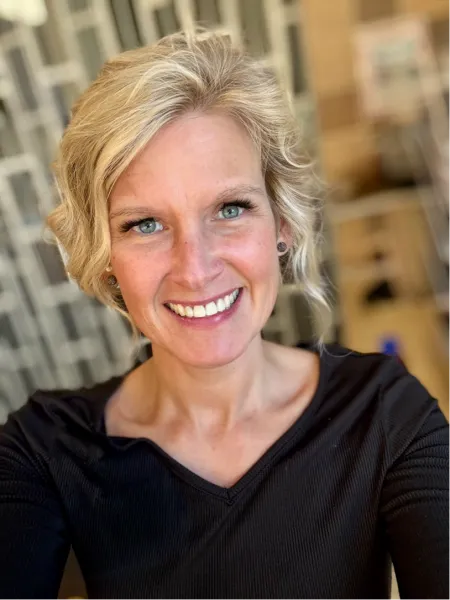
Stephanie Shaw, Online MSW Graduate, 2025
Stephanie currently provides mental health services and is working toward licensure at Family Health and Wellness in Libby, Montana.
"This program has taught me that we don’t have all the answers. We just need the courage to ask hard questions the humility to listen and the compassion to stand beside others as they write their own stories."
Ready to Apply?
Review the application instructions for program-specific requirements and deadlines, then submit your application or request more information.