

Occupational Therapy Doctorate
Forging New Frontiers in Healthcare Education
The University of Montana is proud to launch the state’s first public Occupational Therapy Doctorate (OTD) program, opening new frontiers in healthcare education. Set against the backdrop of wide-open landscapes and a culture that values grit and independence, this program offers a distinctive path for future occupational therapists. Here, students are encouraged to think boldly, serve their communities, and embrace the journey as much as the destination.
We are thrilled to announce that we have received approval of our accreditation candidacy from ACOTE (Accreditation Council for Occupational Therapy Education). Please refer to this Statement on Candidacy Status for more information.
Accreditation, Certification, and Licensure Requirements
-
The University of Montana's entry-level Doctor of Occupational Therapy (OTD) program has been granted Candidacy Status by the Accreditation Council for Occupational Therapy Education (ACOTE) of the American Occupational Therapy Association (AOTA).
ACOTE is located at 7501 Wisconsin Avenue, Suite 510E, Bethesda, MD 20814. ACOTE's telephone number, c/o AOTA, is (301) 652-AOTA, and its website is acoteonline.org.
The University of Montana OTD program has received approval for accreditation candidacy and is progressing through the ACOTE accreditation process. Candidacy Status does not constitute full accreditation. The program must successfully complete the remaining steps of the accreditation process, including the required review and on-site evaluation, before full accreditation can be granted by ACOTE.
-
The University of Montana OTD program is designed to prepare students for entry-level occupational therapy practice and the national certification examination for occupational therapists administered by the National Board for Certification in Occupational Therapy (NBCOT).
Graduates of the program will be eligible to sit for the NBCOT certification examination upon the program's successful attainment of ACOTE accreditation and satisfaction of applicable NBCOT eligibility requirements.
Individuals who successfully complete the certification examination may earn the designation of Occupational Therapist, Registered (OTR).
(301) 652‑6611 -
Certification and state licensure are separate processes. Passing the NBCOT certification examination is generally required for occupational therapy licensure; however, additional requirements vary by state.
Applicants and students are encouraged to review the licensure requirements for the state or states in which they intend to practice.
Additional information is available through the American Occupational Therapy Association's State Licensure Frequently Asked Questions
(301) 652‑6611 -
A felony conviction may affect a graduate's ability to sit for the NBCOT certification examination and/or obtain state licensure as an occupational therapist.
Applicants and students with concerns regarding criminal history are encouraged to review NBCOT's eligibility requirements and the licensing regulations of the state or states in which they intend to practice.
Additional information regarding certification eligibility and character review procedures is available through the National Board for Certification in Occupational Therapy (NBCO
(301) 652‑6611
Sign-Up for the UM OT Virtual Open House - November 16th, 2026 from 6 - 6:30 PM
What Is Occupational Therapy?
Occupational therapy (OT) helps people of all ages participate in meaningful daily activities—like self-care, work, or play—despite challenges from illness, injury, or disability. Combining science and creativity, OT empowers individuals to live fully and independently by promoting physical, emotional, and social well-being across diverse settings.
OTs work in settings such as hospitals, schools, homes, rehabilitation centers, and community programs, among many others. With strong job growth, diverse specialties, and flexibility, OT offers a dynamic, rewarding, and stable healthcare career path.
Learn more about the outcomes and careerpathways a doctorate in occupational therapy from the University of Montana can do for you by clicking here

UM OT Program Highlights
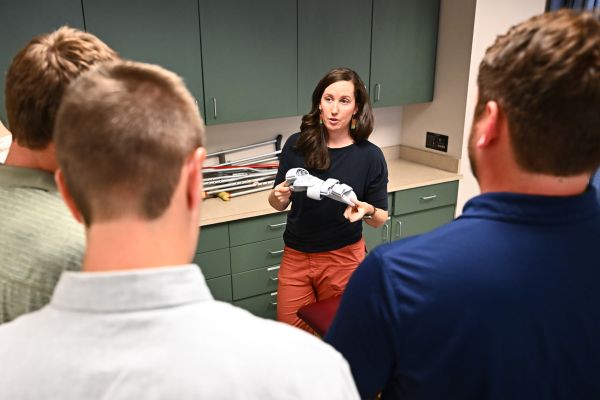
Length & Start Date

Program Type

Location

Fieldwork & Capstone
Fieldwork: Engage in four in-person Level I Fieldworks across Missoula County and two Level II Fieldworks at diverse sites throughout the country, gaining real-world experience in a variety of settings.
Capstone: Design and complete a 14-week Capstone experience tailored to your interests, allowing you to make a meaningful contribution to the field and prepare for advanced OT practice.

Why Choose UM OT?

Student Experience

Admissions Process
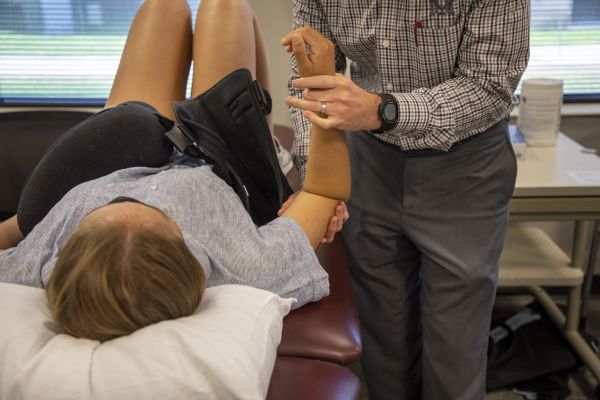
Career Outcomes
Tuition and Fees
-
The University of Montana Doctor of Occupational Therapy (OTD) program is a 33-month, full-time professional doctoral program.
The tuition and fees listed below reflect costs for the 2025–2026 academic year and are presented as estimated annual costs for each of the three years of the OTD program. Tuition and fees are established by the Montana Board of Regents and are subject to change or increase at any time.
-
Tuition/Fee Type Year 1 Year 2 Year 3 Total In-State Tuition $9,512 $10,496
$6,560 $26,568 Out-of-State Tuition $42,137 $46,496 $29,060 $117,693 Institutional Fees $3,752 $4,050 $2,660 $10,462 Program Fees $7,369 $7,516 $7,516 $22,401 Total In-State Program Cost $20,633 $22,062 $16,736 $59,431 Total Out-of-State Program Cost $53,976 $58,840 $39,728 152,544 -
-
Tuition and fee estimates are based on costs reported for the 2025–2026 academic year.
-
Institutional fees include general university fees, such as recreation fees, and are based on course credit enrollment.
-
Total program costs include tuition, institutional fees, and other program costs as reported by the OTD program.
-
Health insurance is not included in the estimated total program costs.
-
Tuition and fees are subject to change. Students should consult the University of Montana Business Services office for current rates.
For current tuition and fee information, visit University of Montana Business Services — Tuition and Fees.
-
-
Students complete four Level I fieldwork experiences, two 12-week Level II fieldwork experiences, and one 14-week doctoral capstone experience and project.
Although students are not required to complete clinical or capstone experiences outside Missoula, limited placement availability means that many students complete at least one experience outside the Missoula area.
Students are responsible for additional travel, housing, and living expenses associated with clinical education and doctoral capstone placements. These costs vary based on the location and duration of the assigned experiences and are not separately quantified in the estimates above.
Students are encouraged to review estimated living expenses using the MIT Living Wage Calculator.
Tuition and Fee Disclaimer: All tuition, fees, and total program costs are estimates and subject to change without notice. Published costs are not a guarantee of future tuition or fee rates. Applicants and enrolled students should verify current information with the University of Montana OTD program or University Business Services.