
Wellbeing Advisory Group (WAG)
Care. Connection. Belonging.
Making wellbeing visible at UM
We bring students, staff, and faculty together to weave wellbeing into everyday campus life, from the way we support one another to the systems that shape our experience.
Who we are
A campus community. A shared commitment.
The Wellbeing Advisory Group (WAG) is a cross-campus coalition working together to create a culture of care, belonging, and whole-person wellbeing at the University of Montana.
We connect people and ideas across departments, coordinate campus-wide efforts, and help wellbeing become part of our systems, spaces, and daily interactions. Our work supports both student and employee success.
Our mission
We embed and model the art and science of wellbeing in campus systems, policies, and environments, championing resilience, belonging, and success for students, staff, and faculty.
Our vision
A thriving UM community where wellbeing is woven into every experience and everyone has the support to reach their potential.
What we do
From everyday care to campus-wide change.
We listen to campus experiences, identify barriers to support, and collaborate on practical improvements.
The Wellbeing Wizard program
Small actions. Care people can feel.
Wellbeing Wizards are connectors, advocates, and collaborators who use the influence they already have to make care, connection, and access more visible at UM.
The role is an invitation to bring wellbeing into the spaces and relationships you already influence. Listening, making someone feel welcome, modeling a healthy boundary, or helping someone find support can make a difference.
Every Door Can Lead to Support
Model healthy wellbeing behaviors.
Connect people with care and resources.
Share feedback to strengthen our campus community.
Listen. Validate. Connect.

Nominate a Wellbeing Wizard
Who makes UM feel more welcoming, connected, or supportive? Help us recognize someone who makes wellbeing visible through everyday actions.
Think of someone who checks in with care, models healthy boundaries, helps people find resources, or works to make a campus process more supportive.
Nominate someone in the UM community to be a Wellbeing Wizard today (nomination form coming soon)!
Stay Connected
Bring your ideas. Find support.
Have an idea for making wellbeing more visible in your department or a campus experience? Connect with the Wellbeing team!
Supporting a Student
-
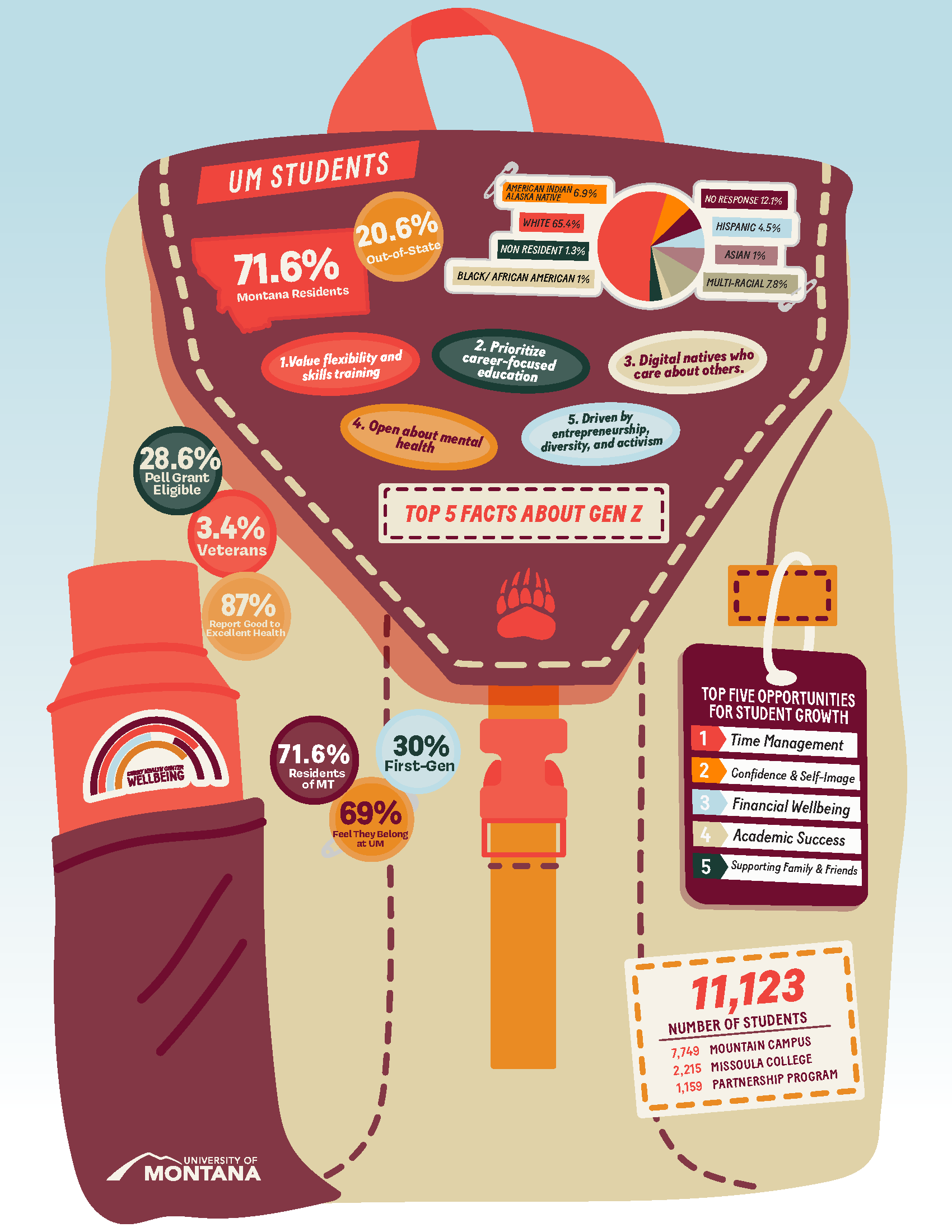
Student Demographics
Use the Link to Download a PDF version with Resources: Student Demographic Sheet with Resource
-
How to Support a Student in Need
Use the Link to Download a PDF Version: How to Support a Student
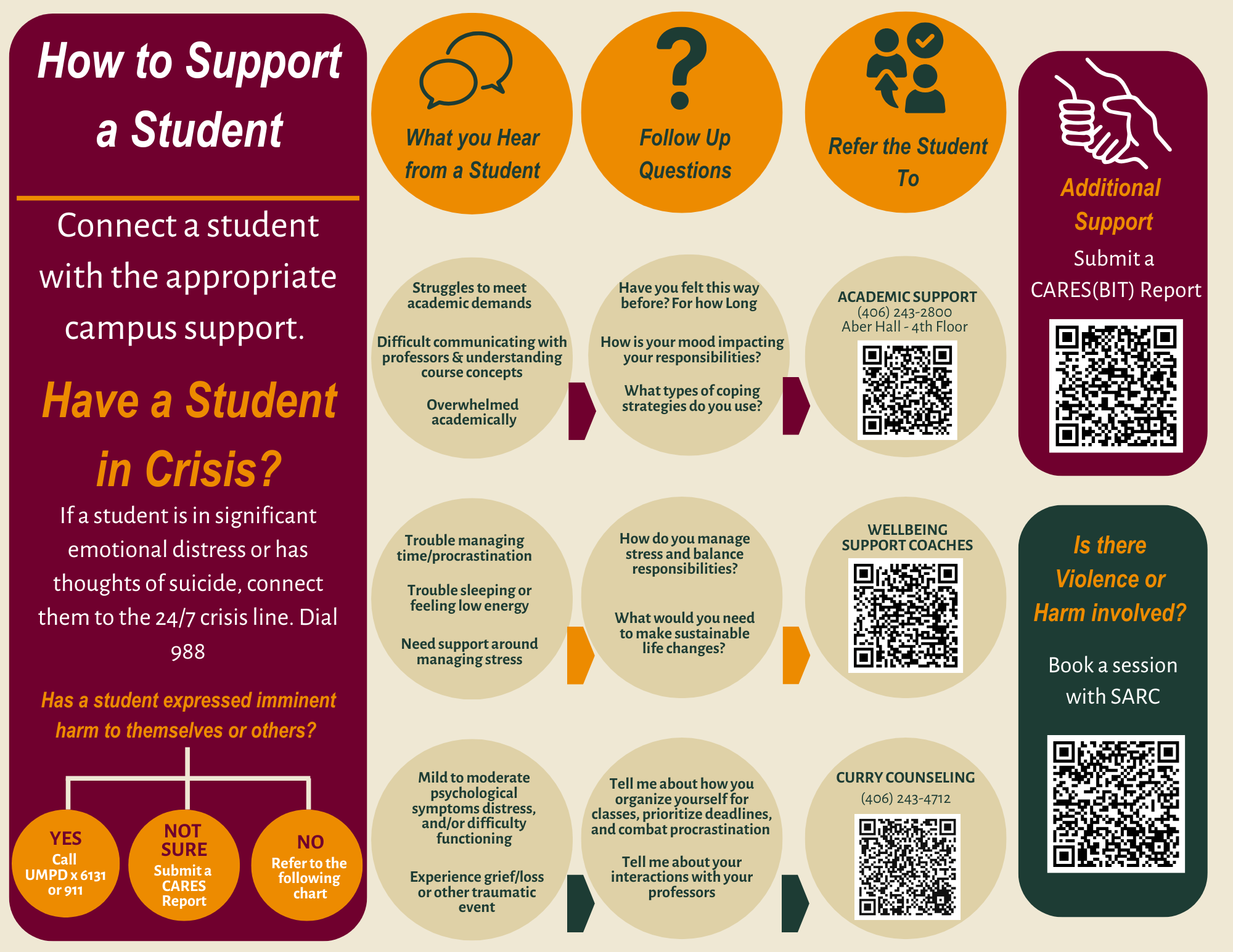
Referral to a Wellbeing Support Coach
What Is An Appropriate Referral?
- Support in coping with stress, anxiety, and feeling overwhelmed
- Sleep and Sleep hygiene
- Time Management and Procrastination
- Movement and Nutrition
- Assistance with finding the right resource for support
Two options for referrals:
- Complete online referral form
- Complete referral within Navigate- Select alert reasons “Wellness”
How Are You Really? Self-Assessment
Use the Link to Download a PDF Version: How Are You Really? Self-Assessment

-
Warm Handoff Script Guide: Offering to Connect the Student to Support
Use the Link to Download a PDF version: Warm Handoff Script
"Hi Student’s Name, I want to make sure you’re getting the right support to help with [specific issue, e.g., academic challenges, stress, financial concerns]. I think connecting you with [Office/Person’s Name] could be really helpful—they specialize in this area and are great at what they do."
*asterisk ask for student's permission before sharing their situation with others through email introduction.
In Person Warm Hand Off
“How about I walk you over (Office/Person’s Name) so I can introduce you? That way, you’ll know exactly where to go and who to talk to.”
Phone
“How about I call (Office/Person’s Name) and see if they are available to chat with us now?"
Virtual Via Email
"Hi [Student’s Name],
I wanted to follow up with you about a resource that I believe could help with your [specific concern]. I’d like to introduce you to [Name of Resource/Person].
You can schedule a meeting with [Resource Name] using this link: [Insert Link to Schedule]. I’ve also copied [Contact Person’s Name] on this email, so feel free to reach out to [them/her/him] directly if you have any questions.
Let me know how else I can support you!
Best,
[Your Name]"
-
Syllabus Statement: Supporting Mental Wellbeing at UM
Use the Link to Download a PDF version: Syllabus Language
Including a statement on mental health in your course syllabus is a simple yet impactful way to support student well-being and promote help-seeking behaviors. It also reinforces that instructors care about their students’ overall health and success. Below is an example of how you can address mental health concerns. Feel free to adapt it to suit your needs:
Healthy Campus-At UM we are dedicated to creating a campus environment that promotes wellbeing, connection, and a sense of belonging for everyone.
Supporting Your Wellbeing
Life can be challenging, and prioritizing your well-being isn’t always easy when time feels limited. Whether you’re balancing academics, relationships, work, or personal growth, caring for your mental, emotional, and physical health is essential. Support is always available, and our campus community is here to help—whether you have five minutes or an hour.
Together, let’s build a culture where seeking balance, asking for help, and supporting one another are part of everyday life College life can be challenging, and students often face issues that may affect academic performance, such as academic stress, sleep difficulties, managing responsibilities, personal life events, relationship concerns, or feelings of anxiety, hopelessness, or depression. If you or someone you know is struggling, support is available:
- Course Support: If you're having difficulty with this class, please reach out. Visit me during office hours or email me at [insert email address].
- Academic Guidance: If you're struggling in multiple classes or unsure about your academic path, consider meeting with your academic advisor for support and planning.
- Counseling Services: Curry Health Center Counseling provides confidential, professional support for a variety of mental health needs. To schedule an appointment, call 406-243-4712 or use the Curry Health Portal.
- Accommodations: Students with disabilities can request accommodations by contacting the Office for Disability Equity (ODE). The University of Montana ensures equal access through collaboration among students, instructors, and ODE. For assistance with accommodation, contact the Office for Disability Equity (ODE) at 406-243-2243.
- Wellbeing Support: Curry Health Center Wellbeing provides a range of resources to help you maintain and improve your overall wellbeing.
- Wellbeing Coaching: Schedule an appointment with a Wellbeing Coach for personalized support with managing stress, improving time management, and boosting productivity. Connect with a coach here.
- Relaxation Station: Need a space to relax and recharge? Book a session at our Relaxation Station here.
- Advocacy and Support: The Student Advocacy Resource Center (SARC) offers free, confidential assistance for students who have experienced identity-based harm, including dating/domestic violence, sexual assault, stalking, harassment, discrimination, or bias. Call 406-243-4429 or schedule an appointment online.
- Immediate Crisis Support:
-
Call 988 for the Suicide and Crisis Lifeline.
-
Visit the nearest hospital emergency room.
-
Contact Campus Safety at 406-243-4000.
-
Additional Resources
-
24/7 Suicide and Crisis Lifeline: Dial 988
-
Montana Community Resource Line: Text 211 or visit Montana211.org
-
The StrongHearts Native Helpline: Call (844) 762-8483
-
National Crisis Text Line: Text "HOME" to 741741
-
Students of Color: Text "STEVE" to 741741
- LGBTQIA2S+ Support:
- Text "START" to 678678
- Call the 24/7 Trevor Lifeline at (866) 488-7386 or visit The Trevor Project
-
UM Resources for Students
Dimensions of Wellbeing with UM Campus Resources- Dimensions of Wellbeing